ZZ Plant
Scientific Name: Zamioculcas zamiifolia
Plant Family: Araceae
Native Region: Eastern Africa (from Kenya to northeastern South Africa)
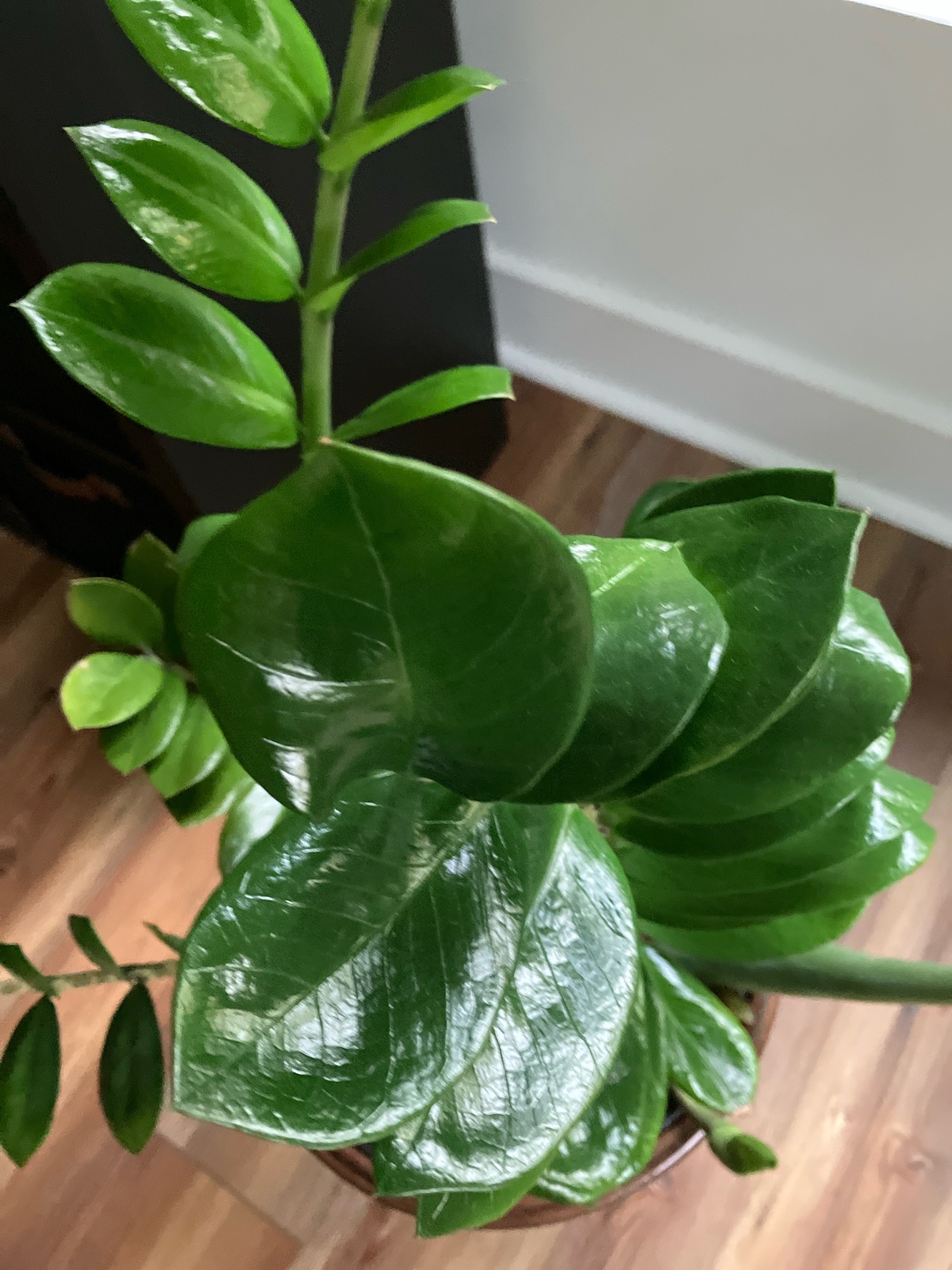
Brief Description
A popular indoor plant characterized by its thick, waxy, deep green oval leaves that grow on upright, succulent stems. It has a glossy appearance and grows from thick underground rhizomes.
Care Instructions
Extremely low-maintenance. Thrives in indirect light but can handle low light. Water sparingly, allowing the soil to dry out completely between waterings. Use well-draining soil and fertilize once or twice during the growing season.
Medicinal Value
We do not currently provide medicinal value for plant identifications.
Sunlight
Low to bright indirect light. Avoid direct hot sun which can scorch the leaves; 4-6 hours of indirect light is ideal.
Watering
Low water needs. Water every 2-4 weeks depending on light levels. It is drought-tolerant; yellowing leaves and mushy stems indicate over-watering.
Soil
Well-draining potting mix with a pH between 6.0 and 7.0. A mixture of standard potting soil with perlite or cactus mix works well.
Hardiness Zone
USDA zones 9b-12 (primarily grown as an indoor plant elsewhere)
Growth Habit
Herbaceous perennial; slow-growing, typically reaching 2-3 feet tall and wide indoors.
Bloom Season
Rarely blooms indoors. When it does, it produces small, yellowish-brown or white spadix flowers tucked away near the base of the stems.
Toxicity
Toxic to humans, dogs, and cats if ingested. Contains calcium oxalate crystals which cause irritation of the mouth and digestive tract. Use gloves if you have sensitive skin.
Propagation
Can be propagated by leaf cuttings, stem cuttings, or division of the rhizomes. Division is the fastest method.
Common Pests & Issues
Root rot due to over-watering is the most common issue. Scale and mealybugs can occasionally occur but are rare for this hardy plant.
Similar Species
Zamia furfuracea (Cardboard Palm), which is actually a cycad. The ZZ plant is distinguished by its smoother, fleshier, more succulent stems and leaves.
Interesting Facts
The ZZ plant has been around for centuries, but it only became a popular global houseplant in the late 1990s after Dutch nurseries began mass-distributing it.
Created At: 2026-06-10T10:44:21.043651