
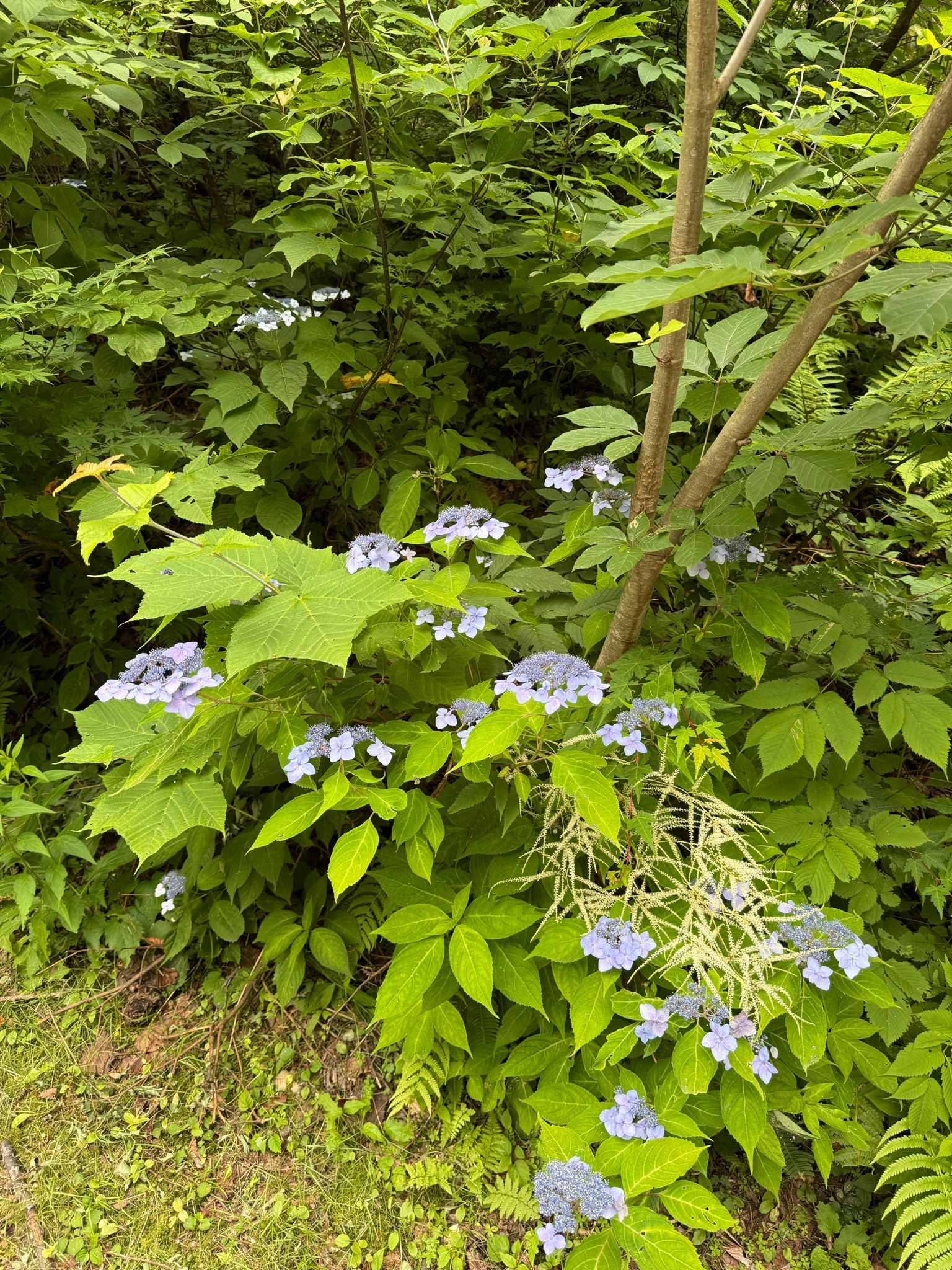
Lacecap Hydrangea
Hydrangea macrophylla var. normalis
A deciduous shrub known for its unique flat-topped flower heads featuring a center of tiny fertile florets surrounded by an outer ring of showy, larger sterile florets. It has large, opposite, glossy green leaves that are serrated.
- Light
- Partial shade; ideally 3-6 hours of morning sun followed by filtered afternoon shade.
- Water
- High water needs; requires deep watering 2-3 times per week to keep the soil consistently moist. Wilting is a sign of underwatering.
- Growth
- Perennial deciduous shrub; rounded form reaching 3-6 feet in height and spread with a moderate growth rate.
Care instructions
Provide partial shade with morning sun and afternoon protection. Keep soil consistently moist but never waterlogged. Use rich, well-draining organic soil and apply a balanced slow-release fertilizer in early spring and summer.
Growing details
Sunlight
Partial shade; ideally 3-6 hours of morning sun followed by filtered afternoon shade.
Watering
High water needs; requires deep watering 2-3 times per week to keep the soil consistently moist. Wilting is a sign of underwatering.
Soil
Rich, loamy, well-draining soil with a pH between 5.2 and 7.0. Soil pH can influence flower color in some cultivars.
Hardiness zone
Zones 6-9; susceptible to late spring frosts which can damage flower buds.
Growth habit
Perennial deciduous shrub; rounded form reaching 3-6 feet in height and spread with a moderate growth rate.
Bloom season
Mid-summer to early autumn; flowers are flat corymbs in shades of blue, pink, or white depending on soil chemistry.
Propagation
Softwood cuttings taken in summer or by layering low-hanging branches in soil.
Common pests & issues
Susceptible to powdery mildew, leaf spot, aphids, and spider mites. Bud death can occur from harsh winter winds or late frosts.
Similar species
Mountain Hydrangea (Hydrangea serrata) which is smaller with narrower leaves and more cold-hardy; and Mophead Hydrangea (Hydrangea macrophylla) which has spherical rather than flat flower heads.