
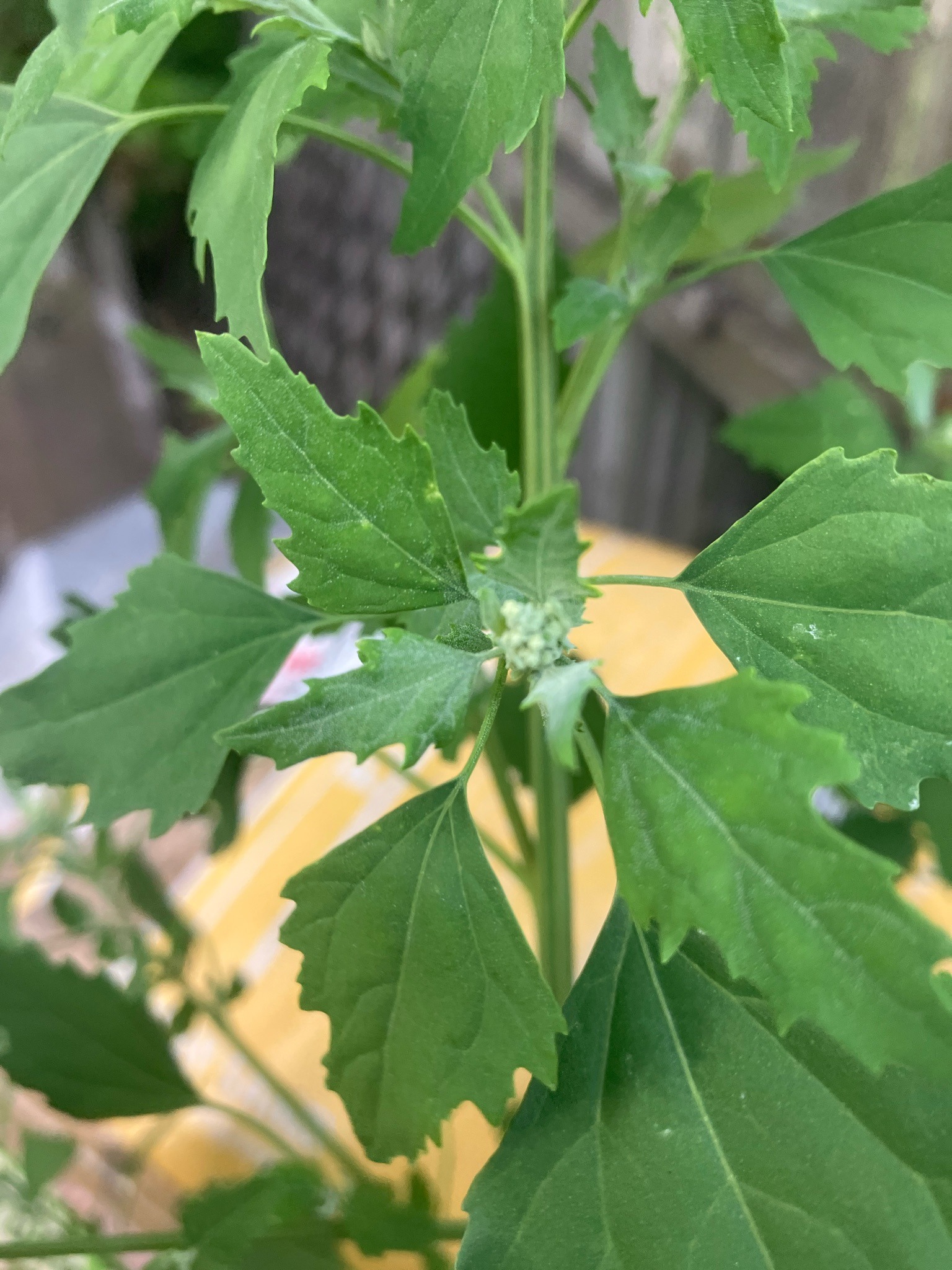
Lamb's Quarters
Chenopodium album
An upright, fast-growing annual weed characterized by its light green, diamond-shaped leaves with wavy-toothed margins and a distinctive white, mealy or powdery coating on the undersides and new growth.
- Light
- Full sun to partial shade (at least 6 hours of light per day for optimal growth).
- Water
- Moderate. It is highly drought-tolerant once established but grows best with regular watering. Signs of underwatering include wilting and leaf drop.
- Growth
- Erect annual herb that can grow 3 to 5 feet tall, though sometimes reaching 9 feet. It has a branched, grooved stem often striped with purple or red.
Care instructions
Generally treated as a weed, but if cultivated, it thrives in full sun and rich, moist soil. No fertilizer is usually needed as it excels at scavenging nutrients. Ensure good drainage.
Growing details
Sunlight
Full sun to partial shade (at least 6 hours of light per day for optimal growth).
Watering
Moderate. It is highly drought-tolerant once established but grows best with regular watering. Signs of underwatering include wilting and leaf drop.
Soil
Well-drained, fertile soil; prefers neutral to slightly alkaline pH (6.5 to 8.0). It is often found in disturbed soils and garden beds.
Hardiness zone
Annual; grows in USDA zones 2 through 11 during the frost-free season.
Growth habit
Erect annual herb that can grow 3 to 5 feet tall, though sometimes reaching 9 feet. It has a branched, grooved stem often striped with purple or red.
Bloom season
Mid-summer to late autumn. Small, inconspicuous green flowers bloom in dense clusters (panicles) at the tips of branches.
Propagation
Propagates easily by seed. A single plant can produce tens of thousands of seeds which can remain viable in the soil for decades.
Common pests & issues
Commonly affected by leaf miners, which create winding tunnels in the leaves, and aphids. Susceptible to downy mildew in damp conditions.
Similar species
Orach (Atriplex hortensis) and Pitseed Goosefoot (Chenopodium berlandieri). It is distinguished from Orach by its mealy leaf coating and more jagged leaf edges.