
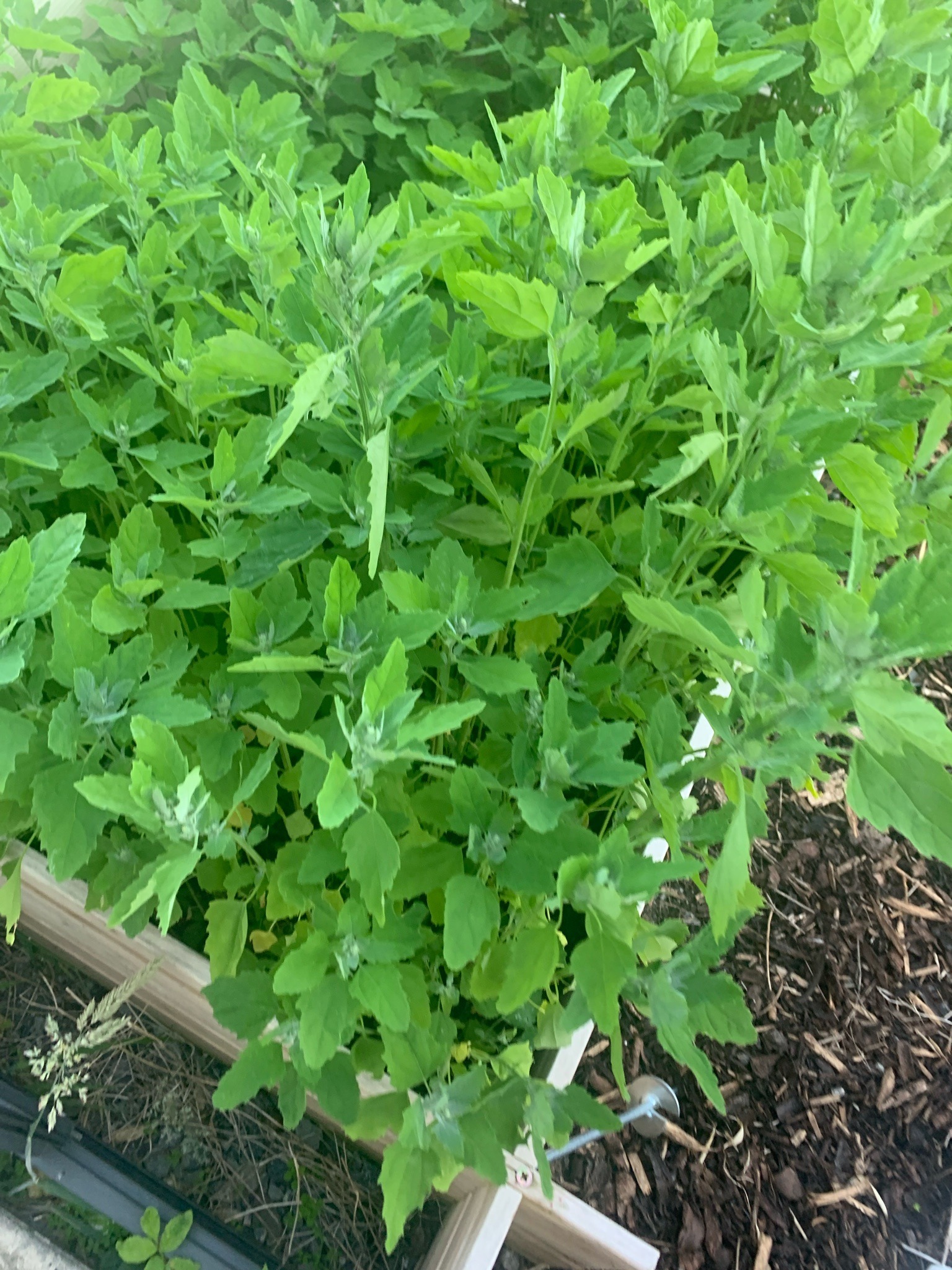
Lamb's Quarters
Chenopodium album
An edible annual weed with diamond-shaped, toothed leaves that are covered in a white, mealy powder (farinose) on the undersides and near the growing tips.
- Light
- Full sun to partial shade; 6-8+ hours per day for optimal growth.
- Water
- Moderate watering; once established, it is drought-tolerant. Over-watering can lead to root rot in poorly drained soil.
- Growth
- Summer annual herb; can reach 3-5 feet in height and 2 feet in spread. Fast-growing and upright.
Care instructions
Thrives in disturbed soil with full sun to partial shade. Requires minimal care once established, as it is a vigorous weed. Water moderately and provide nitrogen-rich soil for best leafy growth.
Growing details
Sunlight
Full sun to partial shade; 6-8+ hours per day for optimal growth.
Watering
Moderate watering; once established, it is drought-tolerant. Over-watering can lead to root rot in poorly drained soil.
Soil
Well-draining, nutrient-rich soil is preferred; adaptable to a wide pH range (4.5 to 8.5) but thrives in neutral to slightly alkaline conditions.
Hardiness zone
Grown as an annual; adaptable to USDA zones 2-11.
Growth habit
Summer annual herb; can reach 3-5 feet in height and 2 feet in spread. Fast-growing and upright.
Bloom season
Summer to early Autumn; inconspicuous, tiny green flowers in dense, grainy clusters. Non-fragrant.
Propagation
Primarily by seed; a single plant can produce tens of thousands of seeds which can remain viable in the soil for decades.
Common pests & issues
Leaf miners are the most common pest; aphids and powdery mildew may also occur. Generally very resilient.
Similar species
Orach (Atriplex hortensis) and Mexican Tea (Dysphania ambrosioides). Lamb's Quarters is distinguished by its mealy, white-gray powdery coating and lack of a strong resinous odor found in Mexican Tea.