Passion Fruit (specifically Maypop or similar Passiflora)
Scientific Name: Passiflora edulis
Plant Family: Passifloraceae
Native Region: Native to South America (Brazil, Paraguay, and northern Argentina); naturalized in many tropical and subtropical regions worldwide.
Brief Description
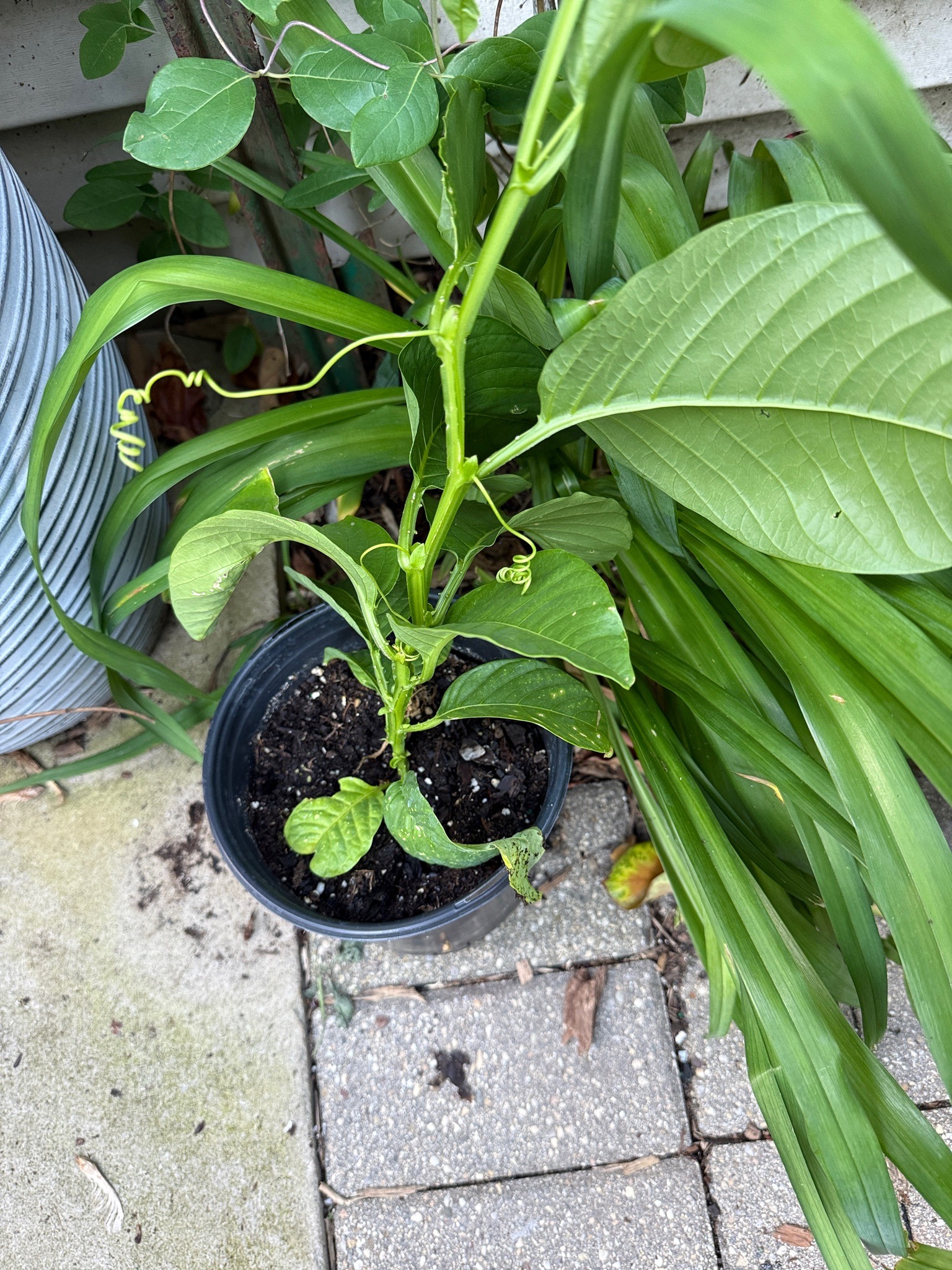
A vigorous evergreen climbing vine characterized by its distinctive herbaceous green stems, alternate glossy green leaves, and specialized axillary tendrils used for climbing.
Care Instructions
Provide a sturdy trellis for climbing. Requires plenty of sunlight, regular watering, and well-draining soil. Fertilize monthly during the growing season with a balanced fertilizer.
Medicinal Value
We do not currently provide medicinal value for plant identifications.
Sunlight
Full sun to partial shade; at least 6 to 8 hours of direct sunlight per day for optimal fruit production.
Watering
Requires regular, deep watering to keep the soil consistently moist but not waterlogged. Increase frequency during hot summer months or flowering.
Soil
Rich, well-draining loamy or sandy soil with a slightly acidic to neutral pH (6.5 to 7.5).
Hardiness Zone
Typically USDA zones 9-11; however, Passiflora incarnata (a close relative) is hardy to zone 5.
Growth Habit
Perennial climbing vine that can grow 20 to 30 feet in length. It grows very quickly once established.
Bloom Season
Late spring through summer; produces complex, exotic-looking flowers with purple and white filaments, followed by egg-shaped fruit.
Toxicity
The fruit is edible when fully ripe. However, the leaves and unripe fruit of some species contain cyanogenic glycosides and can be toxic to humans and pets if ingested in quantity.
Propagation
Easily propagated by stem cuttings, seeds, or layering. Cuttings should be taken in spring or early summer for best results.
Common Pests & Issues
Prone to caterpillars (like the Gulf Fritillary), spider mites, and aphids. Root rot can occur if soil drainage is poor.
Similar Species
Passiflora incarnata (Maypop), which has three-lobed leaves. Passion fruit vines are often confused with other vining weeds until their unique flowers appear.
Interesting Facts
The name 'Passion Flower' was given by 16th-century Spanish missionaries who saw symbols of the crucifixion within the flower's unique structure.
Created At: 2026-06-19T00:19:24.199731