
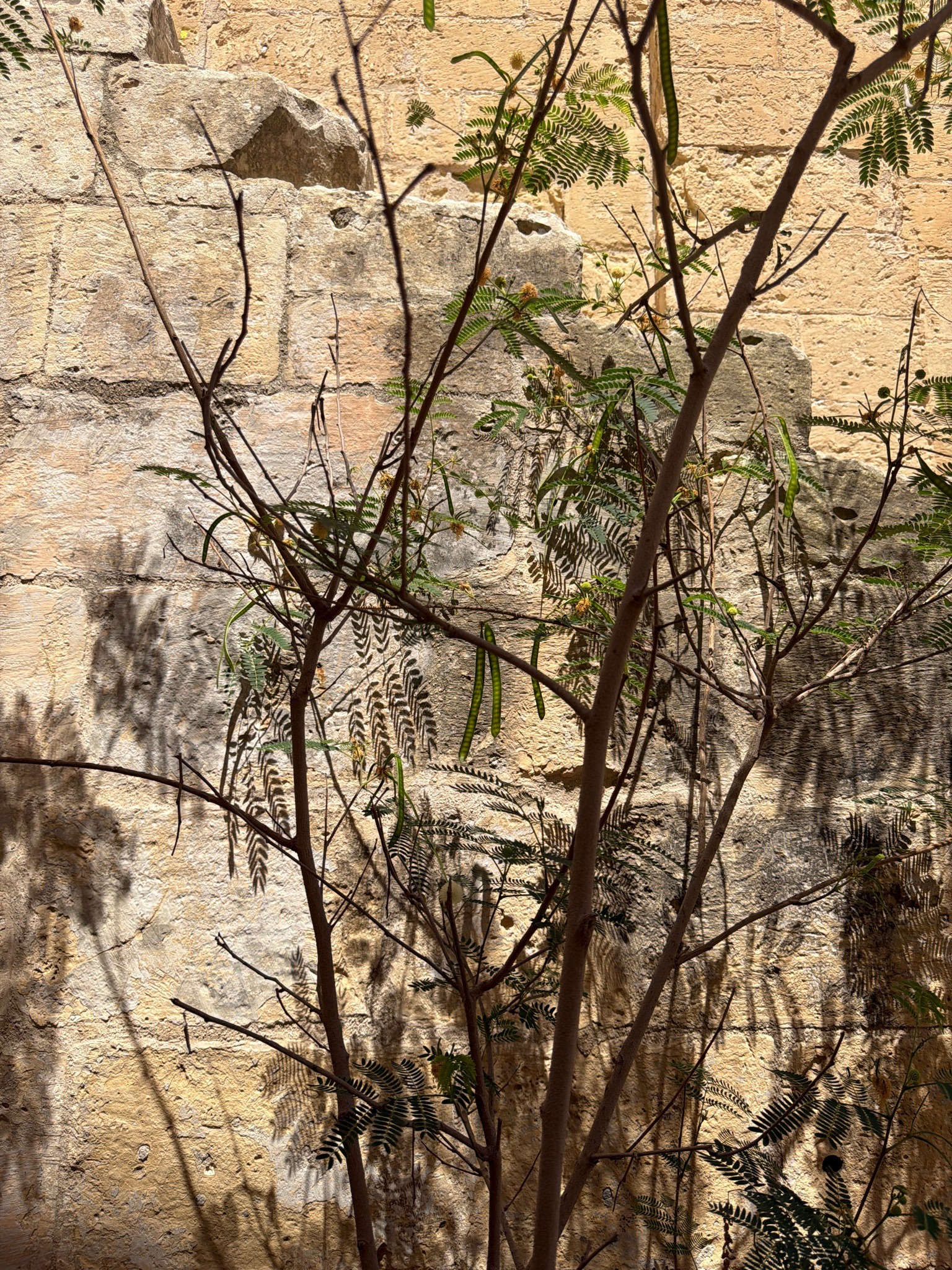
Leadtree
Leucaena leucocephala
A fast-growing, evergreen or semi-evergreen small tree or shrub with finely divided, bipinnate green leaves and greenish-white globe-shaped flower heads, followed by long, flat, brownish seed pods.
- Light
- Full sun, requiring 6 to 8 hours of direct light daily for optimal growth.
- Water
- Moderate to low; prefers regular watering when young but becomes drought-tolerant as it matures. Over-watering in heavy clay can lead to root rot.
- Growth
- Perennial shrub or small tree, typically reaching 5 to 20 feet in height with a spread of 10 to 15 feet; fast growth rate.
Care instructions
Thrives in full sun with minimal attention once established. Requires well-drained soil and occasional watering during extended dry periods, though it is quite resilient to drought.
Growing details
Sunlight
Full sun, requiring 6 to 8 hours of direct light daily for optimal growth.
Watering
Moderate to low; prefers regular watering when young but becomes drought-tolerant as it matures. Over-watering in heavy clay can lead to root rot.
Soil
Adaptable to various soil types including limestone-based and alkaline soils; prefers well-drained sandy or loamy soils with a pH between 6.0 and 8.5.
Hardiness zone
USDA zones 9b to 12; sensitive to frost and cold temperatures.
Growth habit
Perennial shrub or small tree, typically reaching 5 to 20 feet in height with a spread of 10 to 15 feet; fast growth rate.
Bloom season
Produces small, white to pale yellow globose flower clusters intermittently throughout the year, peaking in late spring and summer.
Propagation
Primarily by seed, which should be scarred or soaked in hot water to improve germination; also possible via stem cuttings.
Common pests & issues
Highly susceptible to psyllids (jumping plant lice) and root rot in waterlogged soils. It can be seasonally deciduous in colder climates.
Similar species
Mimosa pudica (Sensitive Plant), which has similar leaves but reacts to touch; and various Acacia species, which often have different pod shapes and smaller leaflets.