
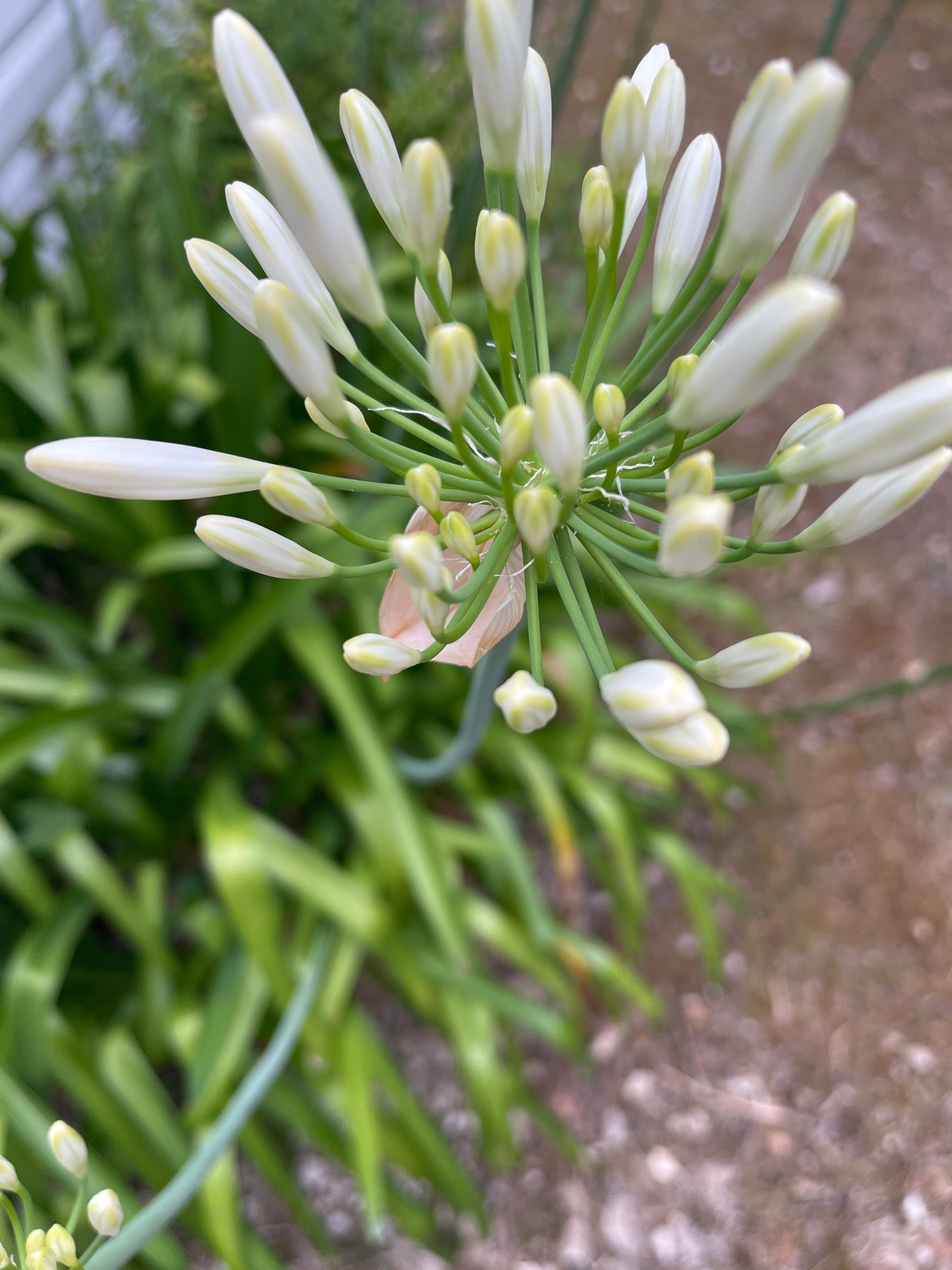
Lily of the Nile (White variety)
Agapanthus praecox
A clump-forming perennial with thick, strap-like green leaves and tall stalks topped with large globular clusters of bell-shaped flowers.
- Light
- Full sun (6-8 hours) is ideal for maximum blooming, though can tolerate partial shade in hot climates.
- Water
- Moderate; water once or twice a week depending on temperature. Drought-tolerant once established but prefers consistent moisture during its flowering period.
- Growth
- Herbaceous perennial growing 2 to 4 feet tall with a similar spread. Forms dense fleshy root clumps.
Care instructions
Thrives in full sun or light shade with well-drained soil. Water regularly during the growing season and apply a balanced fertilizer in spring and summer. Deadhead after blooming to encourage future growth.
Growing details
Sunlight
Full sun (6-8 hours) is ideal for maximum blooming, though can tolerate partial shade in hot climates.
Watering
Moderate; water once or twice a week depending on temperature. Drought-tolerant once established but prefers consistent moisture during its flowering period.
Soil
Rich, fertile, well-draining soil with a neutral to slightly acidic pH (6.0 to 7.5).
Hardiness zone
8-11
Growth habit
Herbaceous perennial growing 2 to 4 feet tall with a similar spread. Forms dense fleshy root clumps.
Bloom season
Mid-summer to early autumn; flowers are held in umbels and can be white or shades of blue.
Propagation
Best propagated by division of the root clumps in early spring or autumn. Can be grown from seed but takes 2-3 years to flower.
Common pests & issues
Generally pest-resistant, but can be affected by snails, slugs, or mealybugs. Overwatering can lead to root rot.
Similar species
Agapanthus africanus (smaller, blue blooms), Crinum lilies (larger flowers), and certain Allium species (spherical flower heads but different foliage).