Sasanqua Camellia
Scientific Name: Camellia sasanqua
Plant Family: Theaceae
Native Region: Japan (Southern islands including Shikoku, Kyushu, and Okinawa)
Brief Description
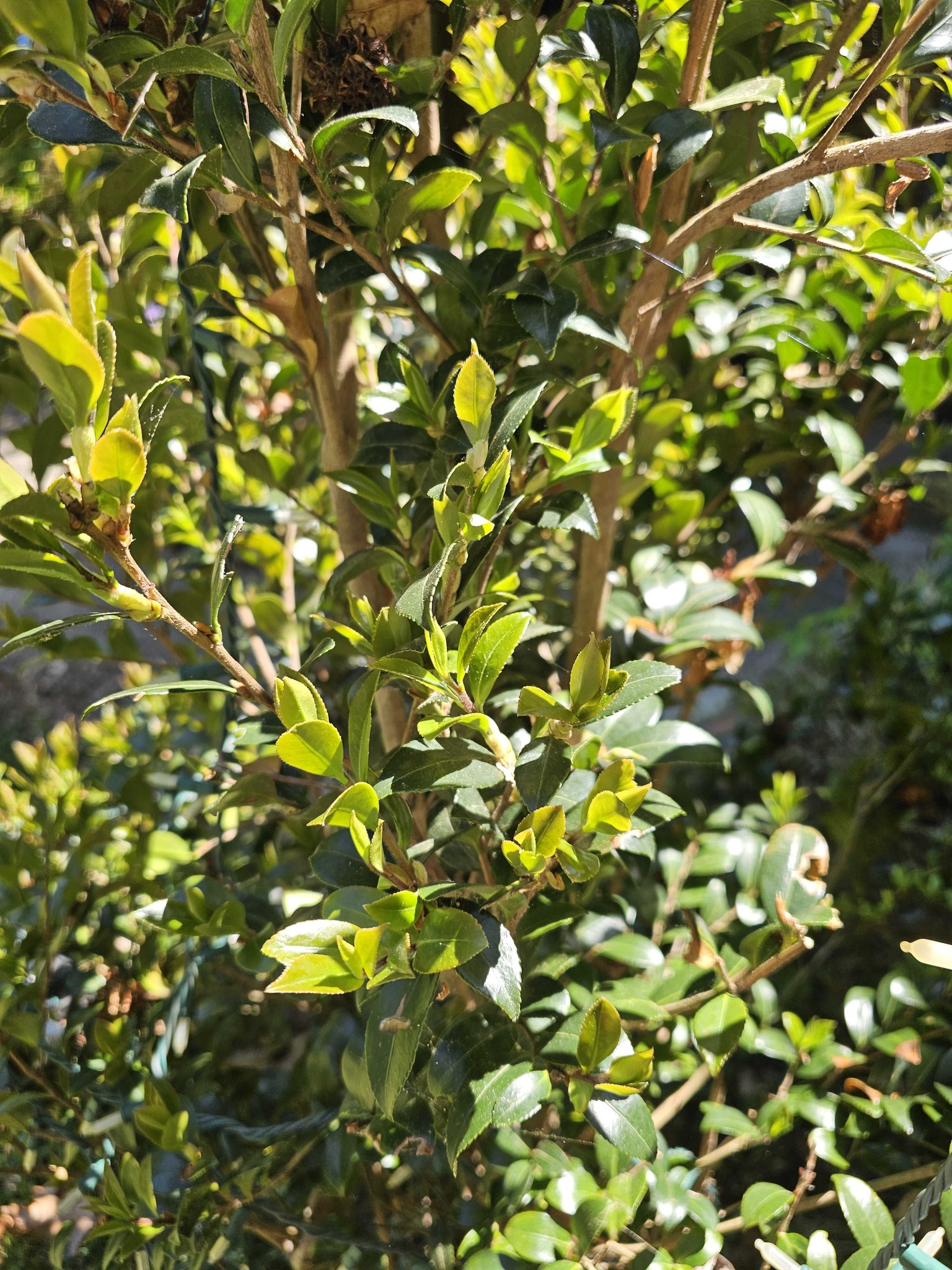
An evergreen shrub or small tree with glossy, dark green, serrated leaves and fragrant flowers. It has a more open and graceful growth habit compared to Camellia japonica.
Care Instructions
Thrives in partial shade with protection from afternoon sun. Provide moist, well-draining acidic soil enriched with organic matter. Water regularly during the first few years and apply acid-forming fertilizer in spring.
Medicinal Value
We do not currently provide medicinal value for plant identifications.
Sunlight
Partial shade to full sun (4-6 hours). While it handles more sun than C. japonica, afternoon shade is preferred in hot climates.
Watering
Moderate. Keep soil consistently moist but not waterlogged. Increase frequency during hot dry spells. Drought tolerant once established.
Soil
Rich, acidic (pH 5.5 to 6.5), well-drained soil with plenty of organic matter.
Hardiness Zone
7 to 9 (USDA)
Growth Habit
Evergreen perennial shrub/tree. Can grow 6-15 feet tall and wide depending on the cultivar. Moderate growth rate.
Bloom Season
Fall to early winter (typically October to December). Flowers are pink, white, or red with prominent yellow stamens.
Toxicity
Generally considered non-toxic to humans, dogs, and cats.
Propagation
Most commonly by semi-hardwood cuttings in summer or by air layering.
Common Pests & Issues
Susceptible to scale insects, aphids, and spider mites. Overwatering can lead to root rot or petal blight in humid conditions.
Similar Species
Camellia japonica (has larger, coarser leaves and blooms later in winter/spring) and Camellia sinensis (the true tea plant, with smaller flowers).
Interesting Facts
Sasanqua camellias have been cultivated in Japan for centuries and were introduced to the Western world in the late 1800s. Its petals fall individually rather than the whole bloom dropping at once.
Created At: 2026-05-03T19:01:55.830950