
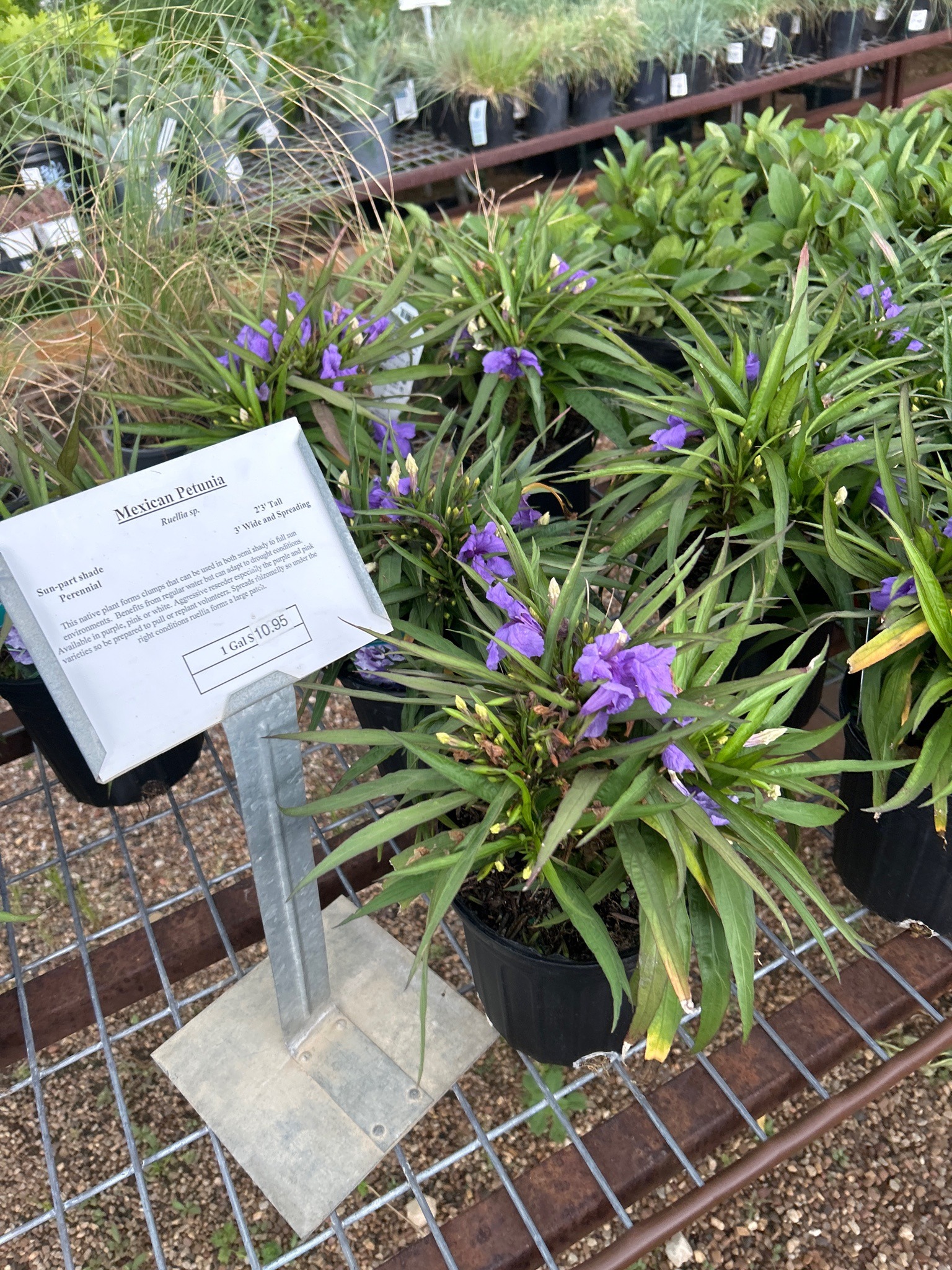
Mexican Petunia
Ruellia simplex
A hardy, clump-forming perennial with upright, purple-tinted stems and sword-shaped, willow-like green leaves. It produces trumpet-shaped, vibrant purple, pink, or white flowers that bloom for only one day.
- Light
- Full sun to partial shade; at least 6 hours of direct sun is recommended for prolific blooming.
- Water
- Average to high; prefers consistent moisture but can survive periods of drought. It can even grow in boggy conditions or standing water.
- Growth
- Herbaceous perennial; grows in clumps with an upright habit reaching 3-4 feet tall (standard) or 10-12 inches (dwarf varieties), spreading via rhizomes and self-seeding.
Care instructions
Extremely low-maintenance. Provide full sun for best flowering, though it tolerates shade. Keep soil moist for optimal growth, but it is remarkably drought-tolerant once established. Fertilization is generally unnecessary unless soil is very poor.
Growing details
Sunlight
Full sun to partial shade; at least 6 hours of direct sun is recommended for prolific blooming.
Watering
Average to high; prefers consistent moisture but can survive periods of drought. It can even grow in boggy conditions or standing water.
Soil
Adaptable to most soil types, including clay and sandy soils, with a preferred pH of 5.5 to 7.8. It thrives in fertile, moist, well-draining soil.
Hardiness zone
USDA zones 8-11; in zone 8, it often dies back to the ground in winter and returns in spring.
Growth habit
Herbaceous perennial; grows in clumps with an upright habit reaching 3-4 feet tall (standard) or 10-12 inches (dwarf varieties), spreading via rhizomes and self-seeding.
Bloom season
Spring through fall; flowers are approximately 2 inches wide, trumpet-shaped, typically violet-purple, and fragrance-free.
Propagation
Very easy via seeds, stem cuttings, or division of the root clump in early spring.
Common pests & issues
Highly resistant to most pests and diseases. The main 'issue' is its invasive potential in warm, wet climates where its aggressive spreading can crowd out native flora.
Similar species
Often confused with true Petunias, but Ruellia has narrower leaves and stiffer stems. It also resembles Ruellia caroliniensis (Carolina Wild Petunia), which is smaller and less aggressive.