
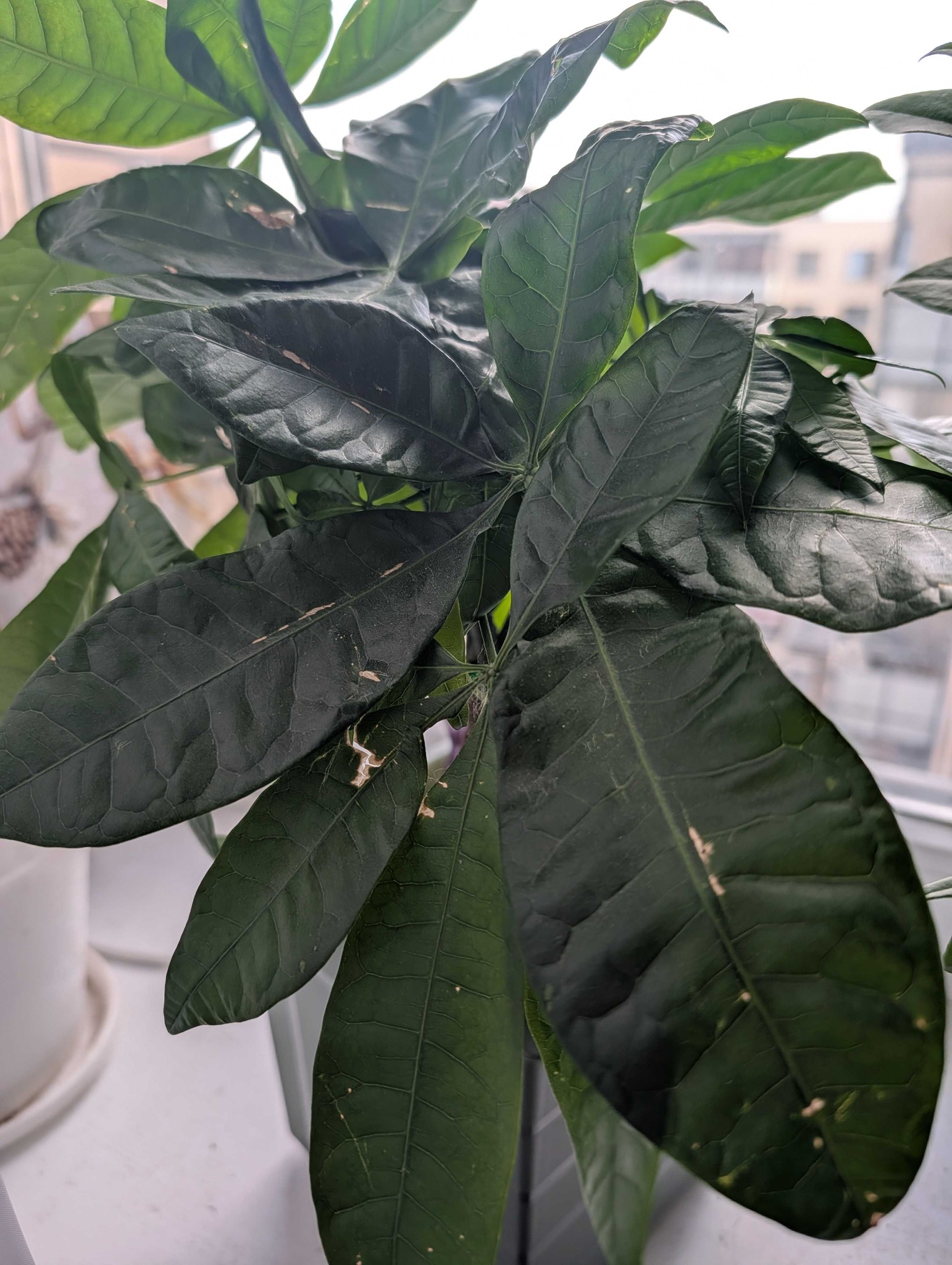
Money Tree
Pachira aquatica
A tropical evergreen tree often featuring a braided trunk and large, glossy, palmately compound leaves with five to seven leaflets. It is a popular ornamental houseplant known for its vibrant green foliage.
- Light
- Bright, indirect light is ideal. It can tolerate some direct sun if acclimated, though too much can scorch leaves. Minimum 6 hours of indirect light per day recommended.
- Water
- Water thoroughly but infrequently. Allow the top 1-2 inches of soil to dry out between waterings. Yellowing leaves may indicate overwatering, while drooping or curled leaves may indicate underwatering.
- Growth
- Perennial tree. Indoors, it typically grows 6-8 feet tall with a spread of 2-3 feet. In the wild, it can reach up to 60 feet. It has a moderate to fast growth rate.
Care instructions
Provide bright, indirect sunlight and water when the top inch of soil is dry. Use well-draining soil and a pot with drainage holes. Fertilize monthly during the spring and summer growing seasons.
Growing details
Sunlight
Bright, indirect light is ideal. It can tolerate some direct sun if acclimated, though too much can scorch leaves. Minimum 6 hours of indirect light per day recommended.
Watering
Water thoroughly but infrequently. Allow the top 1-2 inches of soil to dry out between waterings. Yellowing leaves may indicate overwatering, while drooping or curled leaves may indicate underwatering.
Soil
Well-draining, nutrient-rich potting mix. A peat-based mix with perlite or sand is effective. Prefers a slightly acidic to neutral pH (6.0-7.5).
Hardiness zone
USDA Zones 10-12; it is highly sensitive to frost and cold drafts.
Growth habit
Perennial tree. Indoors, it typically grows 6-8 feet tall with a spread of 2-3 feet. In the wild, it can reach up to 60 feet. It has a moderate to fast growth rate.
Bloom season
Rarely blooms indoors; in its native habitat, it produces large, yellowish-white flowers with long red-tipped stamens that resemble a feather duster.
Propagation
Propagated mainly through stem cuttings in water or moist soil, or via seeds during the spring or summer months.
Common pests & issues
Scale, mealybugs, and spider mites are common pests. Root rot can occur due to overwatering or poor drainage. Sudden leaf drop can be caused by environmental stress such as temperature fluctuations.
Similar species
Schefflera (Umbrella Tree) has similar palmate leaves but generally has thicker, more rounded leaflets and different trunk structures. Pachira glabra is often sold interchangeably but typically has a smoother, greener trunk.