
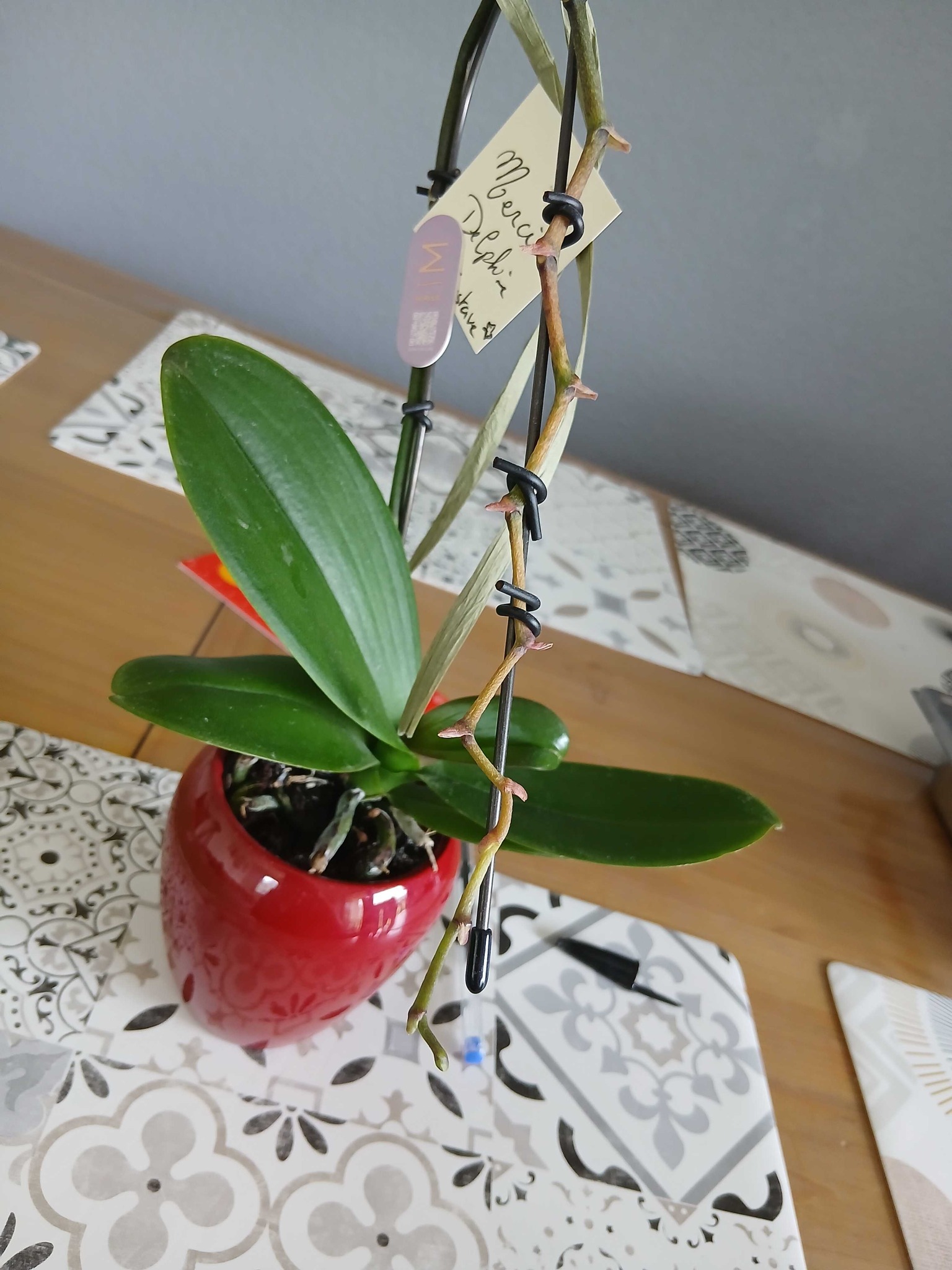
Moth Orchid
Phalaenopsis
An epiphytic orchid with broad, flat, fleshy green leaves and long, arching flower spikes that can produce multiple blooms.
- Light
- Bright indirect light like an east-facing window; avoid direct afternoon sun which can scorch leaves. 10-12 hours of light is ideal.
- Water
- Water approximately once per week. Allow the medium to almost dry out; roots should turn from green to silvery-gray before watering again. Avoid leaving water in the leaf crown.
- Growth
- Monopodial perennial; grows from a single stem with opposite leaves. Indoors, it typically reaches 1-2 feet in height including the flower spike.
Care instructions
Provide bright, indirect light and plant in an airy orchid bark mix. Water once a week or when the roots look silvery, ensuring excellent drainage. Fertilize monthly with orchid-specific fertilizer.
Growing details
Sunlight
Bright indirect light like an east-facing window; avoid direct afternoon sun which can scorch leaves. 10-12 hours of light is ideal.
Watering
Water approximately once per week. Allow the medium to almost dry out; roots should turn from green to silvery-gray before watering again. Avoid leaving water in the leaf crown.
Soil
Requires high drainage and aeration; use a dedicated orchid bark mix or sphagnum moss. pH 5.5 to 6.5.
Hardiness zone
USDA zones 10-12; generally kept as an indoor houseplant between 60-85°F (15-29°C).
Growth habit
Monopodial perennial; grows from a single stem with opposite leaves. Indoors, it typically reaches 1-2 feet in height including the flower spike.
Bloom season
Can bloom at any time of year, with flowers lasting 2-4 months. To trigger re-blooming, a slight drop in nighttime temperature is often required.
Propagation
Most commonly through 'keikis' (baby plantlets that grow on the flower spike) or by laboratory tissue culture; seed propagation is extremely difficult for hobbyists.
Common pests & issues
Root rot due to overwatering, mealybugs, scale, and crown rot. Bud blast (dropping buds) can occur due to sudden temperature or humidity changes.
Similar species
Vanda orchids (which have thinner leaves and different root structures) and Cattleya orchids (which have pseudobulbs).