
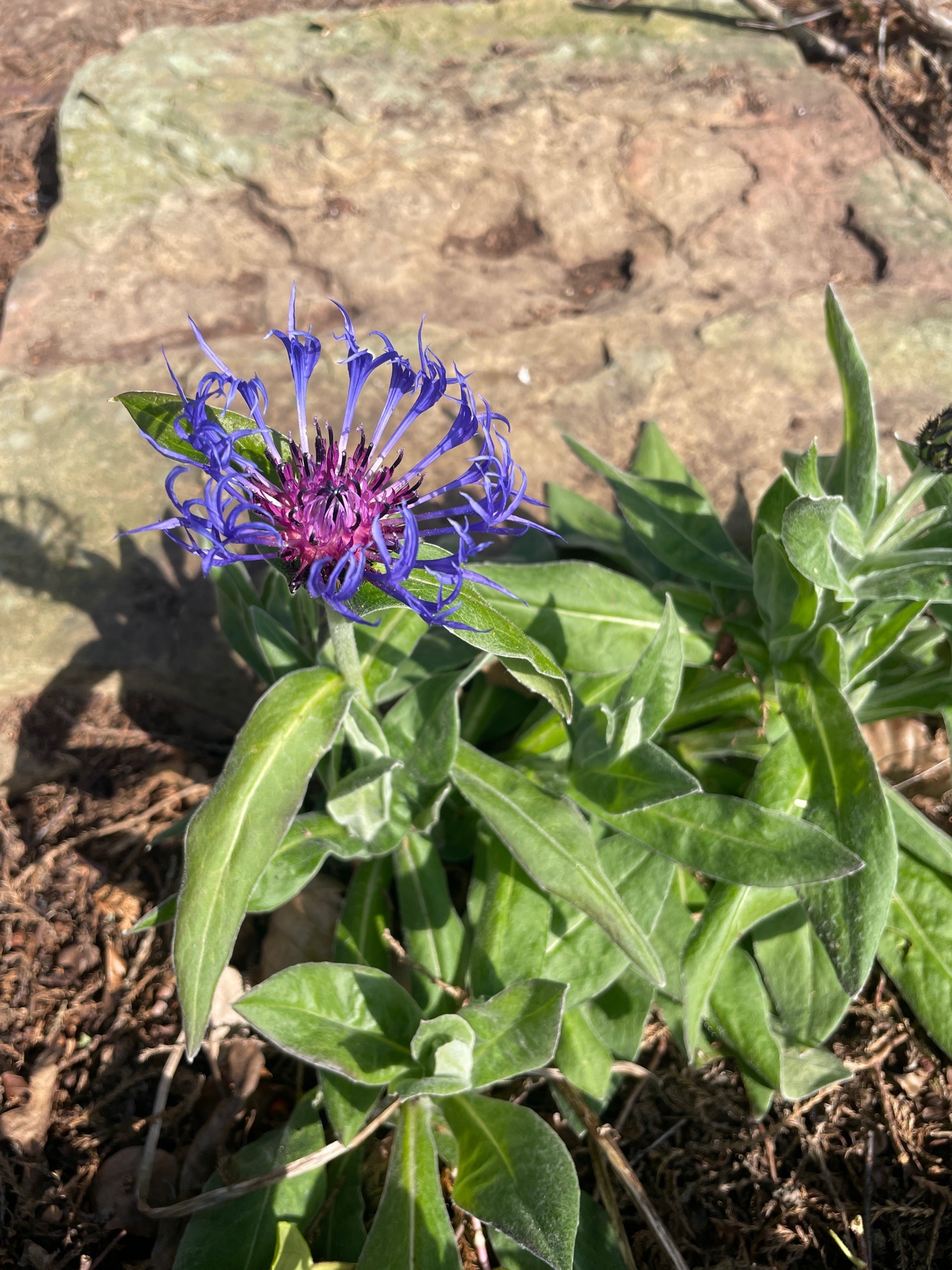
Mountain Cornflower
Centaurea montana
A hardy herbaceous perennial known for its striking thistle-like blue or violet flower heads with fringed petals. It features lance-shaped, grey-green foliage that is often slightly hairy or silvery.
- Light
- Full sun to partial shade; ideally 6+ hours of direct light for the best blooms.
- Water
- Moderate. Water weekly or when the top inch of soil feels dry. It is relatively drought-tolerant once established but performs best with consistent moisture.
- Growth
- Clump-forming perennial. Reaches a mature height of 1-2 feet (30-60 cm) and a spread of 1-1.5 feet. It has a fast growth rate and can spread via underground runners.
Care instructions
Low-maintenance. Plant in full sun to partial shade. Water regularly during the first growing season but allow to dry out once established. Do not over-fertilize, as rich soil can cause the plant to become floppy and invasive.
Growing details
Sunlight
Full sun to partial shade; ideally 6+ hours of direct light for the best blooms.
Watering
Moderate. Water weekly or when the top inch of soil feels dry. It is relatively drought-tolerant once established but performs best with consistent moisture.
Soil
Well-drained soil of average fertility. Tolerates a range of pH from 6.0 to 7.5 (slightly acidic to slightly alkaline).
Hardiness zone
USDA Zones 3-8; very cold-tolerant.
Growth habit
Clump-forming perennial. Reaches a mature height of 1-2 feet (30-60 cm) and a spread of 1-1.5 feet. It has a fast growth rate and can spread via underground runners.
Bloom season
Late spring to early summer (May to June). Flowers are 2 inches wide, deep blue to violet with a reddish-purple center.
Propagation
Propagate by root division in spring or autumn, or by sowing seeds. It is known to self-seed readily in the garden.
Common pests & issues
Susceptible to powdery mildew, rust, and aphids. Good air circulation and avoiding overhead watering can prevent fungal issues.
Similar species
Centaurea cyanus (Bachelor's Button) - Unlike the perennial C. montana, C. cyanus is an annual with narrower leaves and taller, thinner stems.