
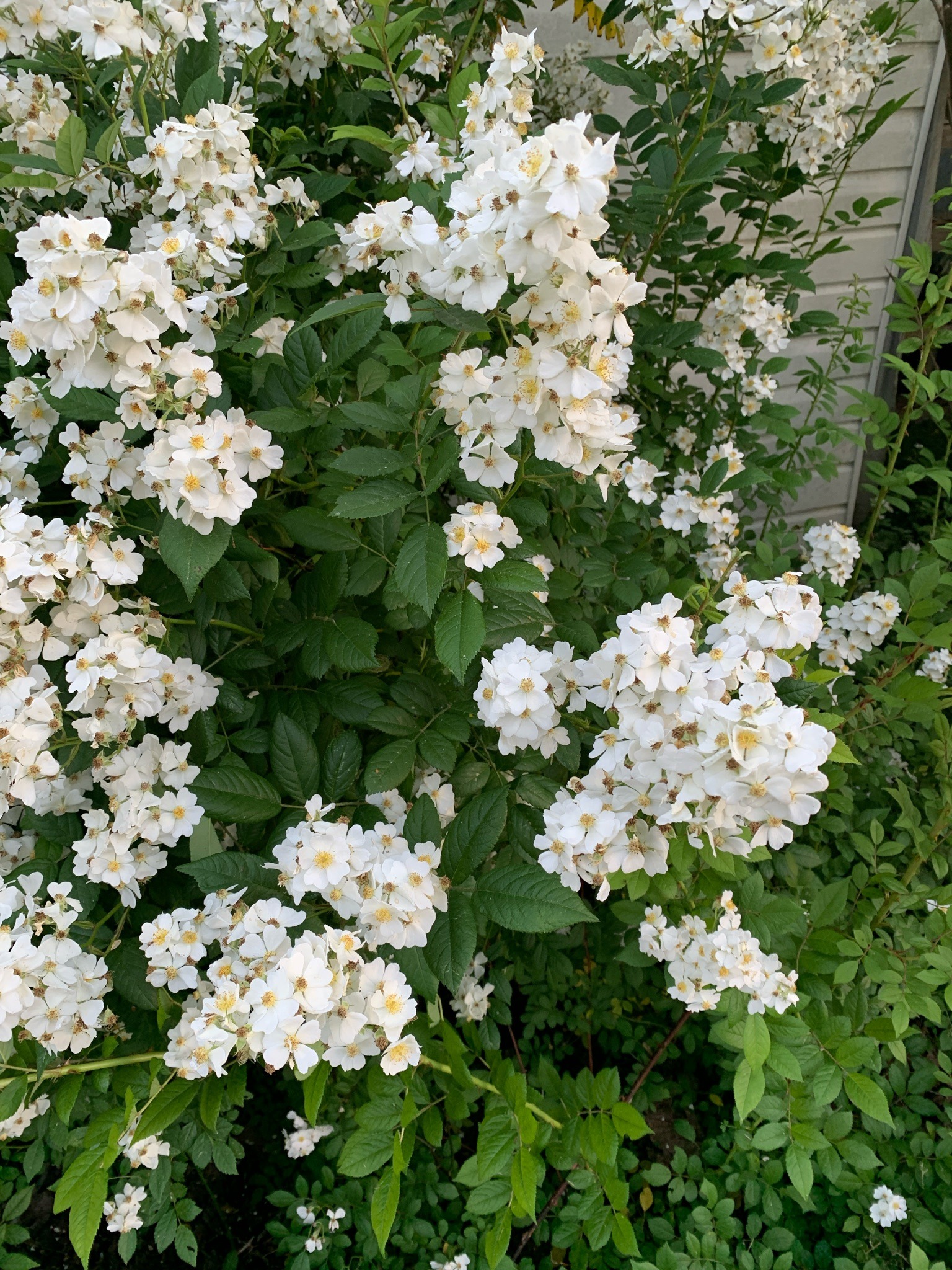
Multiflora Rose
Rosa multiflora
A vigorous, perennial climbing or scrambling shrub with long, arching stems, pinnate leaves with sharply toothed leaflets, and clusters of small white to pinkish five-petaled flowers.
- Light
- Full sun to partial shade; at least 6 hours of direct sunlight per day is preferred for optimal bloom density.
- Water
- Moderate watering when young; highly drought-tolerant once established. Signs of under-watering include drooping foliage.
- Growth
- Deciduous perennial shrub with a scrambling, arching form. Can reach 10-15 feet in height and width, forming dense thickets.
Care instructions
Provide full sun for best flowering. It is a highly adaptable plant that grows in various soil types but prefers well-drained conditions. Once established, it requires little maintenance and is very drought tolerant.
Growing details
Sunlight
Full sun to partial shade; at least 6 hours of direct sunlight per day is preferred for optimal bloom density.
Watering
Moderate watering when young; highly drought-tolerant once established. Signs of under-watering include drooping foliage.
Soil
Adaptable to various soils including clay and loam; prefers well-drained soil with a pH range of 5.5 to 7.0.
Hardiness zone
Zones 5 through 9; cold hardy with stems surviving temperatures well below freezing.
Growth habit
Deciduous perennial shrub with a scrambling, arching form. Can reach 10-15 feet in height and width, forming dense thickets.
Bloom season
Late spring to early summer; features dense clusters of fragrant white or light pink flowers with yellow anthers.
Propagation
Propagates via seed (dispersed by birds) or by tip-rooting where arching stems touch the ground and form new roots.
Common pests & issues
Susceptible to rose rosette disease (transmitted by mites) and Japanese beetles. It is considered highly invasive in many regions and can crowd out native flora.
Similar species
Rosa virginiana (Virginia Rose) - distinguished by its pink flowers and lack of fringed stipules at the base of the leaf stalks, which Rosa multiflora possesses.