Stinking Hellebore / Bear's Foot
Scientific Name: Helleborus foetidus
Plant Family: Ranunculaceae
Native Region: Western and Southern Europe
Brief Description
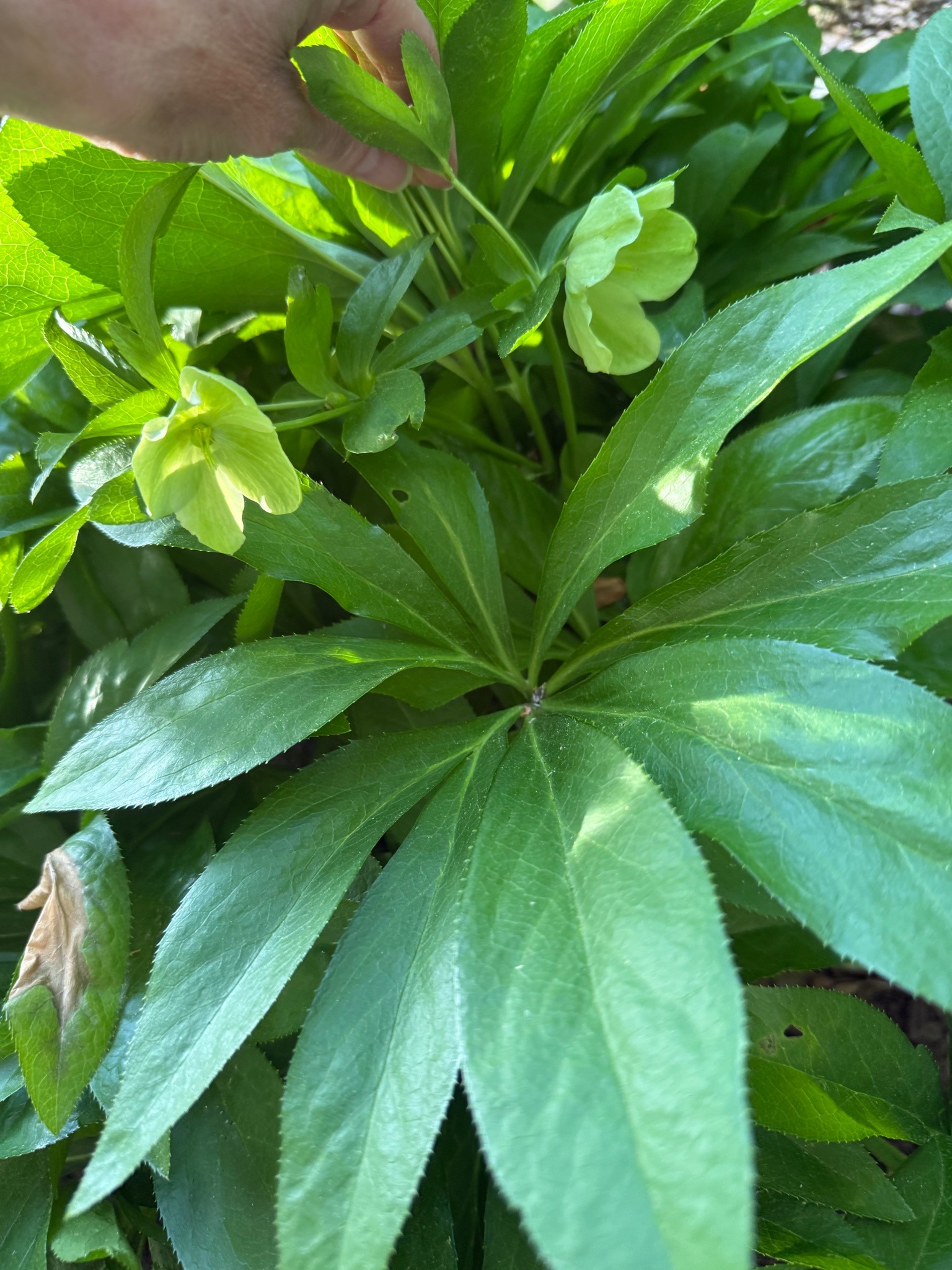
An evergreen perennial featuring deeply divided, dark green, leathery leaves arranged in a fan shape. It produces nodding, bell-shaped lime green flowers, often with a subtle maroon edge, atop sturdy stems.
Care Instructions
This is a low-maintenance plant that thrives in partial to full shade. It prefers moist, well-draining soil and benefits from a layer of mulch. Cut back flowered stems to the base in late spring to encourage fresh foliage growth.
Medicinal Value
We do not currently provide medicinal value for plant identifications.
Sunlight
Partial shade to full shade; 2-4 hours of sunlight is ideal, but it can tolerate deep shade.
Watering
Moderate watering; keep the soil consistently moist but not waterlogged. It is relatively drought-tolerant once established but leaves may droop in excessive heat.
Soil
Wealthy, heavy, alkaline to neutral soil (pH 6.5 to 7.5). It particularly enjoys chalky or loamy soils.
Hardiness Zone
USDA Zones 5-9
Growth Habit
Evergreen perennial; grows in an upright, mounding form. Reaches about 1.5 to 2.5 feet in height and spread.
Bloom Season
Late winter to early spring (January to April); flowers are cup-shaped, pale green with purple-tinted margins.
Toxicity
Highly toxic to humans and pets. If ingested, it can cause severe vomiting, burning of the mouth, and cardiac distress. Contact with sap may cause skin irritation.
Propagation
Propagates best by seed, often self-seeding in the garden. Division is difficult as the plant has a sensitive root system and doesn't like to be moved.
Common Pests & Issues
Generally pest-free, but may be affected by Hellebore leaf spot (fungal) or aphids. Ensure good air circulation to prevent rot.
Similar Species
Helleborus viridis (Green Hellebore) which is smaller and deciduous; Helleborus niger (Christmas Rose) which has white flowers and different leaf shapes.
Interesting Facts
Despite its common name 'Stinking Hellebore', the plant only emits an unpleasant musky odor when the leaves are crushed or bruised. It is highly valued by gardeners for providing color in the dead of winter.
Created At: 2026-04-22T00:57:50.046552