
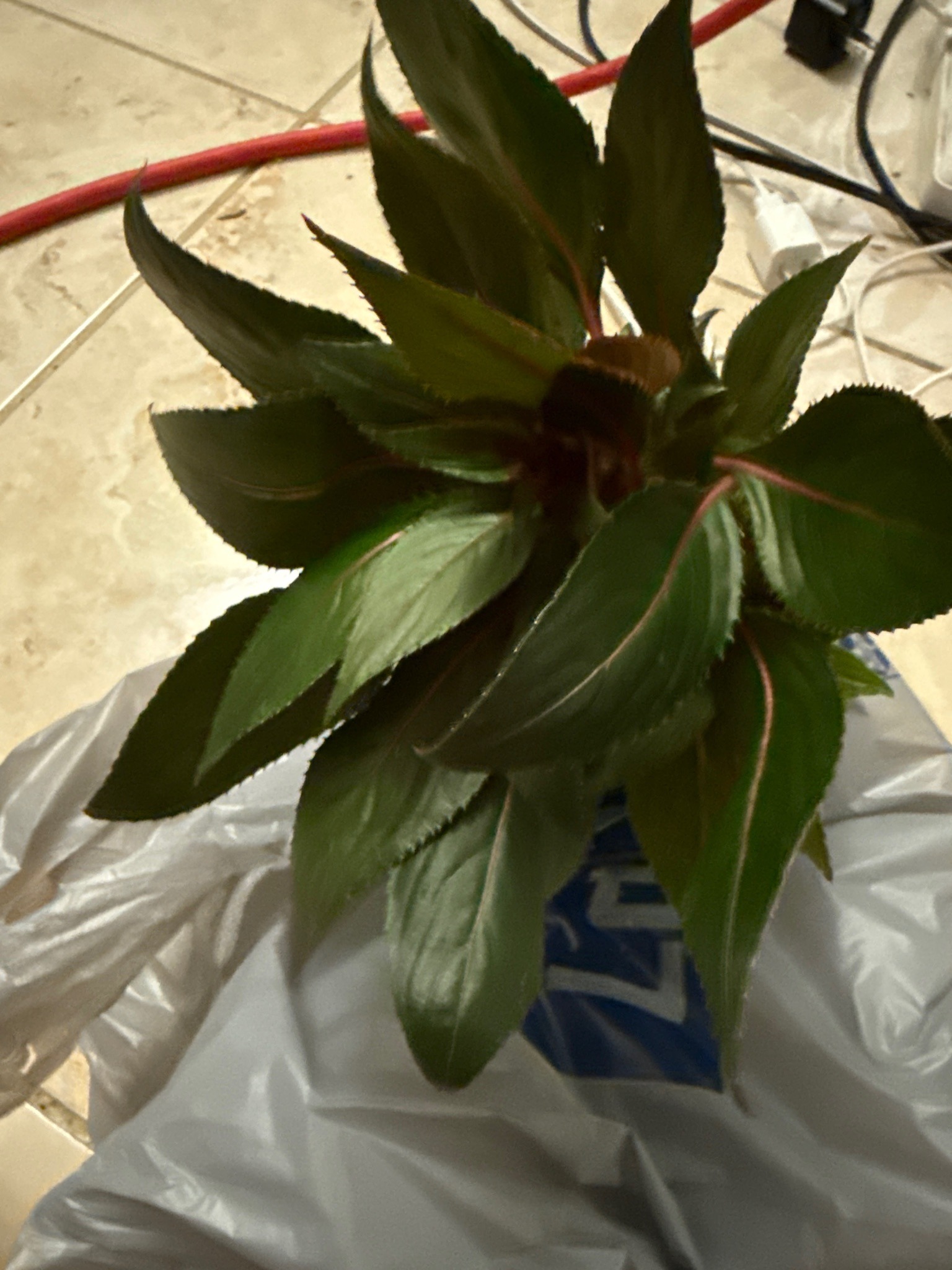
New Guinea Impatiens
Impatiens hawkeri
A vibrant herbaceous perennial often grown as an annual, known for its thick, succulent stems and large, lance-shaped leaves with serrated edges and prominent midribs.
- Light
- Partial shade to bright indirect light; can tolerate more sun than common impatiens if kept well-watered, ideally 4-6 hours of morning sun.
- Water
- Requires regular watering to keep the soil consistently moist but never soggy. Will wilt quickly if the soil dries out completely.
- Growth
- Mounding, upright herbaceous perennial; typically grows 1-2 feet tall and wide at a moderate to fast rate.
Care instructions
Provide moderate filtered light, consistent moisture without waterlogging, and fertile, well-draining soil. Apply a balanced liquid fertilizer every 2-4 weeks during the growing season.
Growing details
Sunlight
Partial shade to bright indirect light; can tolerate more sun than common impatiens if kept well-watered, ideally 4-6 hours of morning sun.
Watering
Requires regular watering to keep the soil consistently moist but never soggy. Will wilt quickly if the soil dries out completely.
Soil
Rich, porous, well-draining soil with plenty of organic matter; pH range of 6.0 to 6.5.
Hardiness zone
USDA zones 10-12; usually grown as an annual in cooler climates.
Growth habit
Mounding, upright herbaceous perennial; typically grows 1-2 feet tall and wide at a moderate to fast rate.
Bloom season
Blooms continuously from late spring through fall; flowers are large, five-petaled, and come in shades of pink, red, white, orange, and purple.
Propagation
Easily propagated by stem cuttings in water or moist potting mix during the spring or summer.
Common pests & issues
Susceptible to spider mites, thrips, and aphids; prone to root rot if overwatered and powdery mildew in high humidity with low airflow.
Similar species
Impatiens walleriana (Common Impatiens), which has thinner, smaller leaves and is more shade-dependent; and SunPatiens, which are a hybrid bred for better heat and sun tolerance.