Marguerite Daisy
Scientific Name: Argyranthemum frutescens
Plant Family: Asteraceae
Native Region: Canary Islands (Spain)
Brief Description
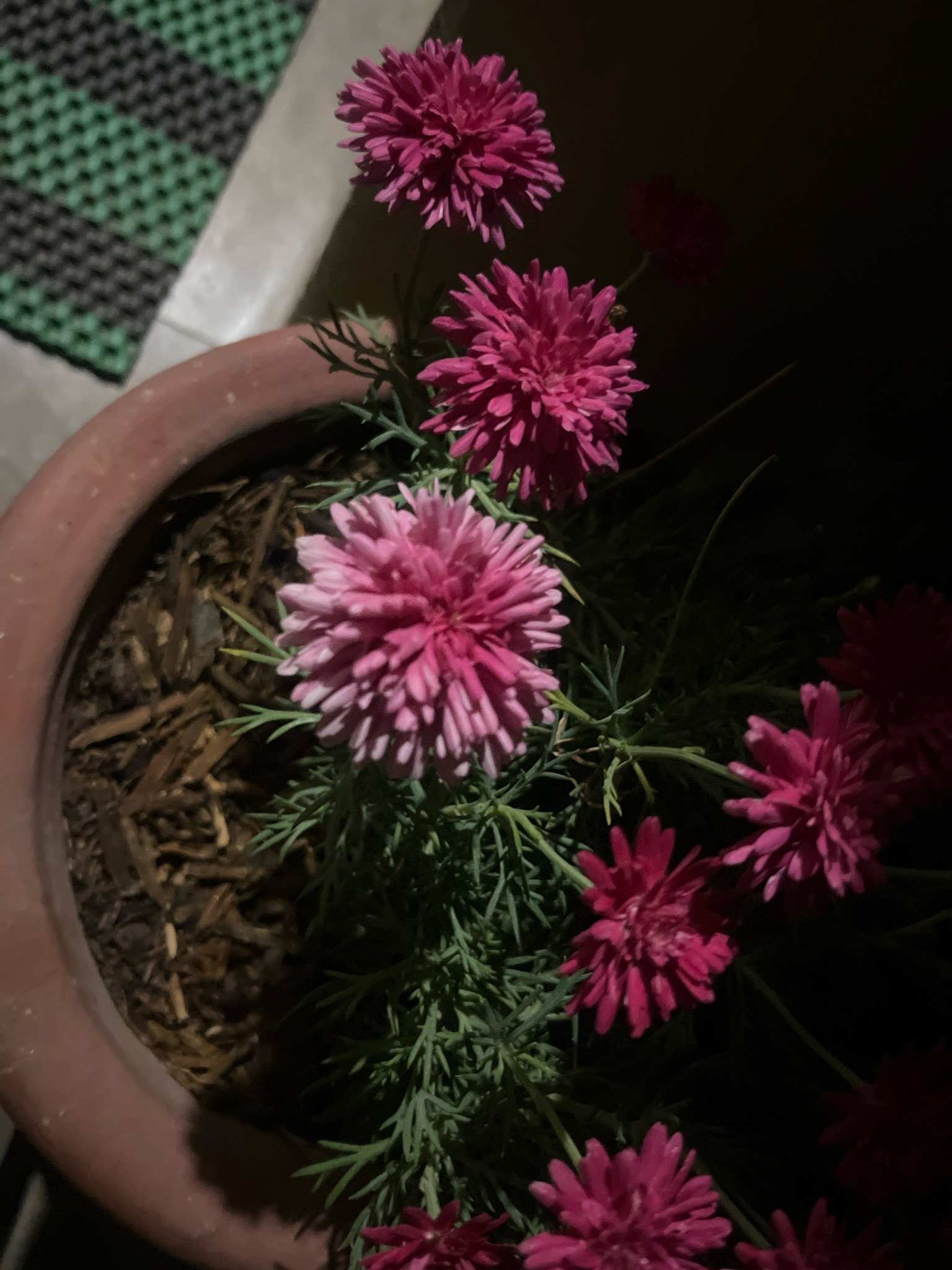
An evergreen shrubby perennial featuring deeply lobed, fern-like green foliage and daisy-like flower heads. This specific variety appears to be a double-flowered cultivar in shades of pink, characterized by dense pom-pom shaped centers.
Care Instructions
Provide full sun and well-draining soil. Deadhead spent flowers regularly to encourage continuous blooming. Water when the top inch of soil feels dry, but avoid waterlogging. Apply a balanced fertilizer every 2-4 weeks during the growing season.
Medicinal Value
We do not currently provide medicinal value for plant identifications.
Sunlight
Full sun, at least 6-8 hours of direct light per day for optimal flowering.
Watering
Moderate watering. Water when the top 1 inch of soil is dry. They are somewhat drought-tolerant once established but prefer consistent moisture during peak heat.
Soil
Well-draining, moderately fertile soil with a neutral to slightly acidic pH (6.1-7.5).
Hardiness Zone
USDA zones 9-11; grown as an annual in colder climates.
Growth Habit
Shrubby evergreen perennial. Typically grows 1-3 feet tall and wide with a mounding habit.
Bloom Season
Spring through autumn; can bloom year-round in frost-free climates. Flowers are double-form in this variety, ranging from pale to vibrant pink.
Toxicity
Generally non-toxic to humans, but can cause skin irritation (dermatitis) in sensitive individuals. Toxic to cats, dogs, and horses if ingested, causing vomiting, diarrhea, and incoordination.
Propagation
Most commonly propagated by softwood cuttings in spring or late summer. Can be grown from seed, though cultivars may not come true to seed.
Common Pests & Issues
Susceptible to aphids, leaf miners, and thrips. Overwatering can lead to root rot or powdery mildew. They may become 'leggy' if not pruned regularly.
Similar Species
Chrysanthemums (Mums), which have different leaf structures and blooming seasons, and Common Daisies (Bellis perennis), which are much smaller and lack the woody stems.
Interesting Facts
The genus name Argyranthemum is derived from the Greek words 'argyros' (silver) and 'anthemon' (flower). They are known as 'Madeira Daisies' in some regions and were a favorite in Victorian-era gardens.
Created At: 2026-04-21T14:02:41.651466