
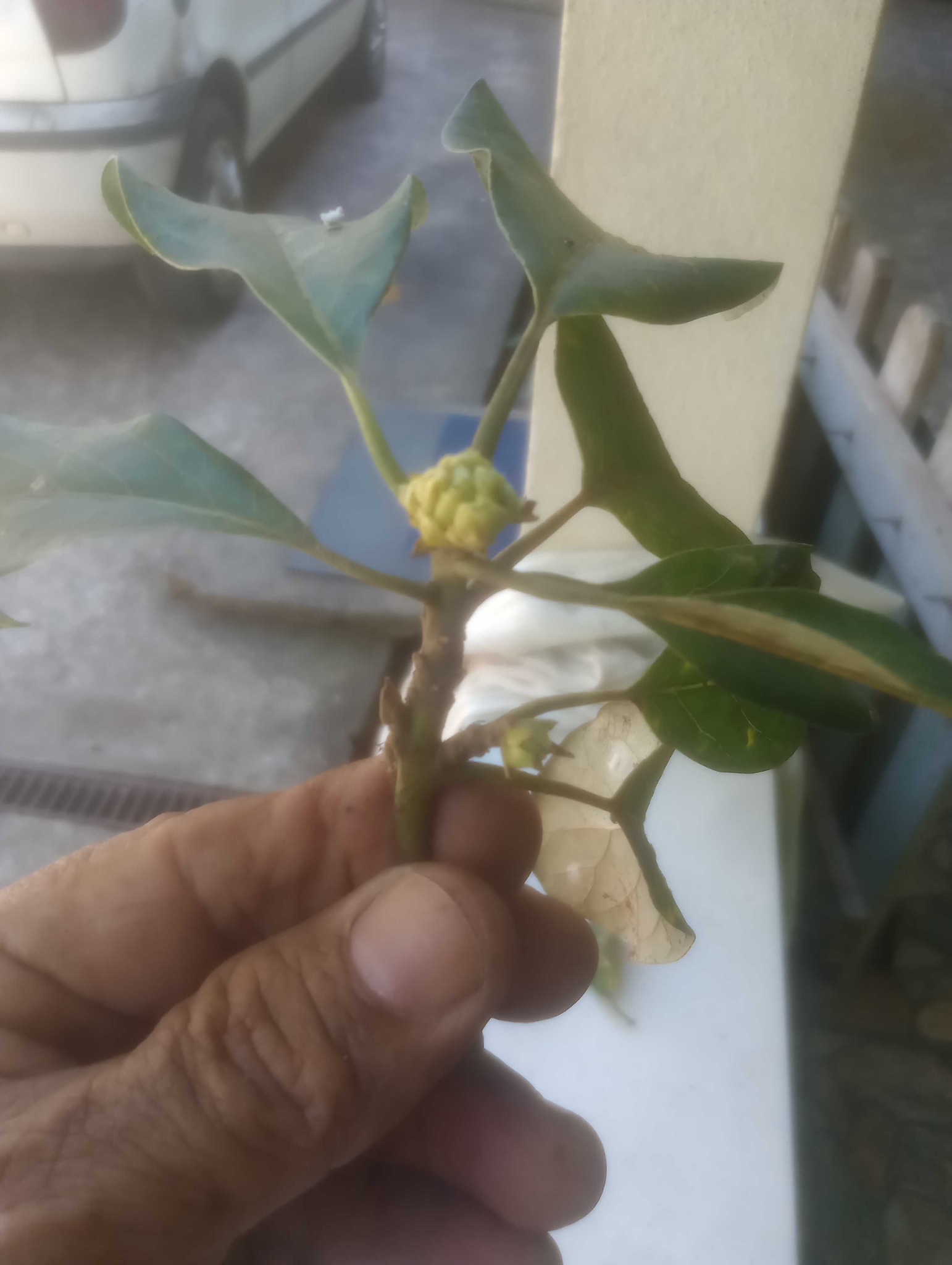
Noni
Morinda citrifolia
Small evergreen tree or shrub featuring broad, glossy, dark green elliptic leaves arranged in opposite pairs, with distinctive stipules and small, globular, multi-flowered heads that develop into irregular, fleshy syncarp fruits.
- Light
- Full sun to partial shade, approximately 6 to 8 hours of direct sunlight daily.
- Water
- Water regularly to keep the soil consistently moist but not waterlogged. Established plants have moderate drought tolerance, but prolonged dry spells will reduce foliage and yield. Avoid letting the plant sit in standing water.
- Growth
- Evergreen shrub or small tree growing typically between 3 to 10 meters in height with an upright, spreading growth habit and a moderate to fast growth rate.
Care instructions
Requires full sun to partial shade, regular and consistent watering while maintaining good drainage, rich loamy or sandy soils, and occasional balanced slow-release fertilizer during the active growing season.
Growing details
Sunlight
Full sun to partial shade, approximately 6 to 8 hours of direct sunlight daily.
Watering
Water regularly to keep the soil consistently moist but not waterlogged. Established plants have moderate drought tolerance, but prolonged dry spells will reduce foliage and yield. Avoid letting the plant sit in standing water.
Soil
Prefers well-draining sandy, loamy, or clay soils. Tolerates a wide range of soil pH from slightly acidic to slightly alkaline (pH 5.5 to 7.5).
Hardiness zone
USDA Hardiness Zones 10 through 12, highly sensitive to frost and freezing temperatures.
Growth habit
Evergreen shrub or small tree growing typically between 3 to 10 meters in height with an upright, spreading growth habit and a moderate to fast growth rate.
Bloom season
Blooms throughout the year in tropical climates, producing small, tubular, white flowers clustered in dense globular heads.
Propagation
Propagated easily from seeds extracted from mature fruits or through stem cuttings taken from healthy branches during active growth periods.
Common pests & issues
Generally resilient, but may occasionally be affected by scale insects, mealybugs, aphids, and root rot if grown in poorly draining, waterlogged soils.
Similar species
Morinda umbellata and other Morinda species, which can be distinguished by differences in leaf shape, inflorescence structure, and fruit morphology.