Rose of Sharon
Scientific Name: Hibiscus syriacus
Plant Family: Malvaceae
Native Region: East Asia (China and Korea)
Brief Description
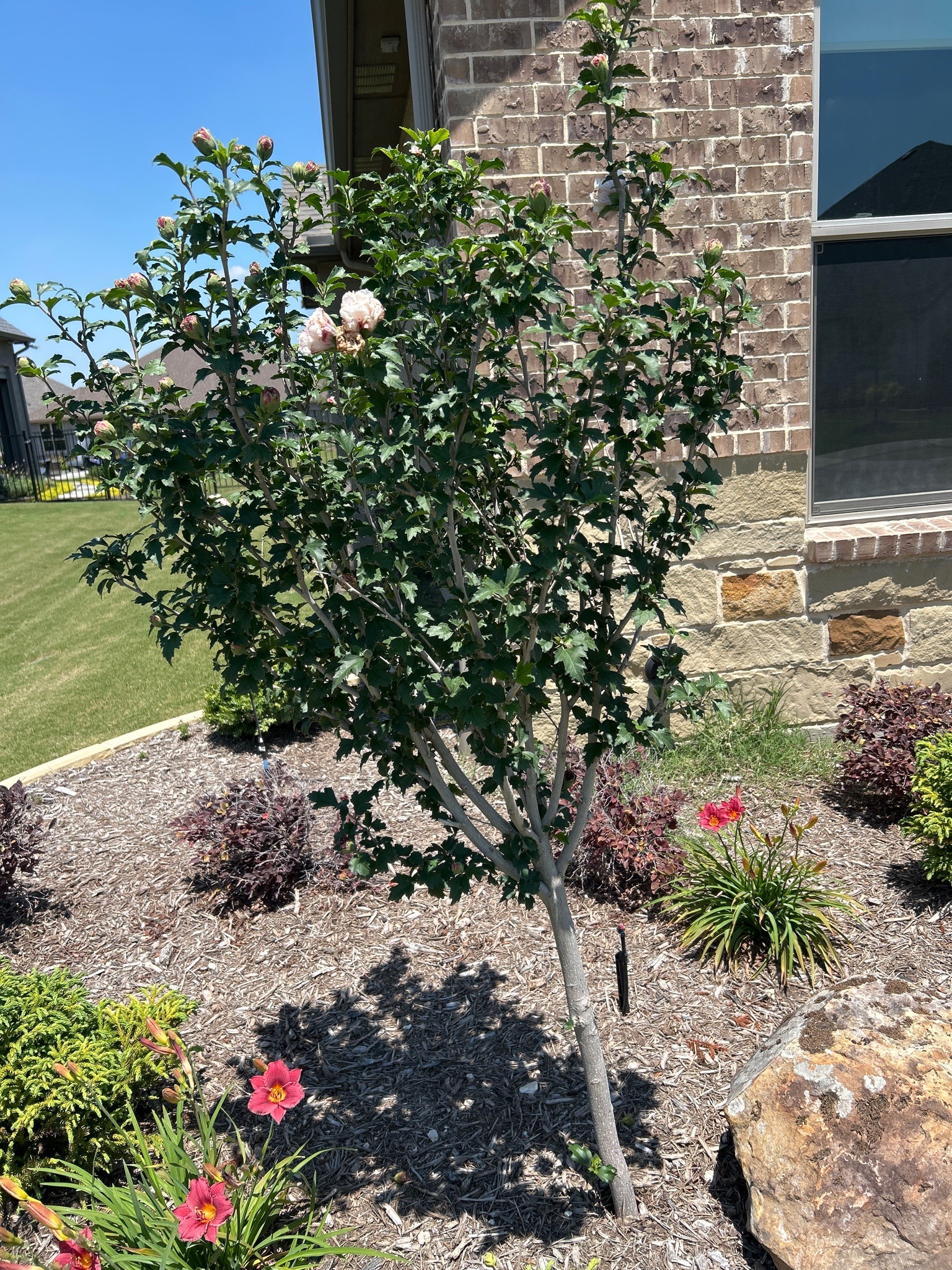
An upright, deciduous shrub or small tree with dark green, palmate-lobed leaves and large, trumpet-shaped flowers featuring prominent stamens. This specific specimen appears to be a double-flowered cultivar.
Care Instructions
Thrives in full sun and well-drained soil. Water regularly until established, and feed with a balanced fertilizer in early spring. Prune in late winter to maintain shape and encourage larger blooms.
Medicinal Value
We do not currently provide medicinal value for plant identifications.
Sunlight
Full sun (6+ hours per day) for best flowering, though it can tolerate light partial shade.
Watering
Moderate; requires regular watering to keep the soil moist but not soggy. It is moderately drought-tolerant once established but may drop buds if too dry.
Soil
Prefers rich, moist, well-draining soil with a pH of 5.5 to 7.5. Adapts well to various soil types including clay.
Hardiness Zone
USDA zones 5-9
Growth Habit
Deciduous upright shrub or trained as a small tree. Reaches 8-12 feet tall and 6-10 feet wide with a moderate growth rate.
Bloom Season
Summer to early Fall; flowers can be white, pink, red, purple, or blue, often with a contrasting dark 'eye' or double petals.
Toxicity
Generally considered non-toxic to humans, but the ASPCA lists Hibiscus syriacus as non-toxic to dogs and cats, though ingestion may cause mild digestive upset.
Propagation
Easily propagated by stem cuttings (softwood in summer or hardwood in winter) and by seed, though seeds may not come true to the parent cultivar.
Common Pests & Issues
Aphids, Japanese beetles, and whiteflies are common pests. Susceptible to leaf spot, rust, and canker if air circulation is poor or soil is overly wet.
Similar Species
Hibiscus rosa-sinensis (Tropical Hibiscus) has glossier leaves and is not cold hardy. Hibiscus moscheutos (Hardy Hibiscus) has much larger flowers and dies back to the ground in winter.
Interesting Facts
It is the national flower of South Korea. It is highly valued for its late-season bloom when many other flowering shrubs have finished for the year.
Created At: 2026-05-12T18:23:51.122047