
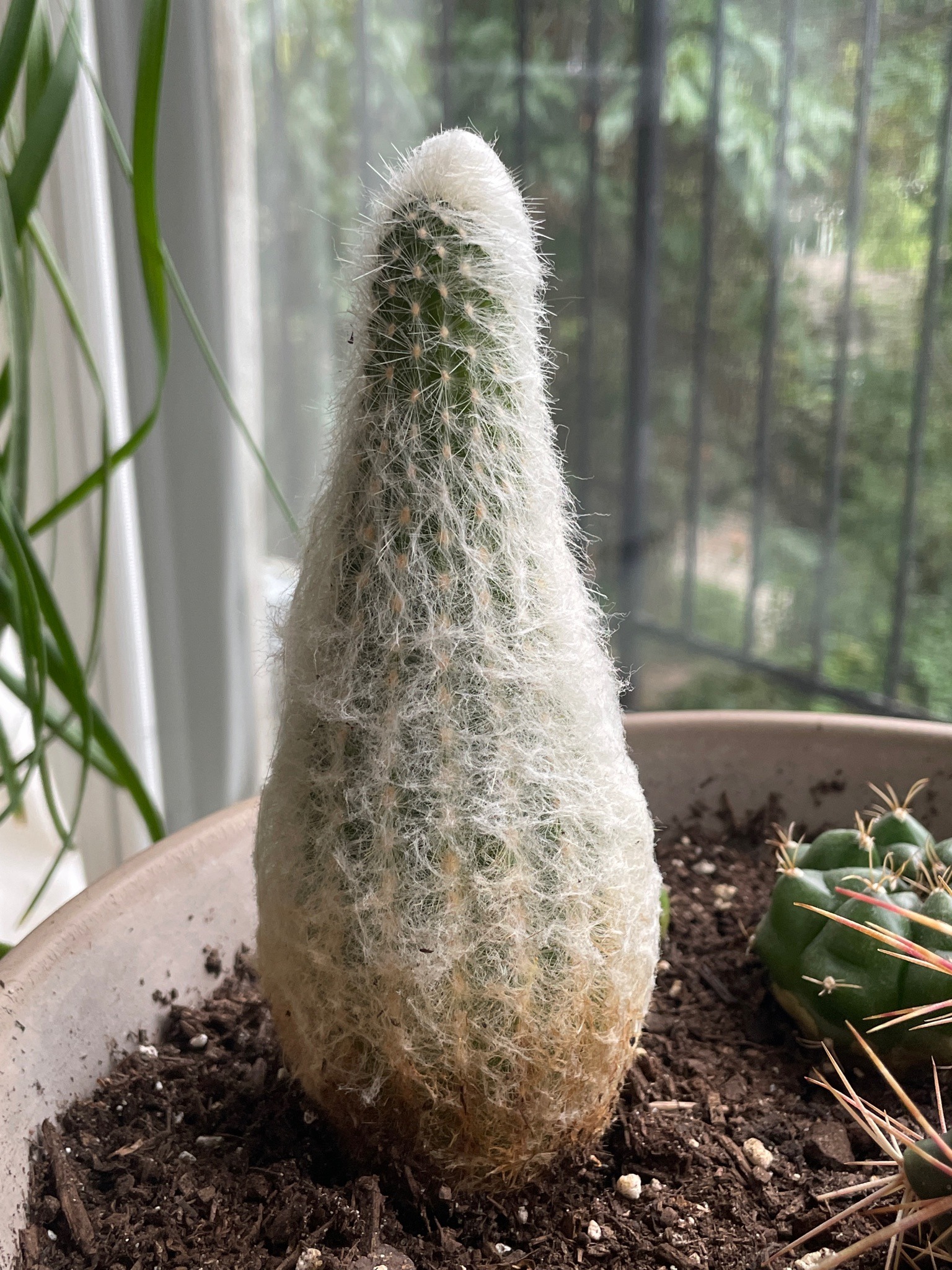
Old Man Cactus
Cephalocereus senilis
A tall, columnar cactus covered in long, white, wooly hairs that serve to protect the plant from high-altitude sunlight and frost.
- Light
- Full sun, requiring at least 6 to 8 hours of direct light per day for healthy hair growth and structure.
- Water
- Low water requirements. Water deeply once the soil is bone-dry. Reduce watering significantly in winter. Over-watering leads to root decay.
- Growth
- Slow-growing columnar perennial reaching up to 15 meters in its native habitat, though usually much smaller in cultivation.
Care instructions
Provide bright, direct light for most of the day. Water only when the soil is completely dry from top to bottom. Use a fast-draining cactus mix and fertilize sparingly during the spring and summer growing season.
Growing details
Sunlight
Full sun, requiring at least 6 to 8 hours of direct light per day for healthy hair growth and structure.
Watering
Low water requirements. Water deeply once the soil is bone-dry. Reduce watering significantly in winter. Over-watering leads to root decay.
Soil
Well-draining sandy or gritty cactus potting mix with a slightly acidic to neutral pH (6.0 to 7.0).
Hardiness zone
USDA zones 9b to 11; sensitive to prolonged frost and excessive humidity.
Growth habit
Slow-growing columnar perennial reaching up to 15 meters in its native habitat, though usually much smaller in cultivation.
Bloom season
Rarely flowers in cultivation; long-established specimens may produce nocturnal, funnel-shaped pink or yellow flowers in late spring or summer.
Propagation
Primarily through seeds or occasionally by stem cuttings, which must callus over for several weeks before planting.
Common pests & issues
Susceptible to mealybugs hiding in the wool and various types of rot if the environment is too humid or the soil stays wet.
Similar species
Espostoa lanata (Peruvian Old Man Cactus), which has sharper spines visible through its wool, and Oreocereus trollii (Old Man of the Andes).