
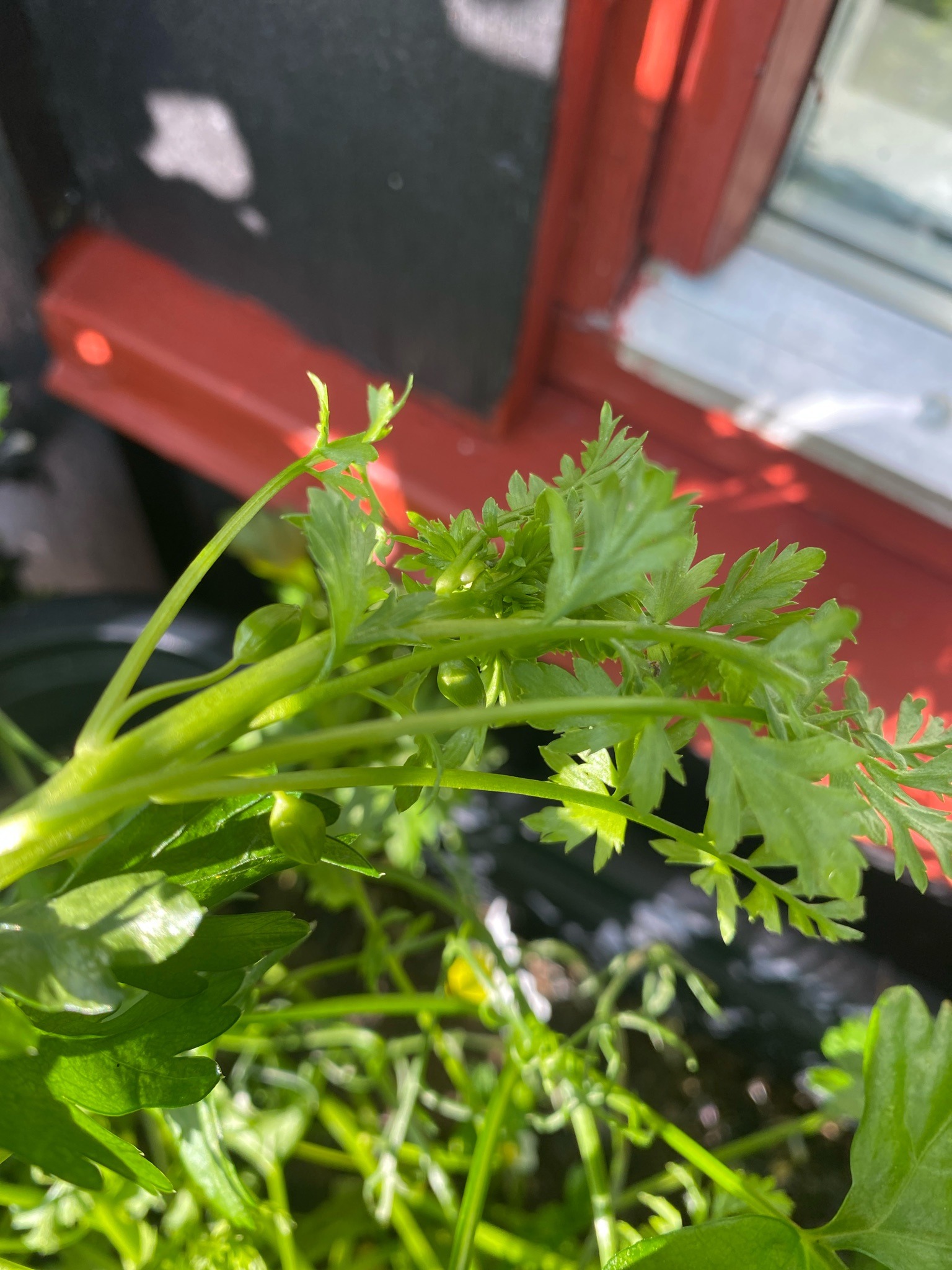
Parsley
Petroselinum crispum
A bright green, herbaceous plant characterized by deeply divided, finely toothed leaves and hollow stems, growing in a rosette or bushy clump.
- Light
- Full sun to partial shade, approximately 6 hours of direct sunlight daily
- Water
- Water deeply when the top inch of soil feels dry. Keep the soil evenly moist but not waterlogged.
- Growth
- Herbaceous biennial grown primarily as an annual, reaching a mature height and spread of 12 to 18 inches with a moderate growth rate
Care instructions
Provide full sun to partial shade with consistently moist, well-draining soil rich in organic matter. Water regularly to prevent drought stress, and apply a balanced liquid fertilizer every few weeks during the active growing season.
Growing details
Sunlight
Full sun to partial shade, approximately 6 hours of direct sunlight daily
Watering
Water deeply when the top inch of soil feels dry. Keep the soil evenly moist but not waterlogged.
Soil
Rich, loamy, well-draining soil with a neutral pH range between 6.0 and 7.0
Hardiness zone
USDA Hardiness Zones 5 through 9, grown as a biennial in temperate climates and annual elsewhere
Growth habit
Herbaceous biennial grown primarily as an annual, reaching a mature height and spread of 12 to 18 inches with a moderate growth rate
Bloom season
Blooms in summer during its second year, producing flat-topped umbels of small greenish-yellow flowers
Propagation
Propagated mainly through seeds sown directly in spring or started indoors; germination can be slow and is aided by soaking seeds in warm water beforehand
Common pests & issues
Susceptible to root rot in poorly draining soils, leaf spot, and common garden pests such as aphids and carrot rust fly larvae; prevent by ensuring good air circulation and proper soil drainage
Similar species
Chervil (Anthriscus cerefolium), which has softer, more delicate foliage, and various other members of the Apiaceae family that share similar finely divided compound leaves