
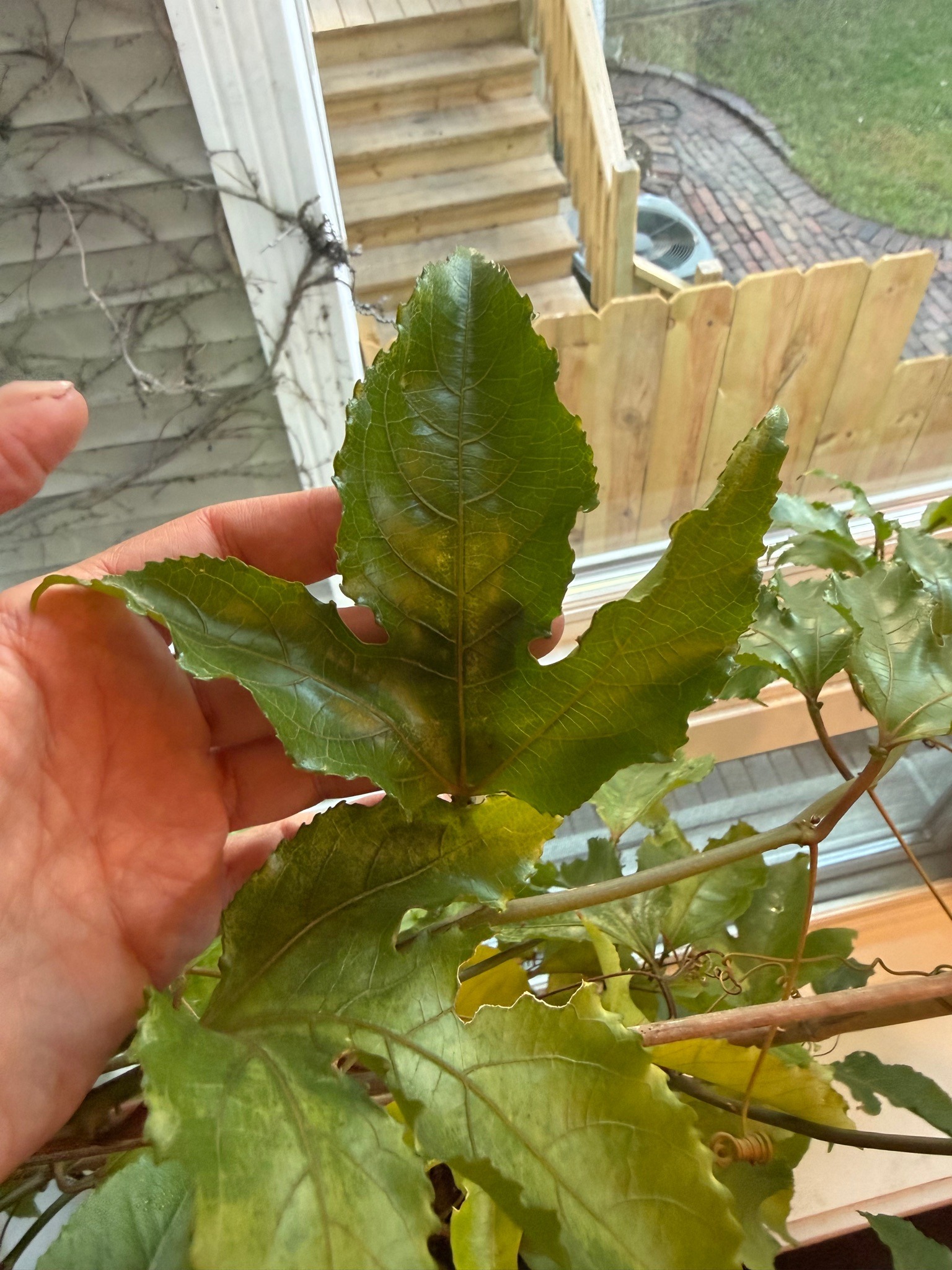
Passion Fruit Vine (Purple/Yellow)
Passiflora edulis
A vigorous evergreen climbing vine characterized by glossy green, typically three-lobed leaves with serrated edges and specialized tendrils for climbing.
- Light
- Full sun; requires 6 to 8 hours of direct light daily for fruit production.
- Water
- High water needs; water roughly 2-3 times per week, ensuring the surface is moist. Avoid letting it sit in standing water.
- Growth
- Perennial climbing vine; can grow 15-30 feet long with a rapid growth rate during warm months.
Care instructions
Provide a sturdy support for climbing. Place in a south-facing window with maximum light. Water consistently to keep soil moist but not waterlogged, and fertilize with a high-potassium feed during the growing season.
Growing details
Sunlight
Full sun; requires 6 to 8 hours of direct light daily for fruit production.
Watering
High water needs; water roughly 2-3 times per week, ensuring the surface is moist. Avoid letting it sit in standing water.
Soil
Rich, well-draining sandy loam with a slightly acidic to neutral pH (6.5 to 7.5).
Hardiness zone
USDA zones 9b-11; sensitive to frost and freezes.
Growth habit
Perennial climbing vine; can grow 15-30 feet long with a rapid growth rate during warm months.
Bloom season
Late spring through summer; produces complex white and purple fringed flowers followed by oval purple or yellow fruit.
Propagation
Easily propagated by semi-hardwood cuttings in summer or from fresh seeds, though seeds may take weeks to germinate.
Common pests & issues
Prone to spider mites and whiteflies indoors; root rot if overwatered. Fungal leaf spot can occur in high humidity without airflow.
Similar species
Passiflora incarnata (Maypop), which is much hardier (Zone 5+) and has thinner, more deeply lobed leaves.