
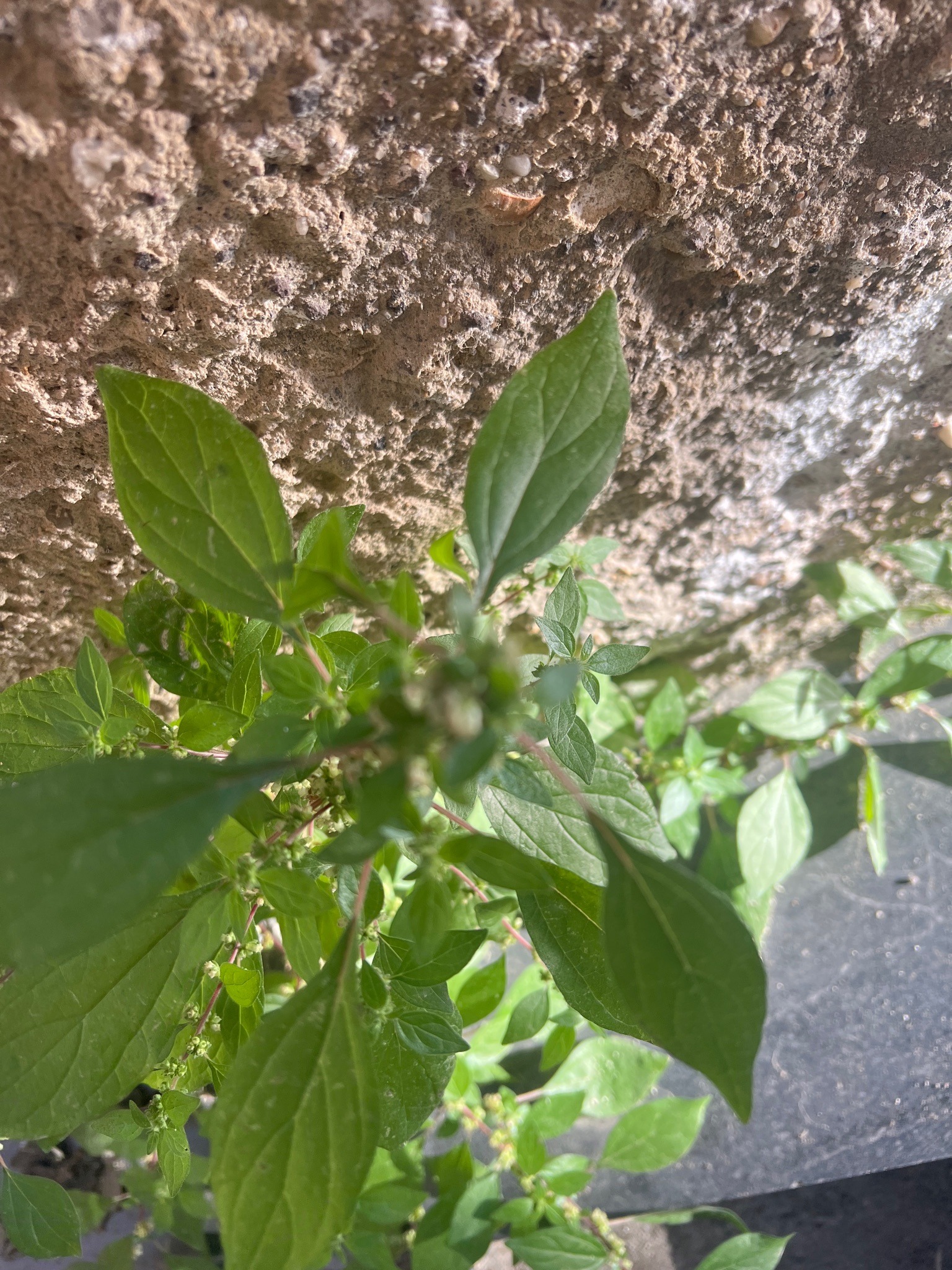
Pellitory-of-the-wall
Parietaria judaica
A spreading perennial herb that commonly grows in the crevices of walls and rocks. It has ovate, alternate leaves and small, greenish-white flowers clustered in the leaf axils. The stems are often pinkish or reddish.
- Light
- Partial shade to full sun; prefers sheltered, shaded spots against walls.
- Water
- Moderate; it is drought-tolerant once established but prefers consistent moisture in well-drained spots.
- Growth
- Perennial herb; spreading or decumbent growth; typically reaches 10-30 cm in height but can spread a meter wide.
Care instructions
This plant is generally considered a weed and requires little care. It thrives in cracks, walls, and rocky soils. For controlled growth, provide partial shade and moderate watering, but it is highly adaptable to poor conditions.
Growing details
Sunlight
Partial shade to full sun; prefers sheltered, shaded spots against walls.
Watering
Moderate; it is drought-tolerant once established but prefers consistent moisture in well-drained spots.
Soil
Well-drained, alkaline to neutral soils; frequently grows in mortar between bricks or in limestone crevices.
Hardiness zone
8-11
Growth habit
Perennial herb; spreading or decumbent growth; typically reaches 10-30 cm in height but can spread a meter wide.
Bloom season
Late spring to autumn (May to October); tiny, inconspicuous greenish-white clusters.
Propagation
Primarily by seed, which are sticky and can be carried by animals or wind; also through division of the rootstock.
Common pests & issues
Often regarded as an invasive weed; susceptible to aphids but generally very resilient against pests.
Similar species
Parietaria officinalis (Upright Pellitory) is similar but has a more erect growth habit and larger leaves. Green Alkanet (Pentaglottis sempervirens) has similar leaves but blue flowers.