
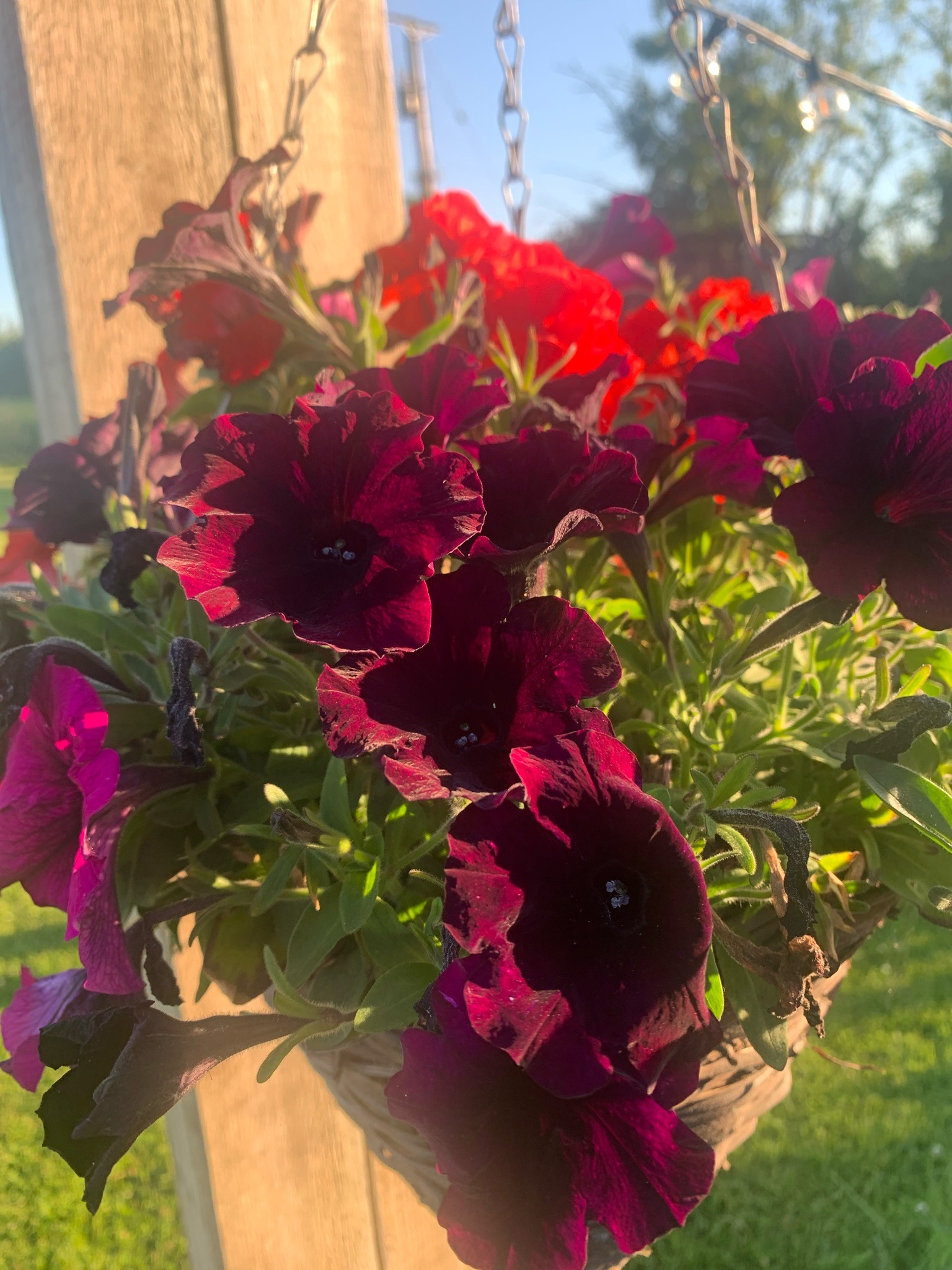
Petunia
Petunia × atkinsiana
Popular annual flowers known for their funnel-shaped blossoms and hairy, somewhat sticky foliage. These particular specimens show deep burgundy/purple velvety petals.
- Light
- Full sun, at least 6-8 hours per day
- Water
- Consistent moisture; water when the top inch of soil feels dry. Drought tolerant once established but blooms better with regular water.
- Growth
- Mounding or trailing annual; typically 6-18 inches tall and wide depending on variety.
Care instructions
Provide full sun and well-drained soil; water regularly but avoid waterlogging; feed weekly with a balanced water-soluble fertilizer; deadhead spent blooms to encourage new growth.
Growing details
Sunlight
Full sun, at least 6-8 hours per day
Watering
Consistent moisture; water when the top inch of soil feels dry. Drought tolerant once established but blooms better with regular water.
Soil
Well-draining, fertile soil with a slightly acidic pH (6.0 to 6.5).
Hardiness zone
Usually grown as annuals; perennial in USDA zones 9-11.
Growth habit
Mounding or trailing annual; typically 6-18 inches tall and wide depending on variety.
Bloom season
Spring until the first frost in autumn. Flowers are trumpet-shaped and available in almost every color.
Propagation
Easily propagated through softwood cuttings or seeds started indoors 10-12 weeks before the last frost.
Common pests & issues
Aphids, budworms, and fungal diseases like root rot or powdery mildew if overwatered or crowded.
Similar species
Calibrachoa (Million Bells) which have significantly smaller flowers and more heat tolerance.