
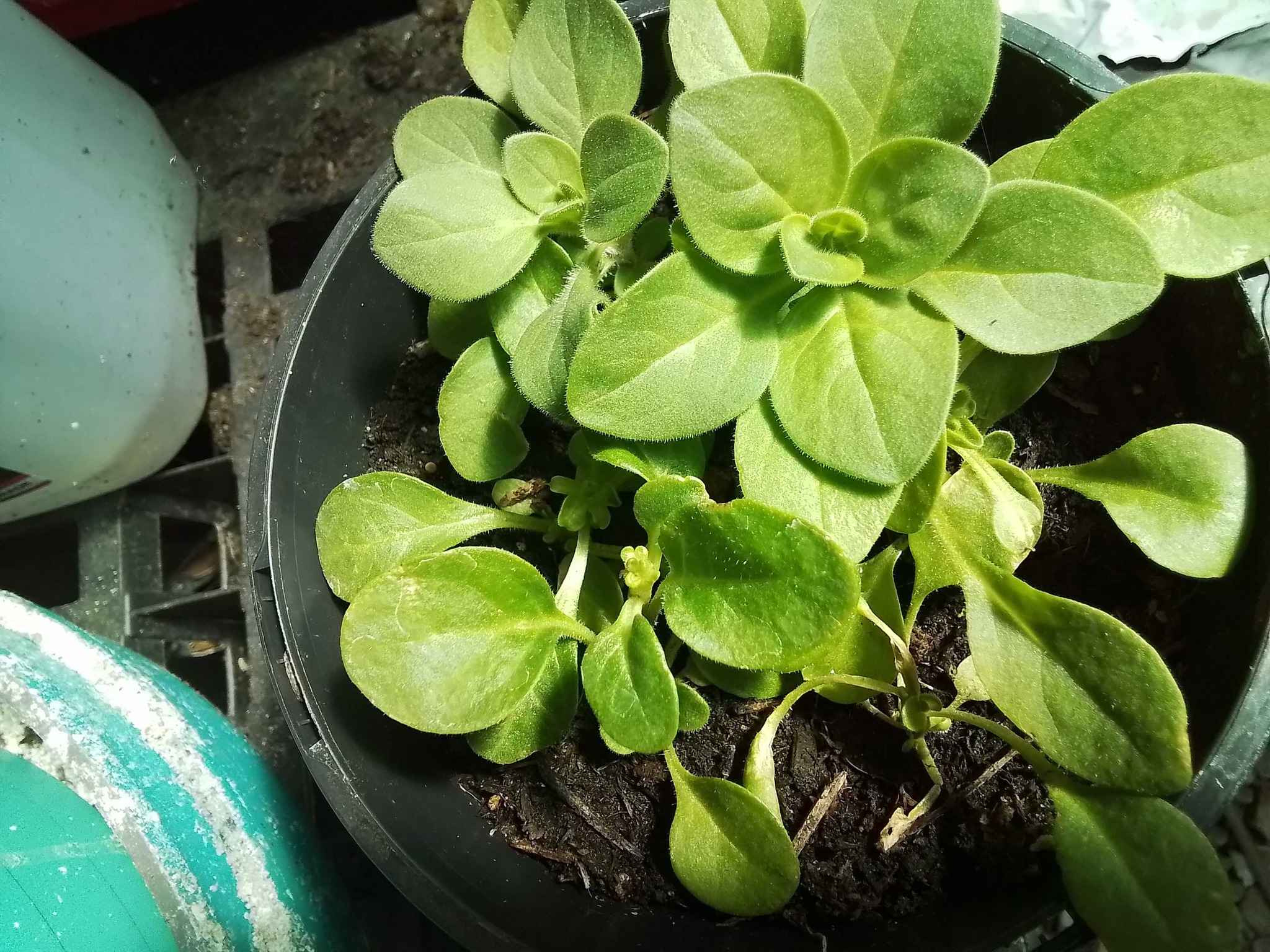
Petunia
Petunia × atkinsiana
Petunias are popular flowering plants known for their broad, trumpet-shaped flowers and slightly fuzzy, oval-to-heart-shaped green leaves that are often sticky to the touch.
- Light
- Full sun for at least 6 to 8 hours daily for maximum flower production.
- Water
- Moderate; water when the top inch of soil feels dry. They prefer consistent moisture but do not like 'wet feet' or soggy soil.
- Growth
- Mounding or trailing herbaceous annual; grows 6–18 inches tall and spreads 12–36 inches wide.
Care instructions
Petunias thrive in full sun and require well-draining soil. They need regular watering and frequent fertilization, especially during the peak blooming season. Deadheading spent blooms encourages continuous flowering.
Growing details
Sunlight
Full sun for at least 6 to 8 hours daily for maximum flower production.
Watering
Moderate; water when the top inch of soil feels dry. They prefer consistent moisture but do not like 'wet feet' or soggy soil.
Soil
Light, well-draining soil rich in organic matter with a pH of 6.0 to 7.0.
Hardiness zone
USDA zones 9-11 as perennials; typically grown as annuals elsewhere.
Growth habit
Mounding or trailing herbaceous annual; grows 6–18 inches tall and spreads 12–36 inches wide.
Bloom season
Spring through the first frost; flowers come in various colors including purple, pink, white, and red.
Propagation
Typically grown from seeds started indoors 10-12 weeks before frost, or via softwood cuttings in late summer.
Common pests & issues
Susceptible to aphids, slugs, and budworms; diseases include gray mold (botrytis), powdery mildew, and root rot if overwatered.
Similar species
Calibrachoa (Million Bells), which has smaller flowers and leaves and is not sticky; Surfinia, which is a specific brand of trailing petunia.