
Pine Tree
Pinus spp.
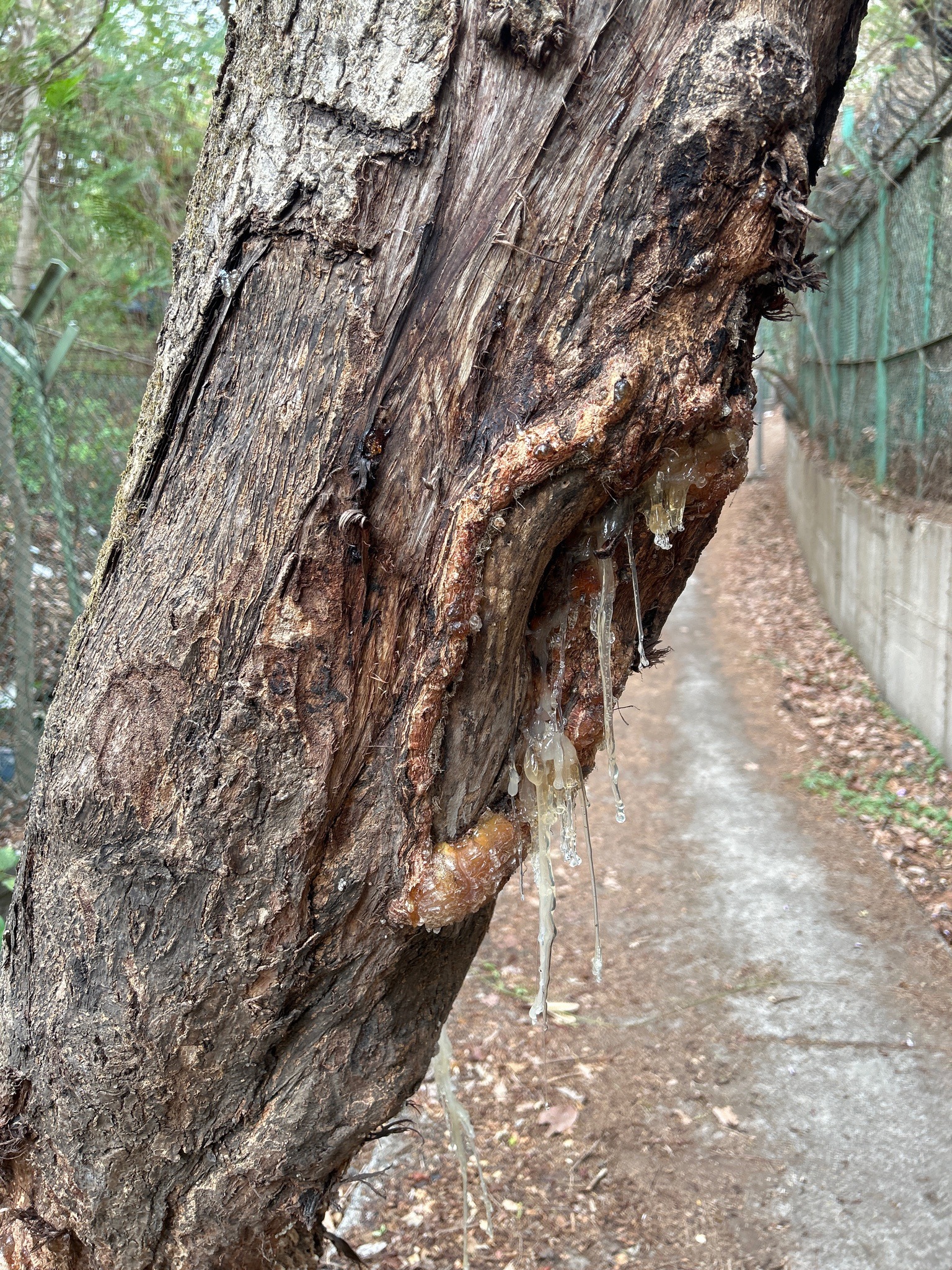
Pine trees are evergreen conifers characterized by needle-like leaves, woody cones, and resinous wood. The bark is typically thick, scaly, and deeply furrowed. A defining feature shown here is the production of amber-colored resin as a defense mechanism against injury or pests.
- Light
- Full sun (6+ hours of direct sunlight per day). They are typically shade-intolerant.
- Water
- Moderate; young trees need weekly watering. Established pines are drought-tolerant but may suffer during prolonged dry spells. Over-watering can lead to root rot.
- Growth
- Perennial evergreen tree; growth form ranges from conical to rounded. Mature height can range from 3 to 80 meters (10 to 260 feet).
Care instructions
Pines are low-maintenance once established. They require full sun and well-draining soil. Minimal pruning is needed unless removing dead wood. Young trees benefit from regular watering and occasional high-nitrogen fertilizer in early spring.
Growing details
Sunlight
Full sun (6+ hours of direct sunlight per day). They are typically shade-intolerant.
Watering
Moderate; young trees need weekly watering. Established pines are drought-tolerant but may suffer during prolonged dry spells. Over-watering can lead to root rot.
Soil
Prefer slightly acidic, well-draining sandy or loamy soils. They can tolerate poor soils but do not like heavy clay.
Hardiness zone
Zones 2-9 depending on the specific species.
Growth habit
Perennial evergreen tree; growth form ranges from conical to rounded. Mature height can range from 3 to 80 meters (10 to 260 feet).
Bloom season
Non-flowering (Gymnosperms); they produce male and female cones, typically in spring, to release pollen.
Propagation
Primarily through seeds (found in cones). Many species require cold stratification to germinate. Large-scale nurseries also use grafting for specific cultivars.
Common pests & issues
Susceptible to Pine Wilt disease, various rust fungi, and bark beetles. Resin flow (gummosis/pitching) is a natural response to these stressors.
Similar species
Spruce (Picea) and Fir (Abies). Pines are distinguished by needles that grow in clusters (fascicles) of 2 to 5, whereas Spruce and Fir needles grow singly on the branch.