
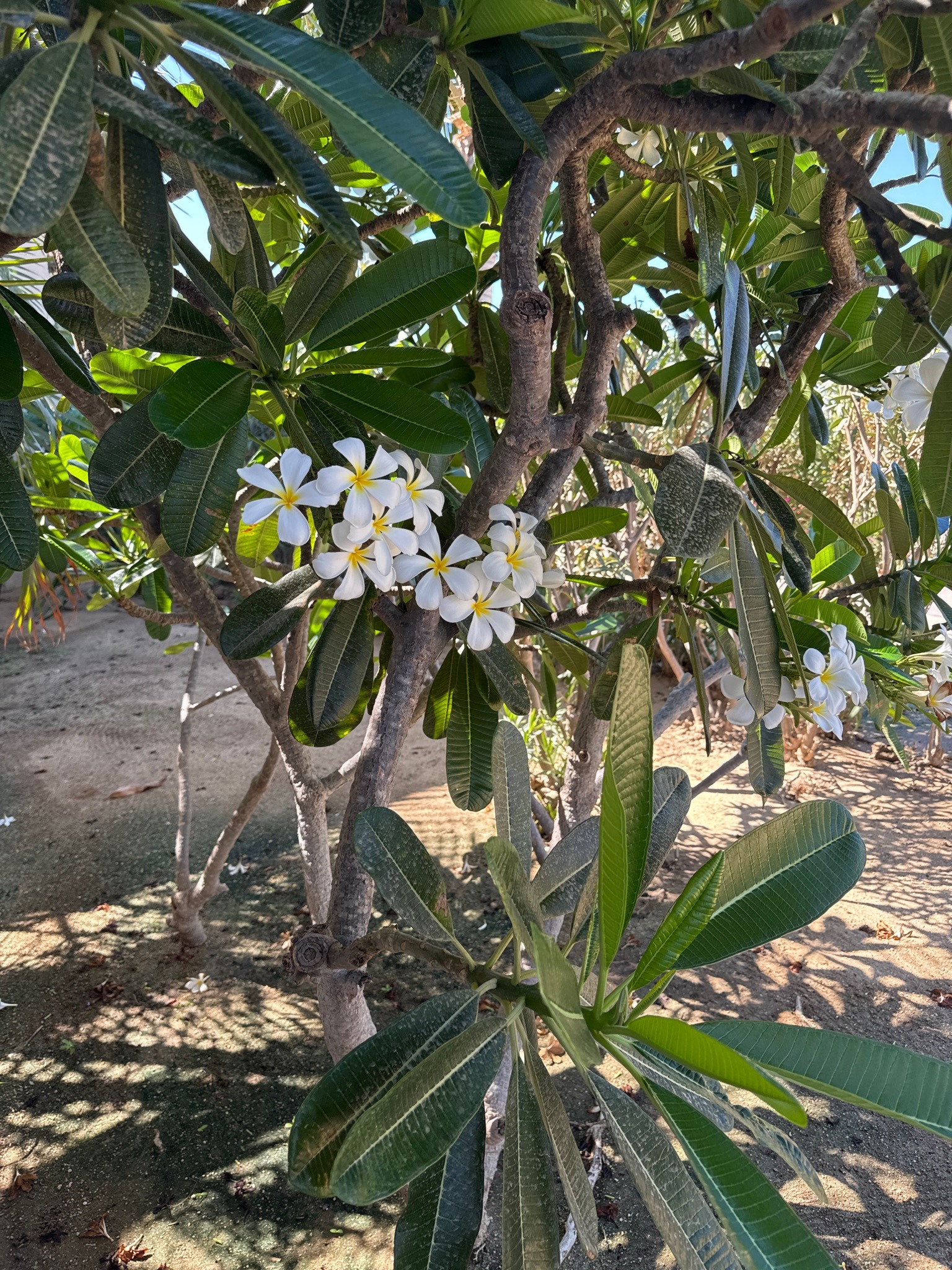
Plumeria
Plumeria obtusa
A small deciduous or semi-evergreen tree with thick, succulent branches and clusters of fragrant, five-petaled white flowers with yellow centers. The leaves are leathery, dark green, and obovate.
- Light
- Full sun, requiring at least 6 to 8 hours of direct sunlight per day for optimal flowering.
- Water
- Moderate during the growing season; allow the soil to dry out between waterings. Highly susceptible to root rot if overwatered or left in standing water.
- Growth
- Perennial small tree or large shrub reaching 15-25 feet in height with a similar spread. It has a broad, rounded canopy and slow to moderate growth rate.
Care instructions
Requires full sun for at least 6-8 hours a day and well-draining soil. Water deeply when the top few inches of soil are dry, but reduce watering significantly during the winter dormant period. Apply a high-phosphorus fertilizer during the blooming season.
Growing details
Sunlight
Full sun, requiring at least 6 to 8 hours of direct sunlight per day for optimal flowering.
Watering
Moderate during the growing season; allow the soil to dry out between waterings. Highly susceptible to root rot if overwatered or left in standing water.
Soil
Well-draining, slightly acidic soil, often a mix of cactus or citrus potting soil perlite, with a pH between 6.0 and 6.7.
Hardiness zone
USDA zones 10-12; very sensitive to frost and cold temperatures.
Growth habit
Perennial small tree or large shrub reaching 15-25 feet in height with a similar spread. It has a broad, rounded canopy and slow to moderate growth rate.
Bloom season
Primarily summer and autumn, featuring pinwheel-shaped white flowers with a yellow eye and a strong, sweet fragrance.
Propagation
Most commonly propagated via stem cuttings taken in spring or summer; seeds can also be used but take longer to reach maturity.
Common pests & issues
Susceptible to Plumeria rust (fungal disease), spider mites, whiteflies, and scale. Ensure good air circulation and avoid overhead watering to prevent rot and rust.
Similar species
Plumeria rubra, which typically has more pointed leaves and a wider variety of flower colors (pink, red, yellow). Plumeria pudica has distinctive spoon-shaped leaves.