Feverfew
Scientific Name: Tanacetum parthenium
Plant Family: Asteraceae (Daisy family)
Native Region: The Balkan Peninsula, Anatolia, and the Caucasus; now naturalized throughout Europe, North America, and Chile
Brief Description
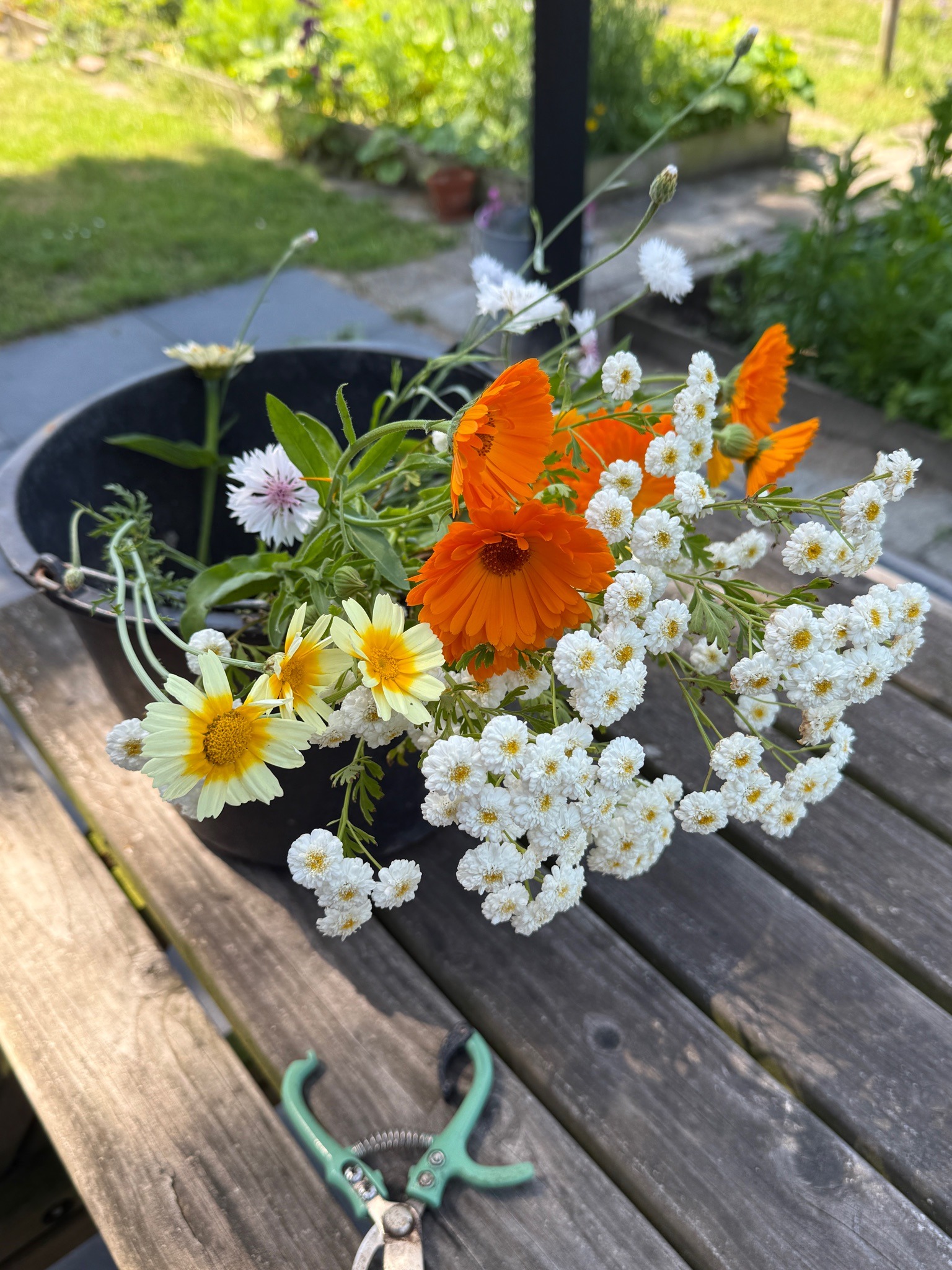
A bushy herbaceous perennial featuring small, white, daisy-like flowers with yellow centers (or fully white double-petaled varieties like shown) and aromatic, feathery, lime-green foliage.
Care Instructions
Low-maintenance. Plant in full sun with well-draining soil. Water regularly until established, then it becomes fairly drought-tolerant. Cut back after flowering to encourage a second flush and prevent excessive self-seeding.
Medicinal Value
We do not currently provide medicinal value for plant identifications.
Sunlight
Full sun (at least 6 hours of direct sunlight per day)
Watering
Moderate; water when the top inch of soil feels dry. It is relatively drought-tolerant once mature but dislikes waterlogged soil.
Soil
Well-drained, sandy or loamy soil with a neutral to slightly acidic pH (6.0 to 7.0).
Hardiness Zone
USDA zones 5-10
Growth Habit
Perennial herb with a clumping habit; typically grows 30-60 cm (1-2 ft) tall and wide.
Bloom Season
Early summer to late summer; produces clusters of small white pom-pom or daisy-shaped flowers.
Toxicity
Generally non-toxic to humans but may cause dermatitis or mouth ulcers. Toxic to cats, dogs, and horses if ingested in large quantities, leading to digestive upset.
Propagation
Easily propagated by seed sown in spring, by stem cuttings in summer, or by division of the root clump in spring or fall.
Common Pests & Issues
Aphids and spider mites are common pests. Susceptible to powdery mildew if air circulation is poor.
Similar Species
Chamomile (Matricaria chamomilla) which has more finely dissected leaves and a different scent, or common Daisies (Bellis perennis).
Interesting Facts
The name 'Feverfew' is derived from the Latin 'febrifugia,' meaning 'fever-driver.' It was traditionally planted near houses to purify the air and ward off disease.
User Notes
Welke witte plant is dit
Created At: 2026-06-25T12:34:20.664683