
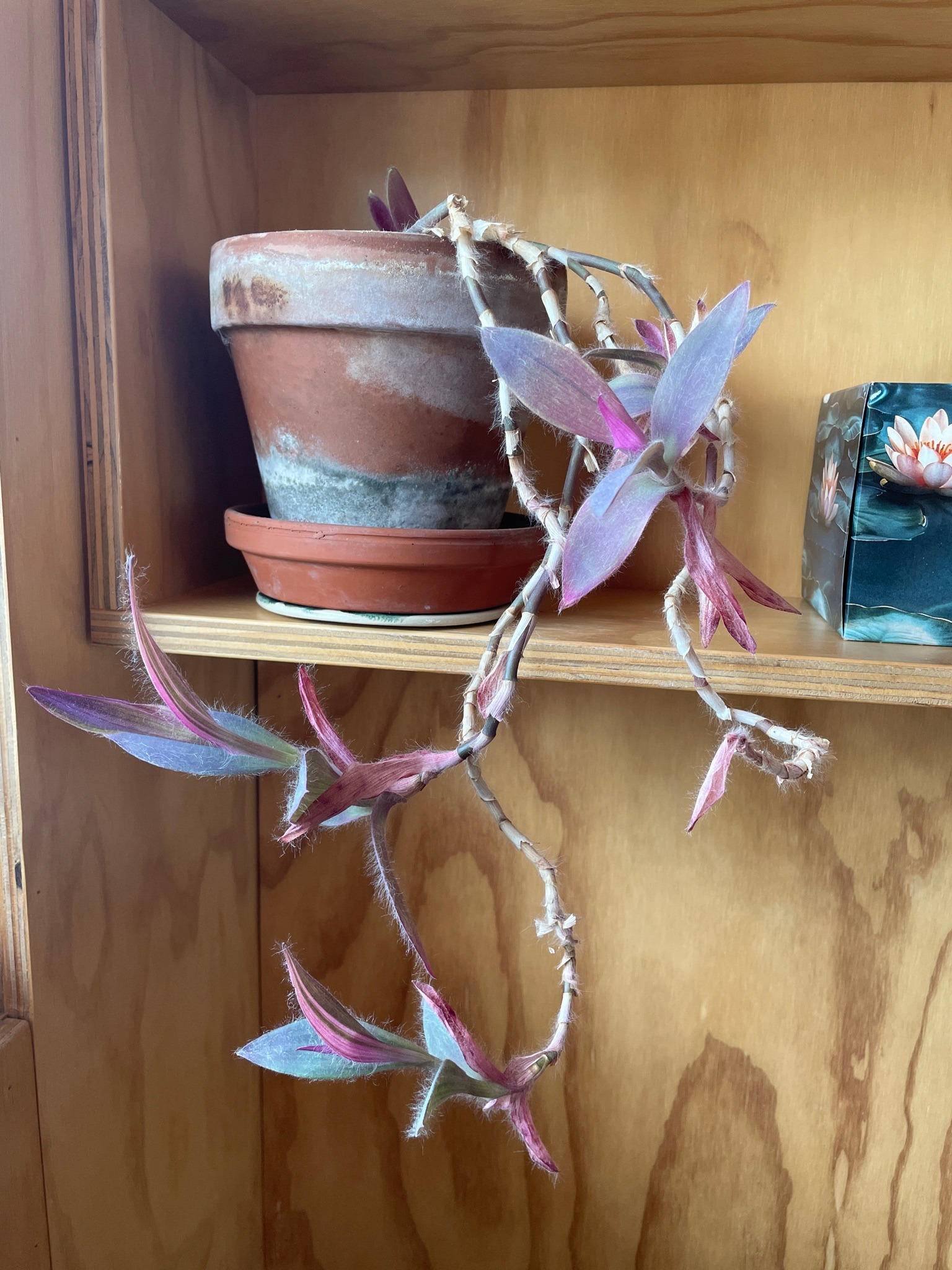
Purple Heart
Tradescantia pallida
A trailing perennial characterized by its striking deep purple, lance-shaped leaves and fleshy, succulent-like stems. The leaves and stems are covered in fine, pale hairs.
- Light
- Full sun to bright, indirect light; at least 6 hours of bright light daily is needed to prevent leggy growth and maintain purple pigment.
- Water
- Allow the soil to partially dry out between waterings. It is drought-tolerant once established. Overwatering leads to root rot; yellowing leaves can indicate excess moisture.
- Growth
- Perennial evergreen herb with a trailing or ground-spreading habit, reaching 8-12 inches high and spreading several feet.
Care instructions
Provide bright light to maintain deep color. Water when the top inch of soil is dry. Use well-draining potting mix and feed monthly during the growing season with a balanced fertilizer.
Growing details
Sunlight
Full sun to bright, indirect light; at least 6 hours of bright light daily is needed to prevent leggy growth and maintain purple pigment.
Watering
Allow the soil to partially dry out between waterings. It is drought-tolerant once established. Overwatering leads to root rot; yellowing leaves can indicate excess moisture.
Soil
Well-draining, lightweight potting soil; prefers a neutral pH between 6.0 and 8.0.
Hardiness zone
USDA zones 7-11; can survive light frosts but prefers temperatures above 50°F (10°C).
Growth habit
Perennial evergreen herb with a trailing or ground-spreading habit, reaching 8-12 inches high and spreading several feet.
Bloom season
Produces small, three-petaled pink or pale purple flowers throughout the summer, though they typically open only in the morning.
Propagation
Easily propagated by stem cuttings placed in water or directly into moist soil; roots develop quickly at the nodes.
Common pests & issues
Susceptible to aphids, mealybugs, and spider mites. Legginess occurs if light is too low; pinch back stems to encourage bushier growth.
Similar species
Tradescantia zebrina (Inch Plant), which has striped silver and purple leaves, and Tradescantia sillamontana (Cobweb Spiderwort), which has thicker white woolly hairs.