
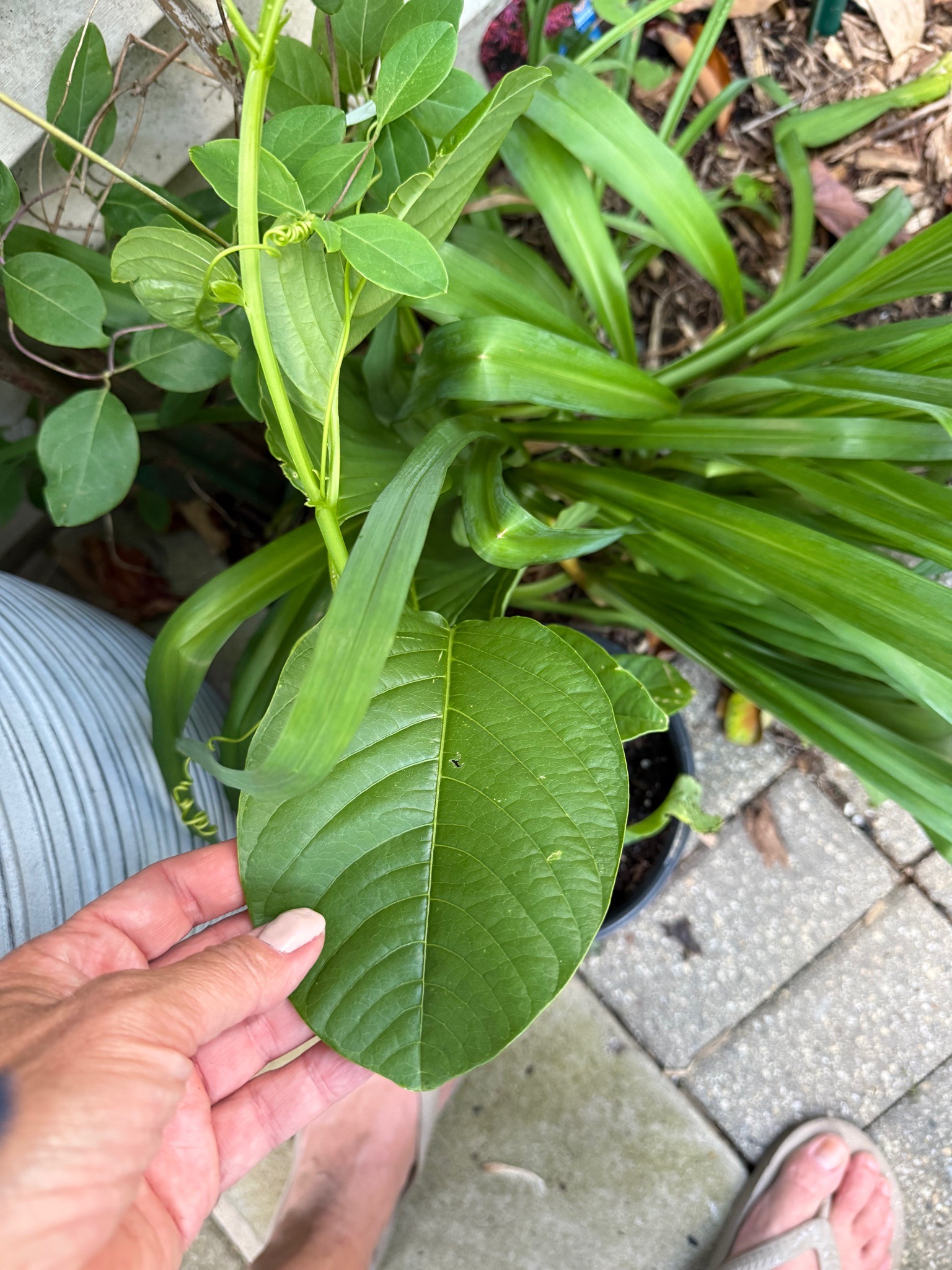
Purple Passionfruit
Passiflora edulis
A vigorous, climbing evergreen vine known for its complex, exotic flowers and delicious purple fruit. It features glossy green, usually three-lobed leaves (though young leaves can be unlobed) and climbing tendrils.
- Light
- Full sun, requiring at least 6 to 8 hours of direct light per day for best fruit production.
- Water
- Regular and consistent watering is essential, especially when fruiting. Avoid waterlogging; water when the top inch of soil feels dry.
- Growth
- Perennial evergreen vine; can grow 15 to 30 feet long with a spreading habit using tendrils to climb.
Care instructions
Provide a sturdy trellis for climbing. Place in a warm, sunny spot protected from wind. Water regularly to keep soil moist but not soggy, and feed with a balanced fertilizer during the growing season.
Growing details
Sunlight
Full sun, requiring at least 6 to 8 hours of direct light per day for best fruit production.
Watering
Regular and consistent watering is essential, especially when fruiting. Avoid waterlogging; water when the top inch of soil feels dry.
Soil
Well-draining, fertile soil rich in organic matter. Prefers a slightly acidic to neutral pH (5.5 to 6.5).
Hardiness zone
9-11 (USDA). It is frost-sensitive and may die back to the ground in zone 9.
Growth habit
Perennial evergreen vine; can grow 15 to 30 feet long with a spreading habit using tendrils to climb.
Bloom season
Spring to autumn. Produces 2-3 inch wide white flowers with a prominent purple filamentous corona.
Propagation
Easily propagated by seed (though variability occurs) or by softwood cuttings to ensure identical fruit quality.
Common pests & issues
Prone to Fusarium wilt, root-knot nematodes, and pests like aphids, spider mites, and gulf fritillary butterfly caterpillars.
Similar species
Maypop (Passiflora incarnata) which is more cold-hardy and has more deeply serrated leaves; Giant Granadilla (Passiflora quadrangularis) which has winged stems.