California Sagebrush
Scientific Name: Artemisia californica
Plant Family: Asteraceae
Native Region: Coastal California and northwestern Baja California
Brief Description
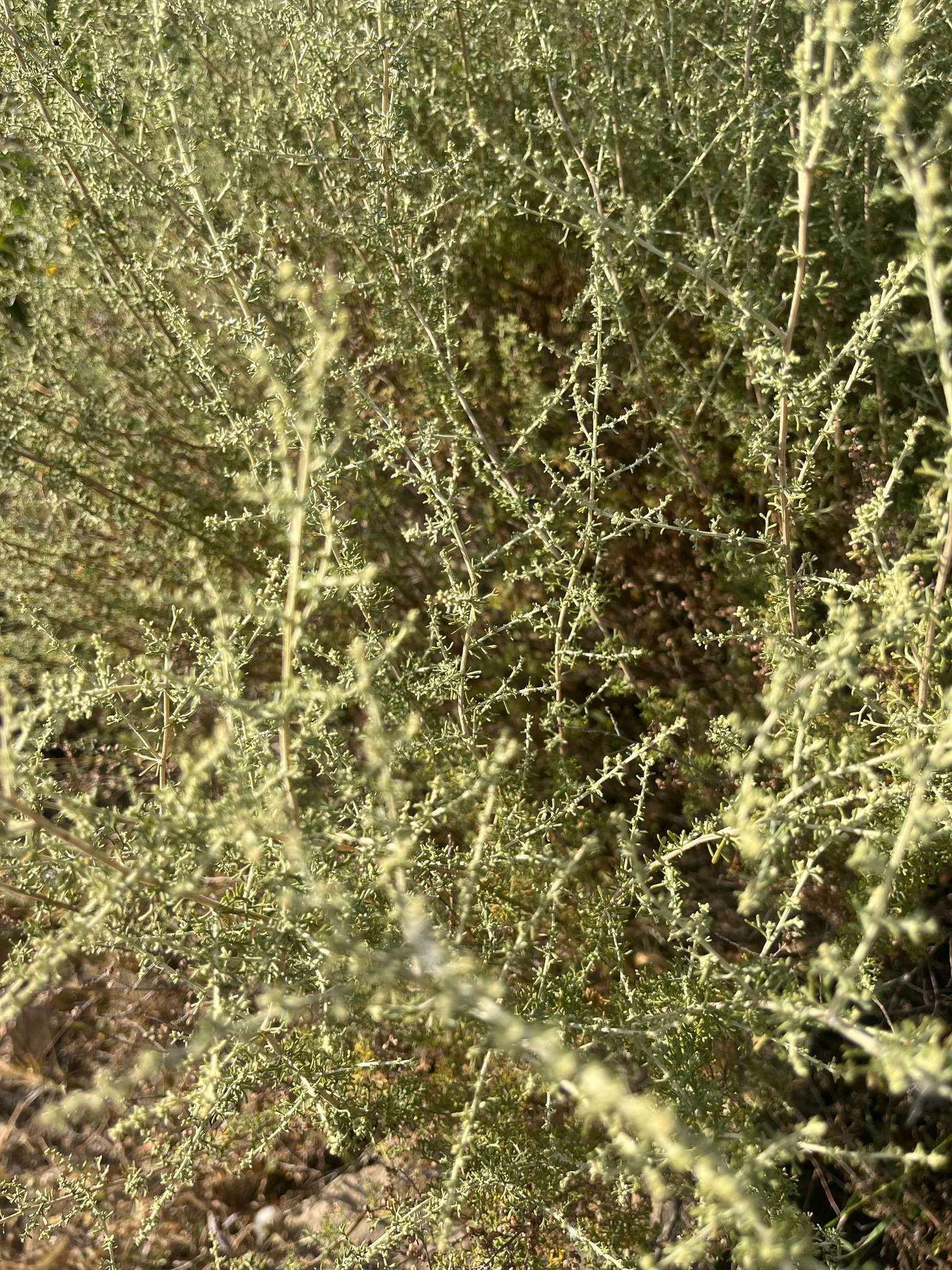
A silver-green, aromatic shrub with fine, thread-like leaves that are deeply divided into needle-like segments. It is a key member of the coastal sage scrub community.
Care Instructions
Requires full sun and excellent drainage. Water sparingly once established, as it is highly drought-tolerant. Avoid heavy fertilizers and rich soils.
Medicinal Value
We do not currently provide medicinal value for plant identifications.
Sunlight
Full sun, at least 6-8 hours per day
Watering
Low; very drought-tolerant. Established plants rarely need water except in extreme drought. Overwatering leads to root rot.
Soil
Well-draining sandy or rocky soils; pH 6.0-8.5.
Hardiness Zone
7-11
Growth Habit
Perennial shrub, 2-5 feet tall and wide; moderate to fast growth rate.
Bloom Season
Late summer to fall; small, inconspicuous yellowish flower heads.
Toxicity
Low toxicity to humans/pets, but contains thujone which is toxic in large quantities if ingested.
Propagation
Propagated by seeds in fall or softwood cuttings in late winter/early spring.
Common Pests & Issues
Root rot from poor drainage; occasionally susceptible to aphids or scale.
Similar Species
Artemisia tridentata (Big Sagebrush) has broader, three-toothed leaves whereas A. californica has fine, thin leaves.
Interesting Facts
Despite its common name, it is not a 'true' sage (Salvia) but a member of the sunflower family; it is highly flammable due to its essential oils.
Created At: 2026-05-17T10:17:45.240818