Yaupon Holly
Scientific Name: Ilex vomitoria
Plant Family: Aquifoliaceae
Native Region: Southeastern United States, from Virginia south to Florida and west to Texas and Oklahoma.
Brief Description
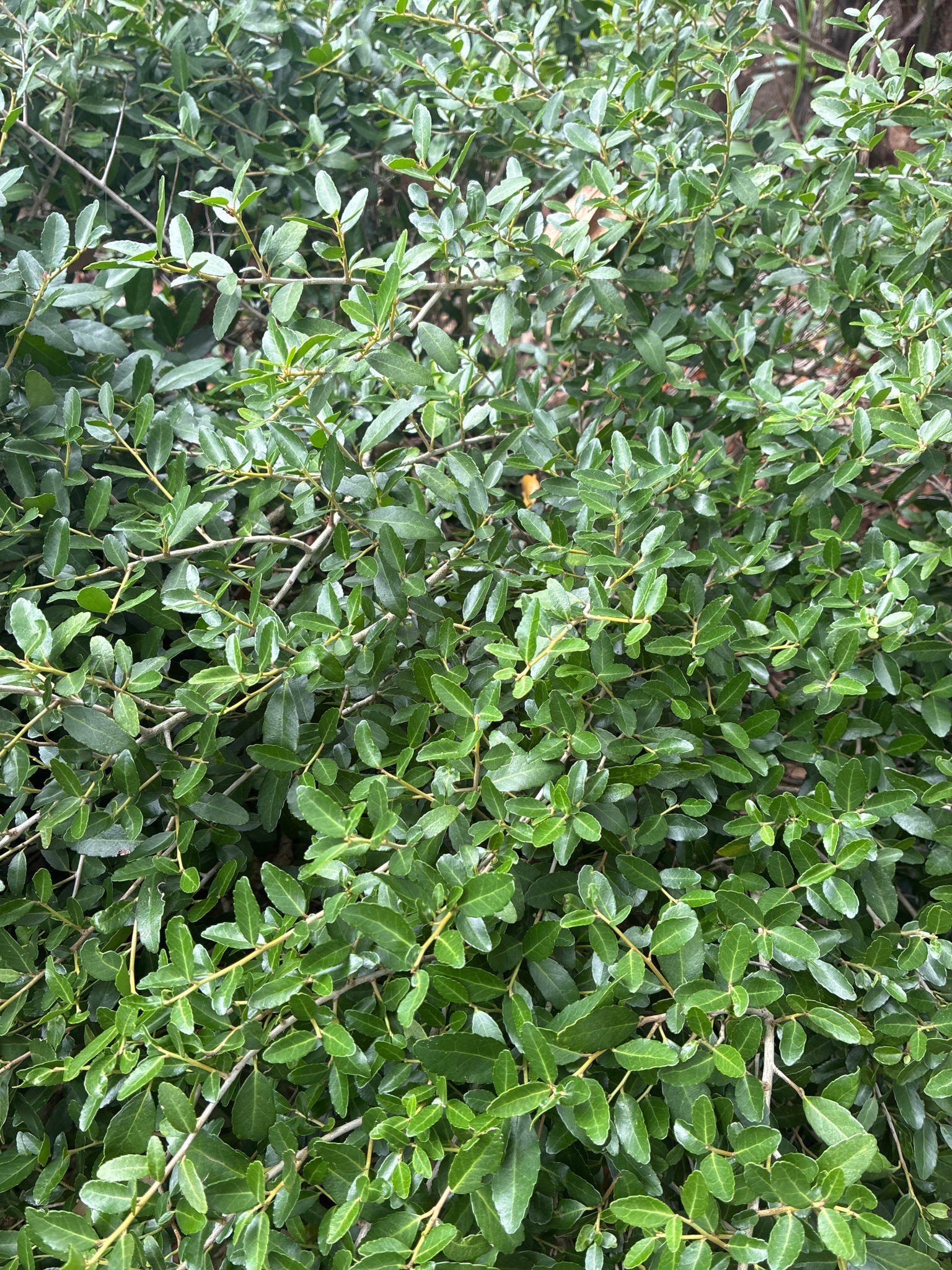
A versatile evergreen shrub or small tree known for its dense, twiggy growth and small, leathery, dark green oval leaves with slightly serrated edges. Female plants produce bright red berries in autumn and winter.
Care Instructions
Yaupon is incredibly hardy and adaptable. Provide full sun to partial shade. It tolerates many soil types, including sandy or clay soils. Water regularly until established, after which it is moderately drought-tolerant. Pruning is best done in late winter.
Medicinal Value
We do not currently provide medicinal value for plant identifications.
Sunlight
Full sun to partial shade (4-6+ hours of sunlight daily). More sun results in denser foliage and more berries.
Watering
Moderate. Requires regular watering for the first year. Mature plants are drought-tolerant but prefer consistent moisture. Over-watering in poorly drained soil may cause root rot.
Soil
Adaptable to acidic, neutral, or alkaline soils; thrives in well-drained loamy, sandy, or clay soils. pH 5.0 to 8.0.
Hardiness Zone
7 through 9 (USDA).
Growth Habit
Perennial evergreen shrub or small tree. Cultivars range from 2-foot dwarfs to 20-foot upright trees. Growth rate is moderate.
Bloom Season
Small, inconspicuous white flowers appear in spring (April-May). Female plants produce red (occasionally yellow) spherical drupes in late fall/winter.
Toxicity
Low toxicity to humans if berries are ingested (may cause stomach upset). Caffeine in leaves is high. Berries are toxic to dogs and cats, causing vomiting and diarrhea.
Propagation
Propagated by semi-hardwood cuttings in summer, or by seeds (which require long stratification and can take years to germinate).
Common Pests & Issues
Relatively pest-free, but may occasionally suffer from leaf miners, scale, or aphids. Leaf spot or powdery mildew can occur in high humidity with poor airflow.
Similar Species
Dwarf Burford Holly (Ilex cornuta) has larger, more spined leaves. Boxwood (Buxus) has opposite leaves, whereas Yaupon has alternate leaves.
Interesting Facts
The species name 'vomitoria' refers to the historical misconception that the tea made from its leaves induced vomiting; it was actually other ingredients or the quantity consumed in rituals that caused the effect.
Created At: 2026-05-30T17:44:43.463440