White Clover
Scientific Name: Trifolium repens
Plant Family: Fabaceae (Legume family)
Native Region: Native to Europe and Central Asia; widely naturalized in North America, Australasia, and Africa
Brief Description
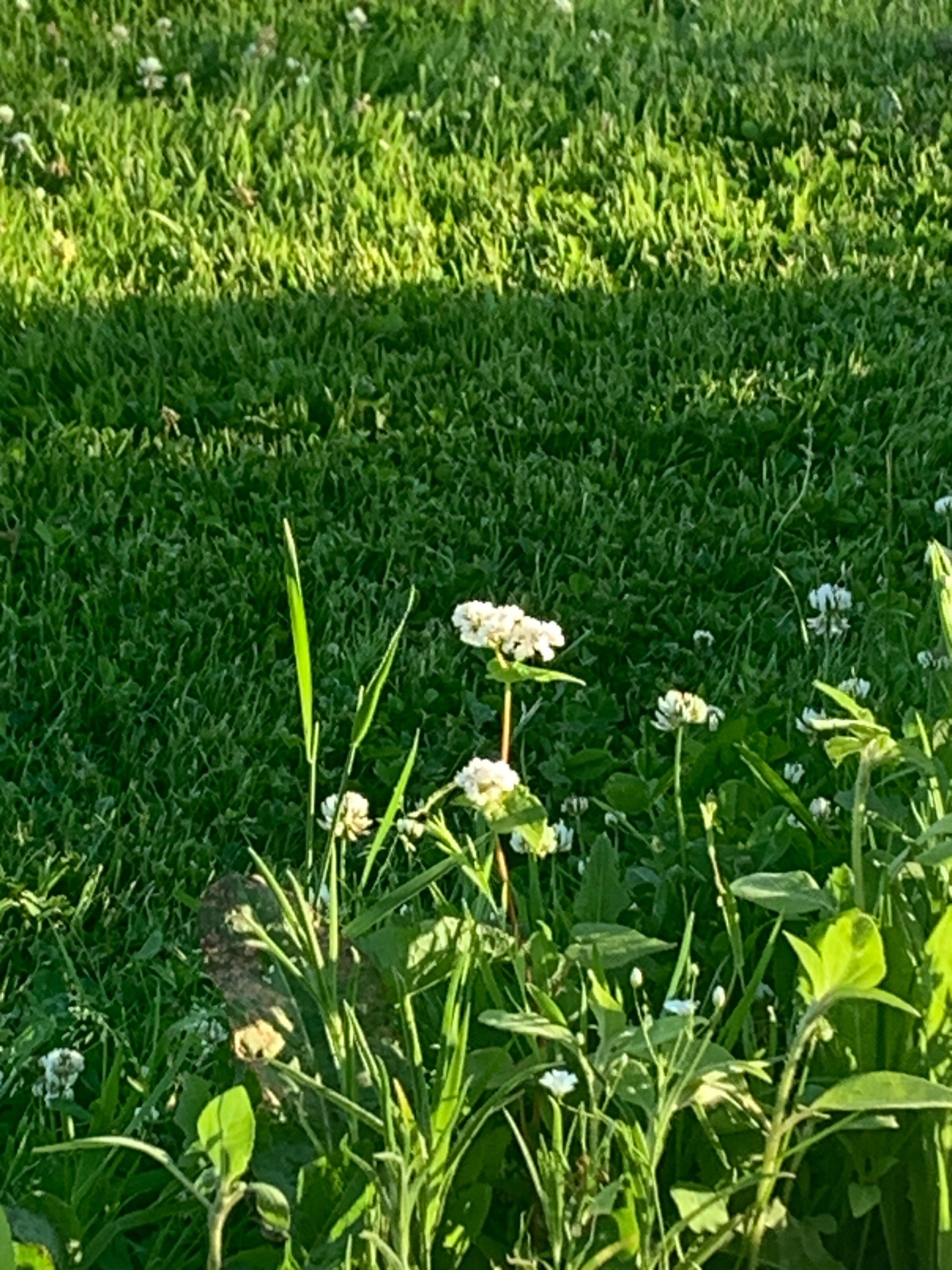
A low-growing perennial herb with creeping stems (stolons) that root at the nodes. It is easily identified by its trifoliate leaves (three leaflets) often marked with a white 'V' or 'crescent' and its globular white flower heads.
Care Instructions
Extremely low maintenance. It thrives in sunny spots with regular moisture but can tolerate poor soil due to its nitrogen-fixing capabilities. No fertilizer is usually needed as it provides its own nitrogen.
Medicinal Value
We do not currently provide medicinal value for plant identifications.
Sunlight
Full sun to partial shade (4-6+ hours of sunlight per day)
Watering
Moderate watering needs. It is somewhat drought-tolerant once established but performs best with consistent moisture. Signs of underwatering include wilting and leaf curling.
Soil
Adaptable to many soil types but prefers moist, well-draining loamy or clay soils with a pH between 6.0 and 7.0.
Hardiness Zone
USDA zones 3 through 10
Growth Habit
Perennial; creeping/prostrate growth form using stolons. Reaches 4-6 inches in height but can spread indefinitely as a groundcover.
Bloom Season
Primarily blooms from late spring through fall; flowers are white or pinkish-tinged globose heads made of many small tubular florets.
Toxicity
Generally non-toxic to humans and pets in small quantities. However, it can contain cyanogenic glycosides which can be toxic to livestock (especially horses/cattle) if consumed in large quantities under specific conditions (like frost or drought).
Propagation
Propagates easily by seed or by division of the creeping stolons that naturally root in the soil.
Common Pests & Issues
Generally pest-resistant, but can be affected by slugs, clover mites, or powdery mildew in very humid or wet conditions. Often considered a 'weed' in manicured grass lawns.
Similar Species
Red Clover (Trifolium pratense) which is taller with larger pink/purple flowers; Strawberry Clover (Trifolium fragiferum) which has more pinkish, raspberry-like seed heads.
Interesting Facts
White clover is a major nectar source for honeybees. The rare four-leaf clover is a genetic mutation of this species, traditionally considered a symbol of good luck.
Created At: 2026-06-23T19:08:15.902137