Scots Pine (Seedling)
Scientific Name: Pinus sylvestris
Plant Family: Pinaceae
Native Region: Eurasia, ranging from Western Europe to Eastern Siberia, south to the Caucasus Mountains, and north to inside the Arctic Circle.
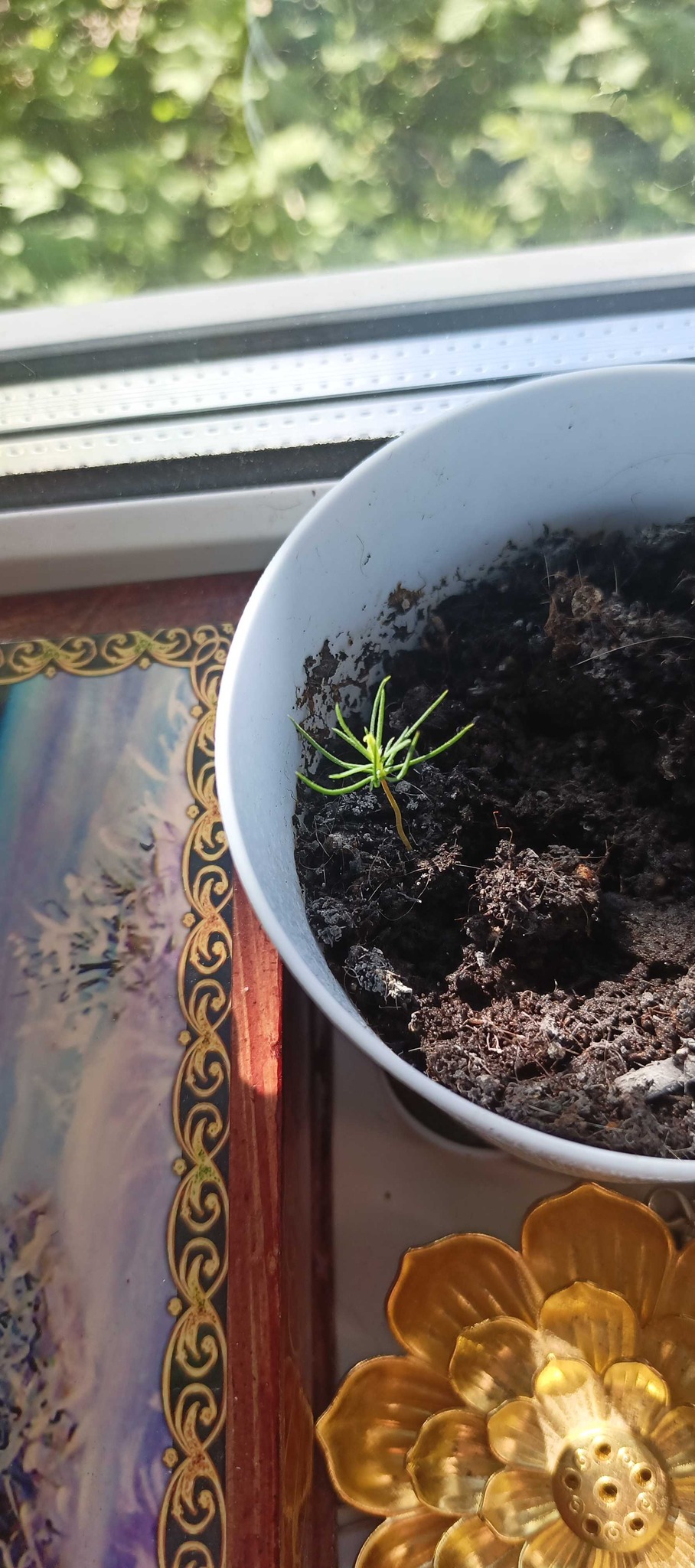
Brief Description
A young conifer seedling with a thin brownish stem and a whorl of narrow, bright green cotyledons (seed leaves) emerging at the top. As it matures, it will develop paired blue-green needles and orange-red bark.
Care Instructions
Requires bright but indirect light as a seedling, moving to full sun as it strengthens. Keep soil consistently moist but never waterlogged. Use well-draining acidic soil and avoid heavy fertilization until established.
Medicinal Value
We do not currently provide medicinal value for plant identifications.
Sunlight
Full sun (6+ hours per day) is required for mature trees; seedlings prefer bright indirect light or dappled sun to avoid scorching.
Watering
Keep moist but well-drained. Water once the top inch of soil feels dry. Seedlings are sensitive to both drought and 'damping off' from overwatering.
Soil
Prefers well-drained, sandy, or loamy soil. Tolerates poor soils but prefers an acidic pH (4.5 to 6.5).
Hardiness Zone
USDA Zones 2-7
Growth Habit
Perennial evergreen tree. Slender and conical when young, becoming irregular and flat-topped with age. Can reach 35-115 feet in height.
Bloom Season
Non-flowering; produces pollen cones and seed-bearing woody cones in spring/summer.
Toxicity
Generally non-toxic to humans and pets, though ingestion of large amounts of needles can cause mild gastrointestinal upset.
Propagation
Primarily by seed. Seeds often require a period of cold stratification to break dormancy.
Common Pests & Issues
Subject to 'damping off' (fungal rot) as a seedling. Mature trees can face pine wilt, needle cast, or sawfly larvae.
Similar Species
Austrian Pine (Pinus nigra) which has darker bark and longer needles, or Norway Spruce (Picea abies) which has single needles rather than pairs.
Interesting Facts
Scots Pine is the national tree of Scotland and is one of the most widely distributed pine species in the world, spanning across two continents.
Created At: 2026-05-26T12:37:10.303456