
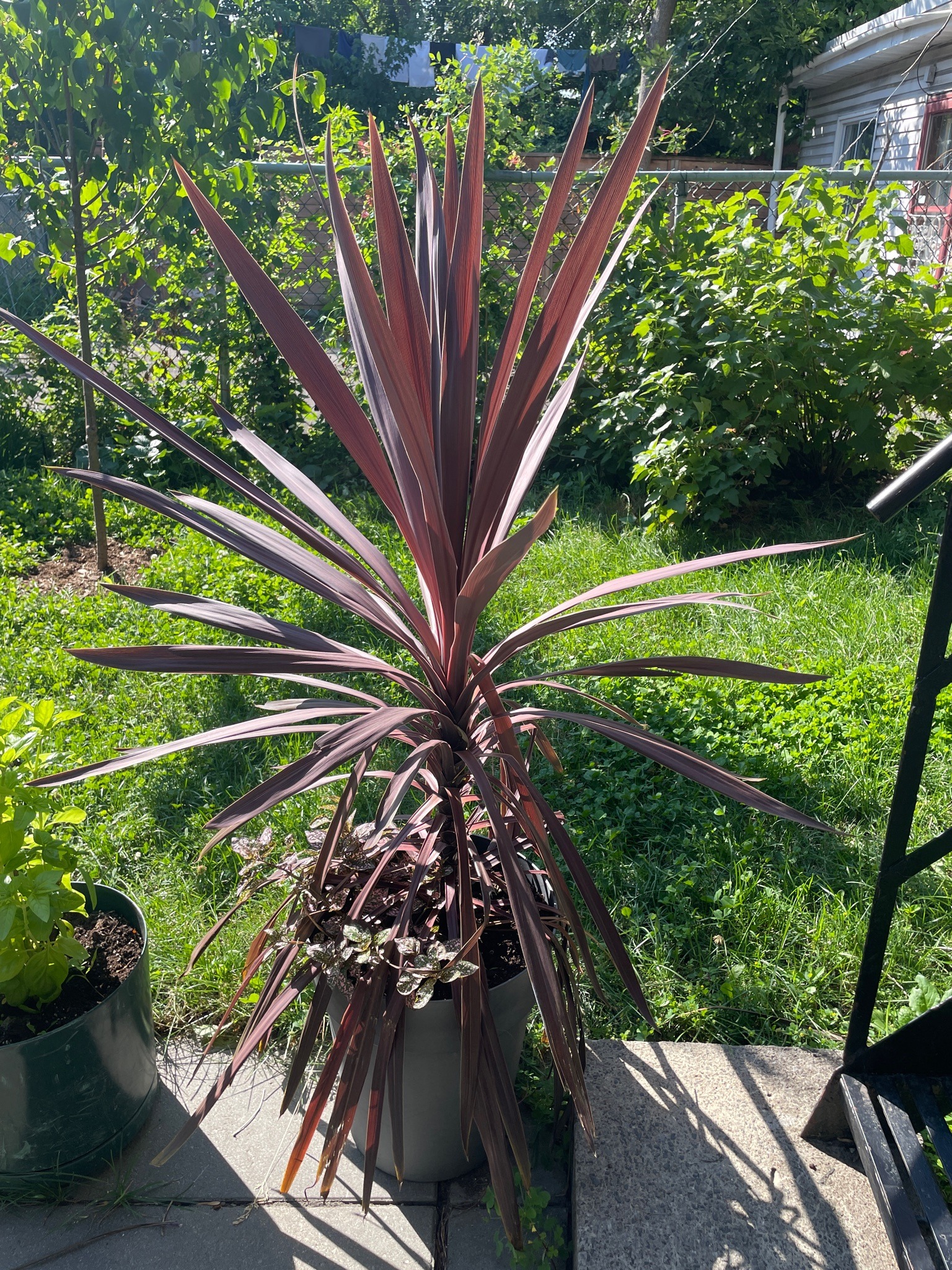
Red Sensation Cordyline
Cordyline australis 'Red Sensation'
An evergreen palm-like shrub with long, arching, sword-shaped leaves that are a deep burgundy or bronze-red color.
- Light
- Full sun to partial shade; prefers at least 4-6 hours of sunlight for best color intensity.
- Water
- Moderate watering; allow the soil to dry slightly between waterings. Drought tolerant once established, but avoids waterlogged soil to prevent root rot.
- Growth
- Perennial shrub with an upright, palm-like habit. Can reach 10-20 feet in the ground over time, but typically stays 3-6 feet in containers.
Care instructions
Provide bright, direct to indirect sunlight and water when the top inch of soil is dry. Use well-draining soil and apply a balanced fertilizer during the growing season. Protect from frost and harsh winds.
Growing details
Sunlight
Full sun to partial shade; prefers at least 4-6 hours of sunlight for best color intensity.
Watering
Moderate watering; allow the soil to dry slightly between waterings. Drought tolerant once established, but avoids waterlogged soil to prevent root rot.
Soil
Rich, well-draining loam or potting mix with a pH between 6.0 and 7.5.
Hardiness zone
USDA Zones 8-11; can be grown as an indoor container plant in colder climates.
Growth habit
Perennial shrub with an upright, palm-like habit. Can reach 10-20 feet in the ground over time, but typically stays 3-6 feet in containers.
Bloom season
Spring to early summer; produces large panicles of small, fragrant white flowers on mature specimens.
Propagation
Propagated by stem cuttings, offsets, or seed.
Common pests & issues
Susceptible to mealybugs, scale, and spider mites. Leaf spot or root rot can occur if humidity is too high or drainage is poor.
Similar species
Cordyline fruticosa (Ti Plant), which has wider leaves and lower cold tolerance, and Phormium tenax (New Zealand Flax), which grows in clumps without a central trunk.