
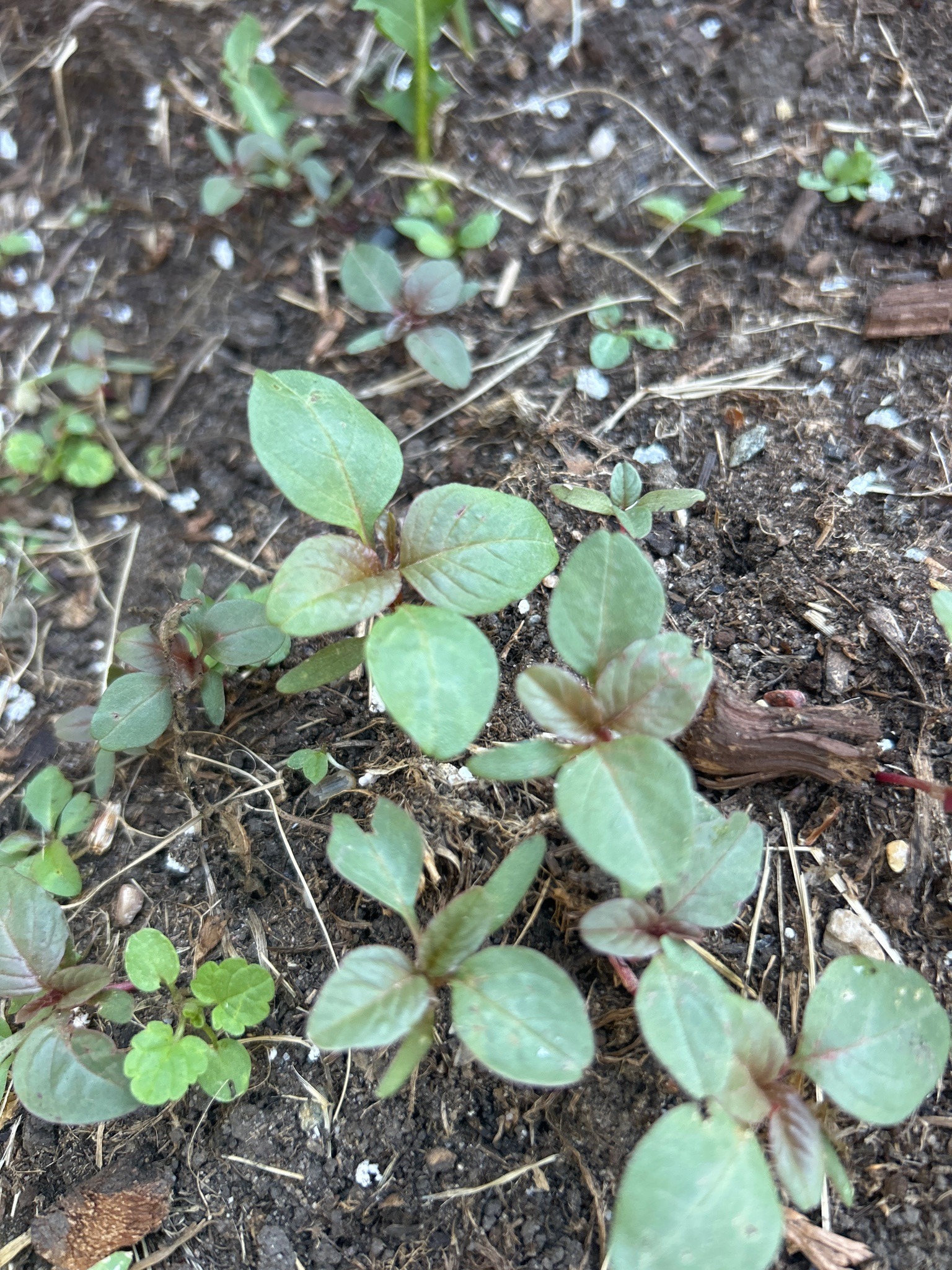
Redroot Pigweed
Amaranthus retroflexus
An erect annual herb characterized by its stout, hairy stems and dull green, alternate, ovate-to-lanceolate leaves which often have reddish veins on the underside. Seedlings often display a reddish-pink taproot.
- Light
- Full sun, requiring at least 6 to 8 hours of direct light per day for optimal growth.
- Water
- Moderate; the plant is relatively drought-tolerant once established but performs best with regular moisture in the early growth stages.
- Growth
- Erect annual herb growing from 1 to 10 feet tall depending on conditions, with a branching taproot and a fast growth rate.
Care instructions
Generally considered a weed, it thrives in disturbed soils with full sun. If cultivated, provide moderate water and well-drained soil; no fertilization is typically necessary as it is a vigorous competitor.
Growing details
Sunlight
Full sun, requiring at least 6 to 8 hours of direct light per day for optimal growth.
Watering
Moderate; the plant is relatively drought-tolerant once established but performs best with regular moisture in the early growth stages.
Soil
Prefers rich, nitrogen-heavy, well-drained loamy soils but can adapt to compacted or sandy substrates; pH 5.5 to 8.0.
Hardiness zone
3 to 11 (Annual)
Growth habit
Erect annual herb growing from 1 to 10 feet tall depending on conditions, with a branching taproot and a fast growth rate.
Bloom season
Mid-summer to early autumn; produces dense, prickly green terminal clusters of small, inconspicuous flowers.
Propagation
Propagated by seeds, which are produced in vast quantities and can remain viable in the soil for many years.
Common pests & issues
Susceptible to various leaf-spot diseases and pests like amaranth weevils, aphids, and flea beetles.
Similar species
Amaranthus hybridus (Smooth Pigweed), which has hairless or less hairy stems, and Amaranthus palmeri (Palmer Amaranth), which has much longer petioles than its leaves.