
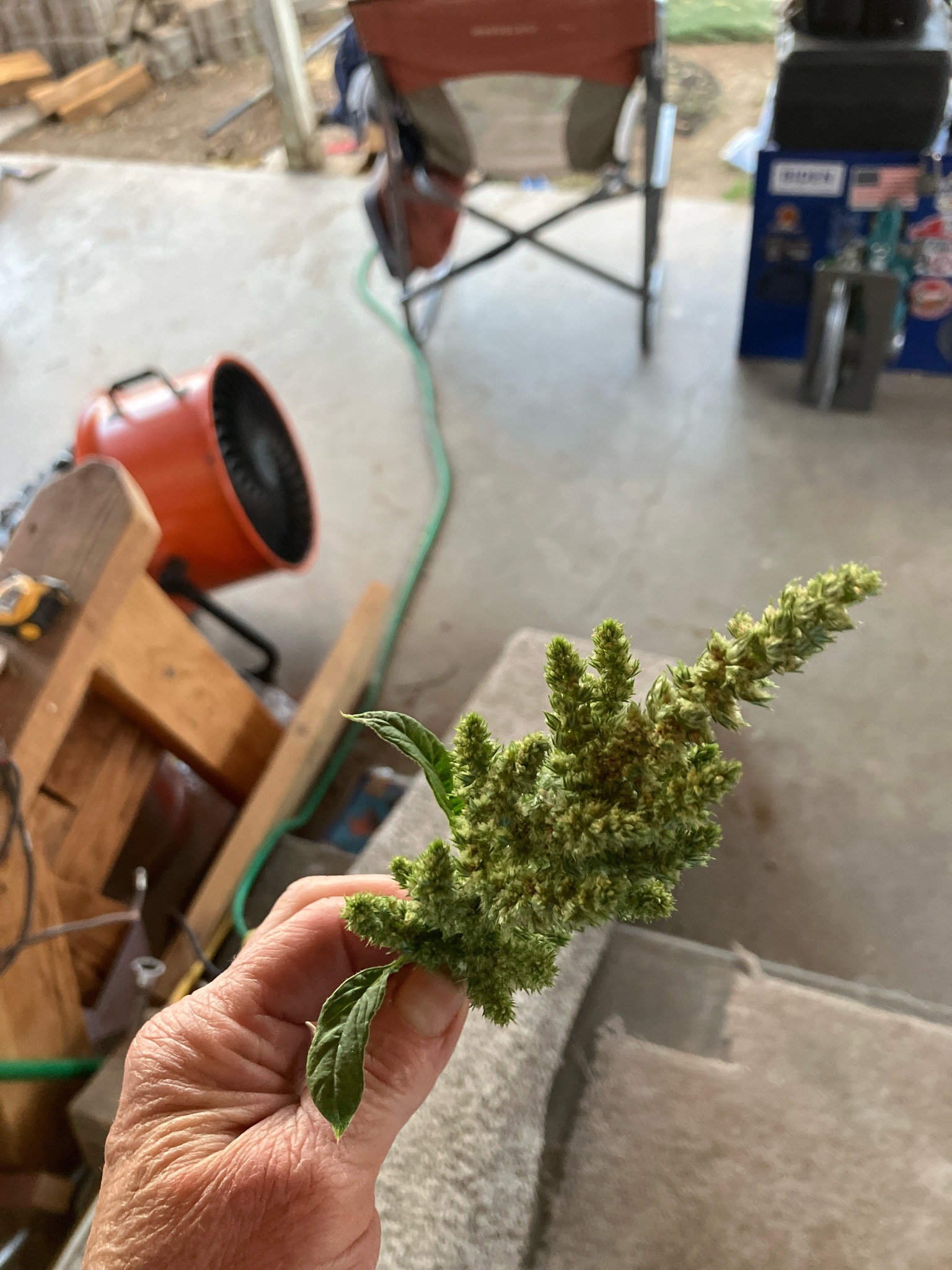
Redroot Pigweed
Amaranthus retroflexus
An erect annual herb characterized by an angular, hairy stem and a dense, greenish spike classification of flowers. The leaves are ovate or rhombic with wavy margins and prominent veins.
- Light
- Full sun, requiring 6 to 8 hours of direct light daily for optimal growth.
- Water
- Low to moderate; it is drought-tolerant. Water when the top inch of soil is dry. Overwatering can lead to root fungal issues.
- Growth
- Erect annual herb that typically reaches heights of 1 to 3 feet, occasionally taller in ideal conditions. It grows rapidly during summer months.
Care instructions
Generally grown as a wild weed, it requires full sun and well-drained soil. It is highly adaptable and requires minimal intervention once established in disturbed soil.
Growing details
Sunlight
Full sun, requiring 6 to 8 hours of direct light daily for optimal growth.
Watering
Low to moderate; it is drought-tolerant. Water when the top inch of soil is dry. Overwatering can lead to root fungal issues.
Soil
Adaptable to various soils but thrives in rich, loamy, well-drained soil with a neutral pH of 6.0 to 7.5.
Hardiness zone
USDA zones 3-11; it is a warm-season annual that does not tolerate frost.
Growth habit
Erect annual herb that typically reaches heights of 1 to 3 feet, occasionally taller in ideal conditions. It grows rapidly during summer months.
Bloom season
Mid-summer to early autumn (July to October); produces small, crowded green flowers in stiff, terminal panicles.
Propagation
Propagates strictly by seed. Seeds germinate easily in warm, moist soil after the threat of frost has passed.
Common pests & issues
Susceptible to leaf miners, aphids, and several viral diseases often carried by insects. It is also a known host for various agricultural pests.
Similar species
Amaranthus hybridus (Smooth Amaranth) which has stems that are smoother or less hairy, and Amaranthus palmeri (Palmer Amaranth) which has longer petioles and a more aggressive growth habit.