
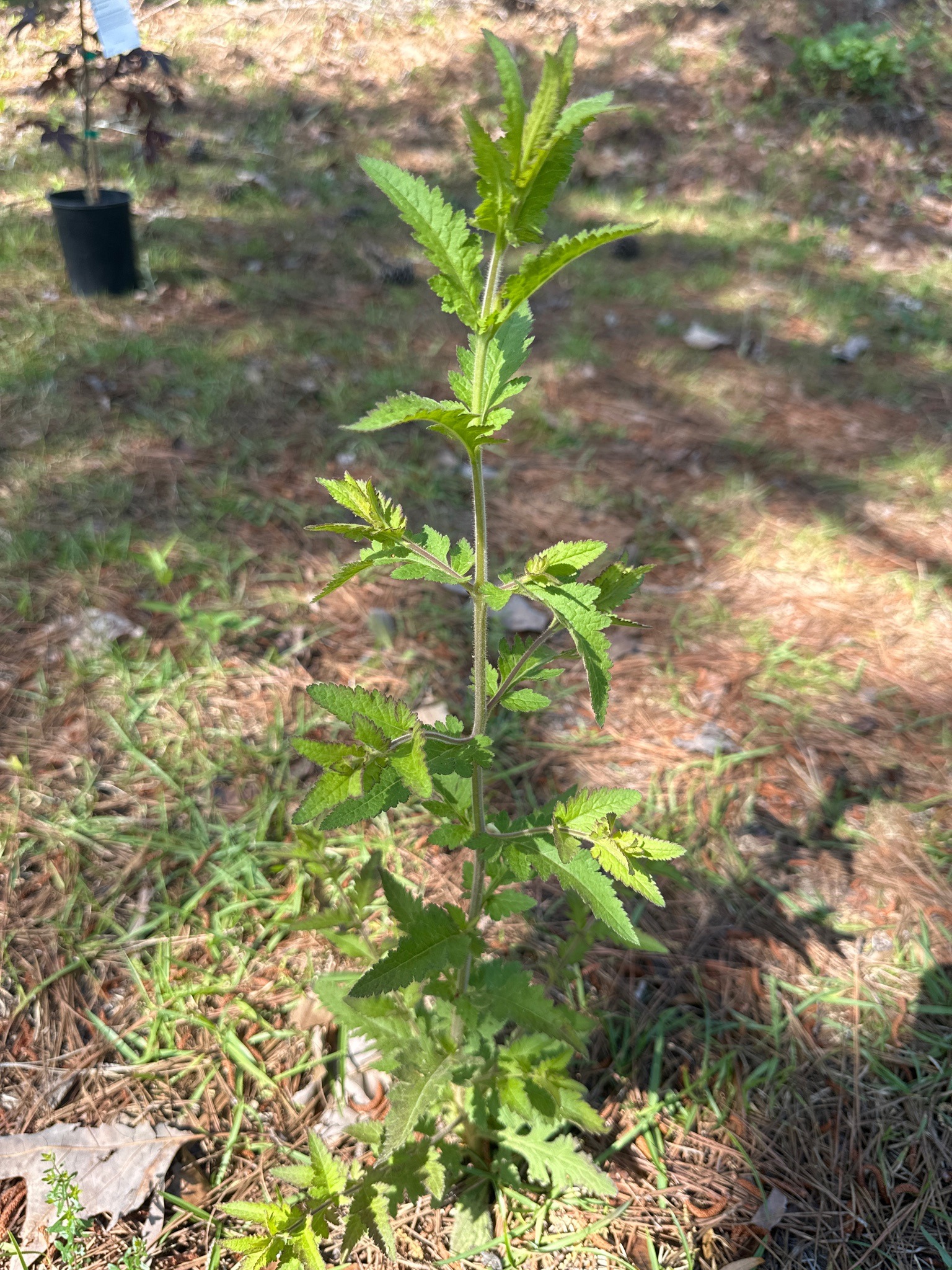
Rose Verbena
Glandularia canadensis
A low-growing, spreading perennial with hairy stems and deeply lobed, opposite leaves. It produces clusters of five-petaled pink to purple flowers at the ends of its stems.
- Light
- Full sun (6+ hours per day); can handle very light afternoon shade in hot climates.
- Water
- Low to medium; drought-tolerant once established. Water when the top inch of soil feels dry, and avoid overwatering to prevent root rot.
- Growth
- Herbaceous perennial; sprawling or decumbent growth form, reaching 6-12 inches high and spreading up to 2 feet wide.
Care instructions
This is a low-maintenance plant that thrives in sunny locations with well-draining soil. It is drought tolerant once established and benefits from occasional deadheading to encourage more blooms and light pruning to maintain its shape.
Growing details
Sunlight
Full sun (6+ hours per day); can handle very light afternoon shade in hot climates.
Watering
Low to medium; drought-tolerant once established. Water when the top inch of soil feels dry, and avoid overwatering to prevent root rot.
Soil
Well-draining sandy, loamy, or rocky soil; pH 6.0 to 7.5.
Hardiness zone
7 to 9 (sometimes 6 with protection)
Growth habit
Herbaceous perennial; sprawling or decumbent growth form, reaching 6-12 inches high and spreading up to 2 feet wide.
Bloom season
Spring through Fall (peaking in late Spring); clusters of pink, rose, or purple tubular flowers with 5 notched lobes.
Propagation
Propagated by seeds sown in spring, stem cuttings taken in summer, or through natural layering where stems touch the ground.
Common pests & issues
Susceptible to powdery mildew if air circulation is poor and spider mites in very hot, dry conditions. Root rot may occur in heavy, wet soils.
Similar species
Verbena rigida (Stiff Verbena), which has more upright stems and less lobed leaves, and Verbena bonariensis, which is much taller with smaller flower clusters.