
Rose
Rosa hybrids
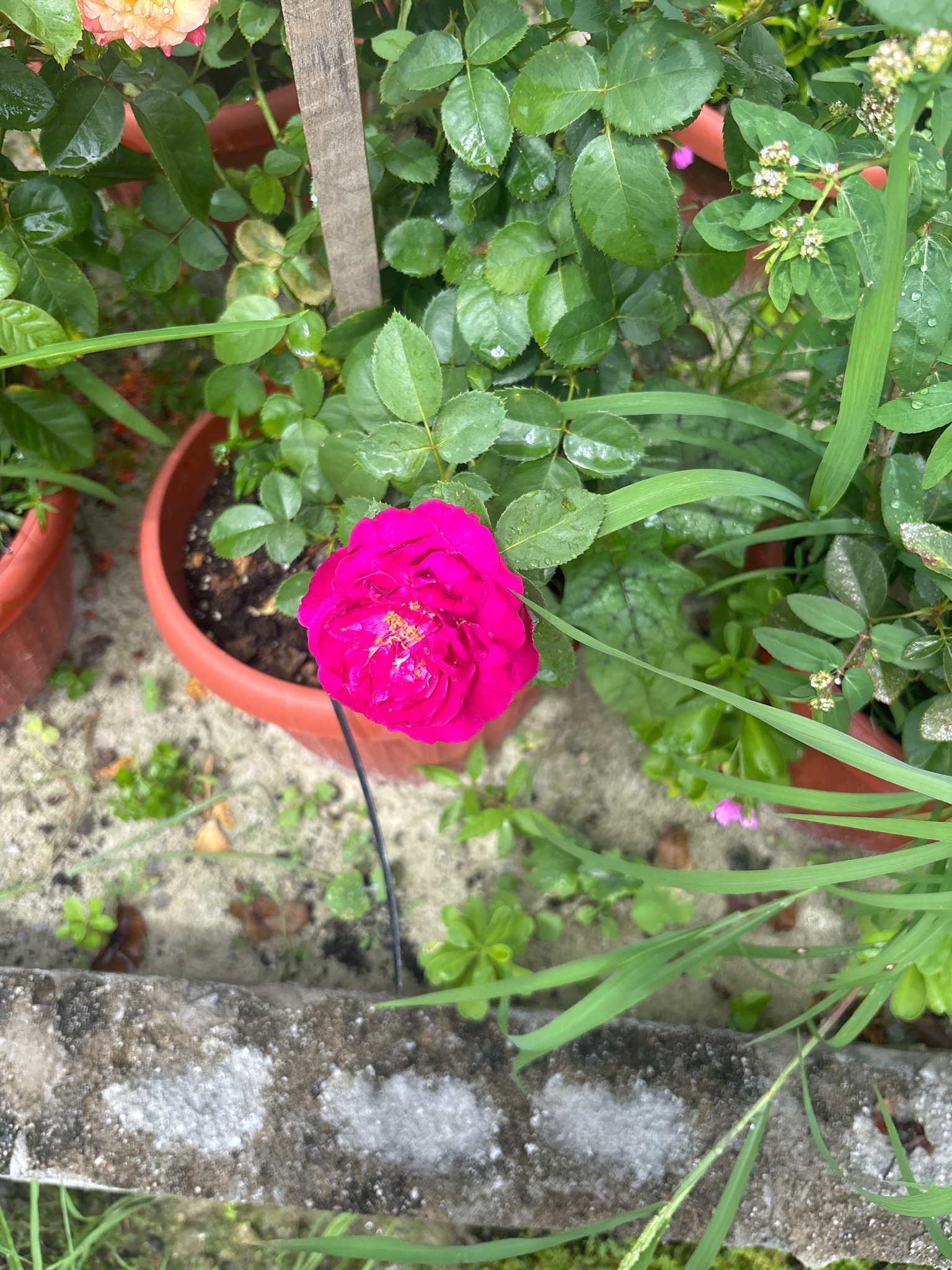
A woody perennial flowering plant characterized by serrated green leaves, thorny stems, and showy, multi-petaled vibrant pink or magenta flowers with visible yellow stamens.
- Light
- Full sun, requiring 6 to 8 hours of direct sunlight per day for optimal blooming.
- Water
- Requires regular watering to maintain damp soil, approximately 1-2 inches per week; increase frequency during hot weather but avoid keeping roots waterlogged.
- Growth
- Perennial shrub; can range from 2 to 6 feet in height and spread depending on pruning and variety; medium growth rate.
Care instructions
Provide at least 6 hours of sunlight daily, water at the base to keep soil consistently moist but well-drained, and apply a balanced rose fertilizer during the growing season.
Growing details
Sunlight
Full sun, requiring 6 to 8 hours of direct sunlight per day for optimal blooming.
Watering
Requires regular watering to maintain damp soil, approximately 1-2 inches per week; increase frequency during hot weather but avoid keeping roots waterlogged.
Soil
Prefers loamy, rich, well-draining soil with a slightly acidic to neutral pH between 6.0 and 7.0.
Hardiness zone
Zones 5-9 depending on specific cultivar
Growth habit
Perennial shrub; can range from 2 to 6 feet in height and spread depending on pruning and variety; medium growth rate.
Bloom season
Spring through autumn, featuring double-petaled magenta-pink flowers with a layered, cup-like shape.
Propagation
Typically propagated via softwood or hardwood stem cuttings, grafting, or division of established rootstocks.
Common pests & issues
Susceptible to aphids, spider mites, black spot fungus, and powdery mildew; manageable through proper air circulation and fungicide application.
Similar species
Peonies (which lack thorns and have different leaf structures) and Camellias (which have waxy, thicker leaves and typically bloom in cooler seasons).