
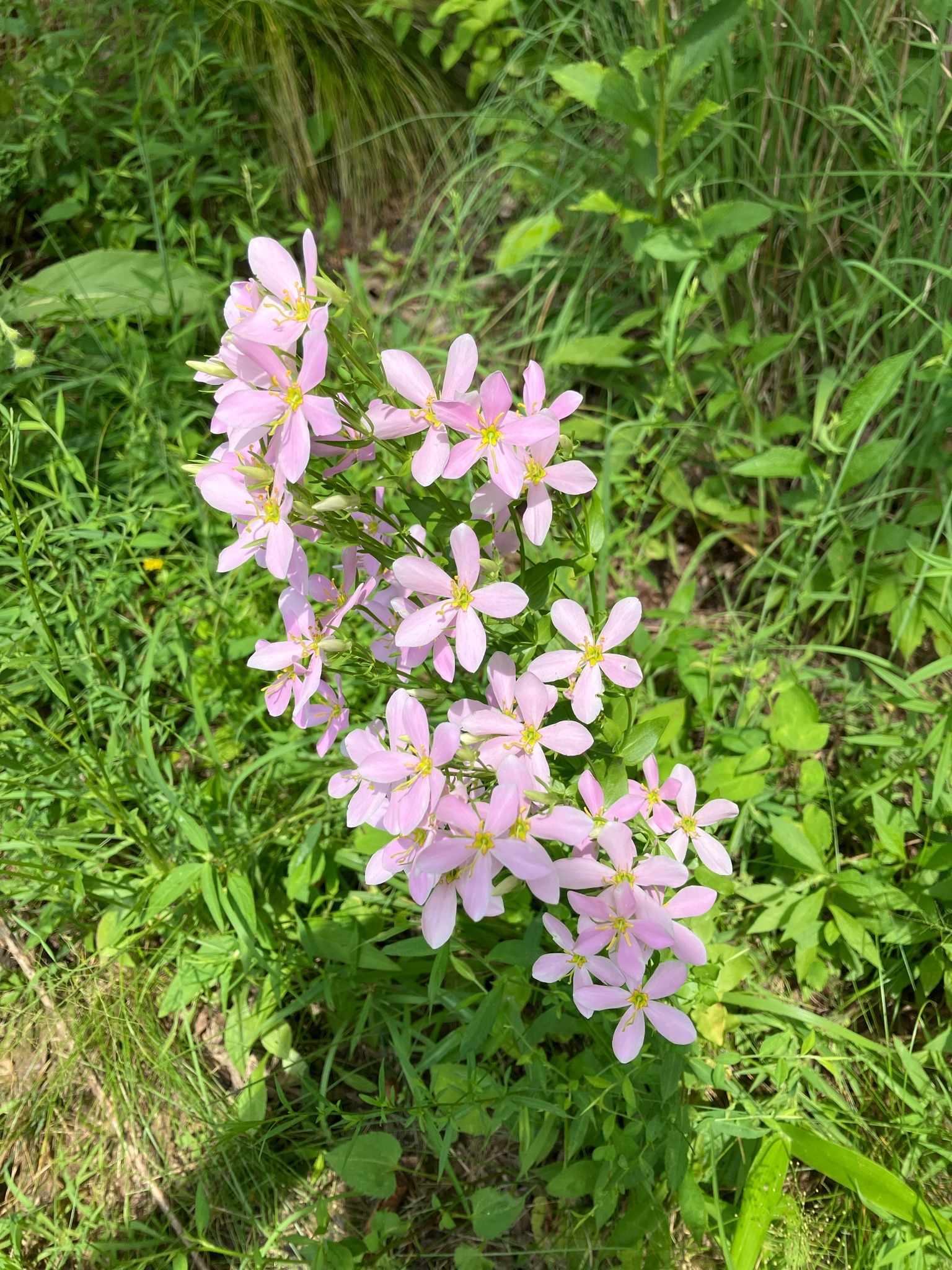
Rosemary Centaury
Sabatia angularis
A biennial wildflower known for its vibrant rose-pink, star-shaped flowers with a yellow-and-green center, held on square, winged stalks.
- Light
- Partial sun to partial shade, typically requiring 4 to 6 hours of filtered sunlight per day.
- Water
- Requires regular moisture; the soil should not be allowed to fully dry out, as it prefers wet-mesic to mesic conditions.
- Growth
- Biennial wildflower; forms a basal rosette in the first year and a flowering stalk reaching 1 to 3 feet in height during the second year.
Care instructions
This wildflower thrives in moist, well-draining soil with bright, indirect sun or partial shade. It requires consistent moisture through its biennial lifecycle to ensure successful flowering in the second year.
Growing details
Sunlight
Partial sun to partial shade, typically requiring 4 to 6 hours of filtered sunlight per day.
Watering
Requires regular moisture; the soil should not be allowed to fully dry out, as it prefers wet-mesic to mesic conditions.
Soil
Well-drained loamy or sandy soil with a neutral to slightly acidic pH, often found in meadows or woodland edges.
Hardiness zone
Zones 3 to 9
Growth habit
Biennial wildflower; forms a basal rosette in the first year and a flowering stalk reaching 1 to 3 feet in height during the second year.
Bloom season
Mid-summer to early autumn (July to September); features 5-petaled pink flowers roughly 1 inch wide with a central green star.
Propagation
Propagated by seeds which require a period of cold stratification; they should be surface-sown in late autumn or early spring.
Common pests & issues
Relatively pest resistant, though it may suffer from root rot if the soil is waterlogged without adequate drainage.
Similar species
Sabatia campestris (Prairie Rose-Gentian) is similar but typically smaller with more rounded leaves compared to the acute, clasping leaves of S. angularis.