
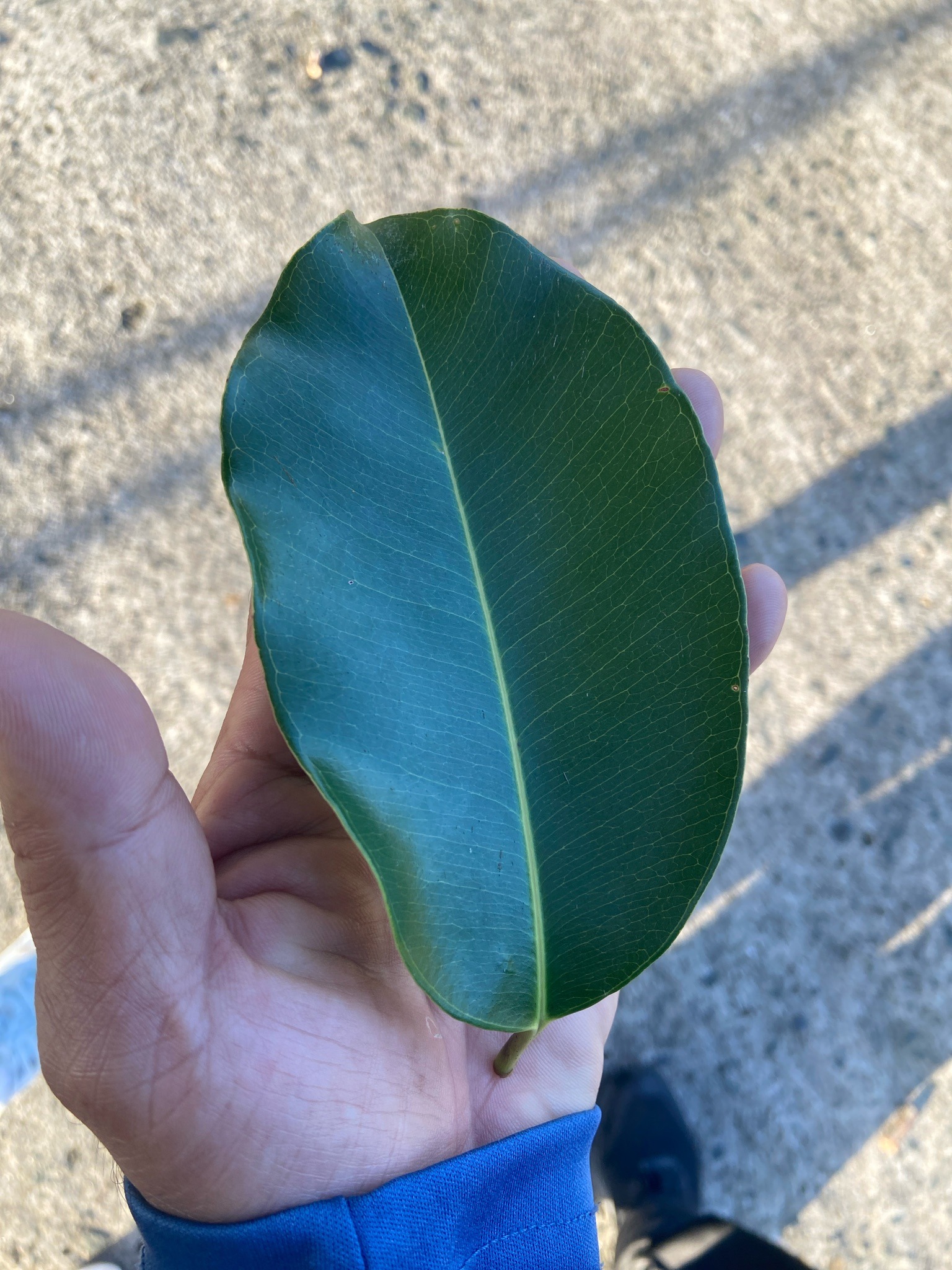
Rubber Fig
Ficus elastica
A large evergreen tree with broad, oval, glossy dark green leaves. The leaves are leathery and can grow up to 12 inches long, featuring a prominent central vein.
- Light
- Bright, indirect light; can tolerate some direct morning sun; 6-8 hours per day.
- Water
- Moderate watering; allow the top 25-50% of soil to dry out between waterings. Yellowing leaves may indicate overwatering.
- Growth
- Perennial evergreen tree; can reach 50-100 feet in the wild, but stays 6-10 feet tall as an indoor houseplant.
Care instructions
Requires bright indirect light and well-draining soil. Water when the top inch of soil is dry and wipe leaves regularly to remove dust. Fertilize during the growing season.
Growing details
Sunlight
Bright, indirect light; can tolerate some direct morning sun; 6-8 hours per day.
Watering
Moderate watering; allow the top 25-50% of soil to dry out between waterings. Yellowing leaves may indicate overwatering.
Soil
Well-draining, aerated potting mix with a pH of 6.0 to 7.0.
Hardiness zone
USDA zones 10-12; not frost-tolerant.
Growth habit
Perennial evergreen tree; can reach 50-100 feet in the wild, but stays 6-10 feet tall as an indoor houseplant.
Bloom season
Rarely flowers indoors; in nature, it produces small, oblong, yellowish-green inconspicuous figs.
Propagation
Stem tip cuttings or air layering during the spring or summer months.
Common pests & issues
Susceptible to scale insects, mealybugs, and spider mites. Leaf drop can occur due to sudden temperature changes or overwatering.
Similar species
Ficus lyrata (Fiddle Leaf Fig) has larger, violin-shaped leaves; Ficus benjamina has much smaller, narrower leaves.