Prickly Lettuce
Scientific Name: Lactuca serriola
Plant Family: Asteraceae
Native Region: Europe, Asia, and North Africa; naturalized worldwide including North America
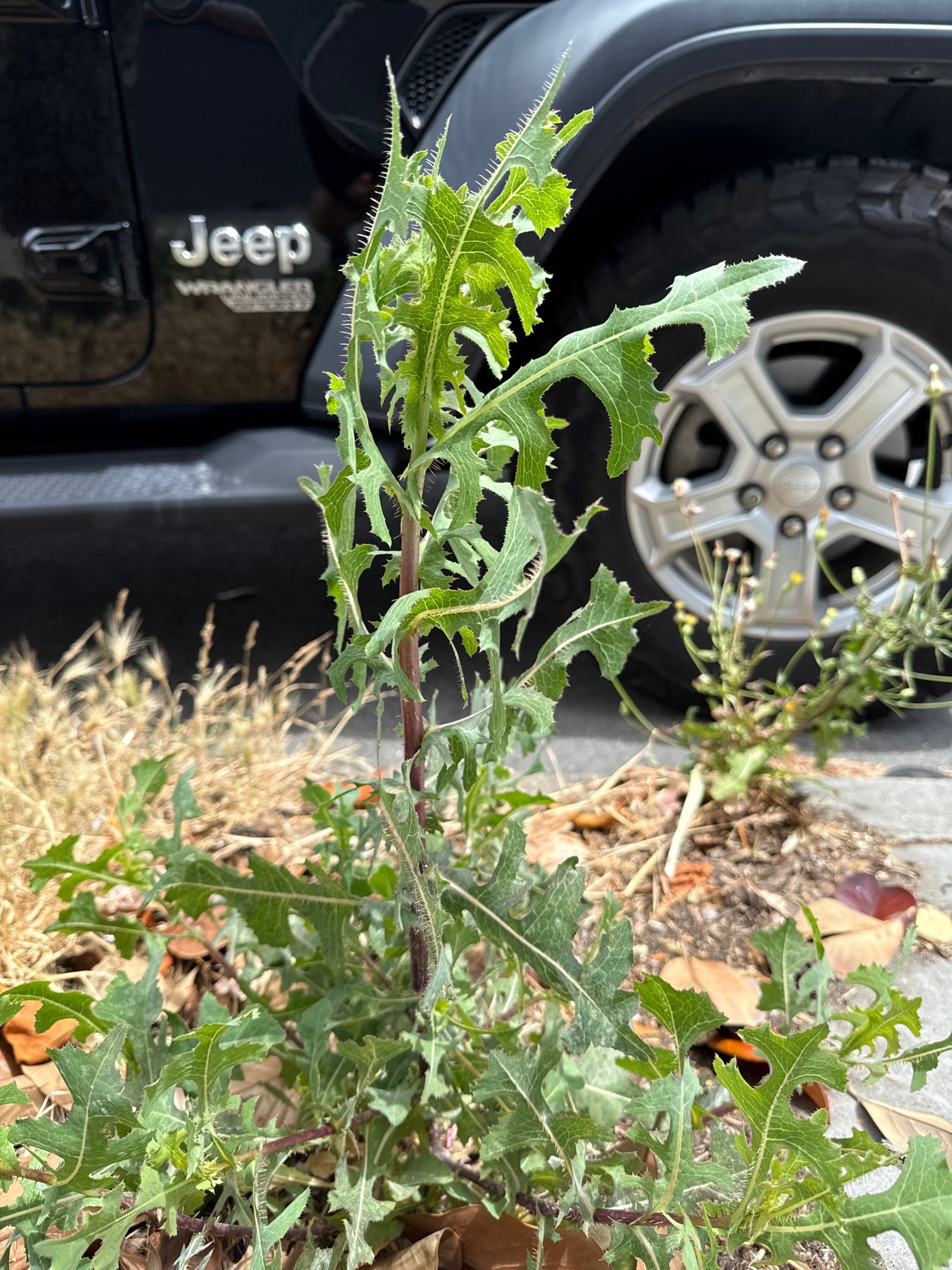
Brief Description
An upright, biennial or annual herb characterized by deeply lobed, prickly-edged leaves that align vertically in north-south directions and a central stem that contains a milky white sap.
Care Instructions
Rarely cultivated as an ornamental, it is highly adaptable. It thrives in full sun and disturbed soil with little to no maintenance, needing no additional water or fertilizer once established.
Medicinal Value
We do not currently provide medicinal value for plant identifications.
Sunlight
Full sun (6+ hours per day) for optimal growth.
Watering
Very low; extremely drought-tolerant. Natural rainfall is usually sufficient. Over-watering can lead to root rot in poorly drained soils.
Soil
Prefers well-drained, sandy or loamy soils but can grow in heavy clay and compacted gravel. Tolerates wide pH ranges.
Hardiness Zone
3 to 10 (USDA).
Growth Habit
Annual or biennial herb growing 1 to 5 feet tall. Initially forms a basal rosette before sending up a tall flowering stalk.
Bloom Season
Flowers from mid-summer to early fall. Produces small, pale yellow flower heads (ray florets) that open in the morning.
Toxicity
Low toxicity; the milky sap can cause mild skin irritation or contact dermatitis in some humans and pets. Not generally considered highly dangerous.
Propagation
Mainly by wind-dispersed seeds. Each plant can produce thousands of seeds per season.
Common Pests & Issues
Often considered a weed. Susceptible to aphids and downy mildew, but generally very hardy against pests.
Similar Species
Sow thistle (Sonchus species) looks similar but lacks the row of prickles along the midrib on the underside of the leaf, which is a key diagnostic for Lactuca serriola.
Interesting Facts
Known as the 'compass plant' because its leaves often twist to a vertical position to align with the sun, minimizing water loss. It is a wild relative of cultivated lettuce.
Created At: 2026-06-26T19:03:54.241149