
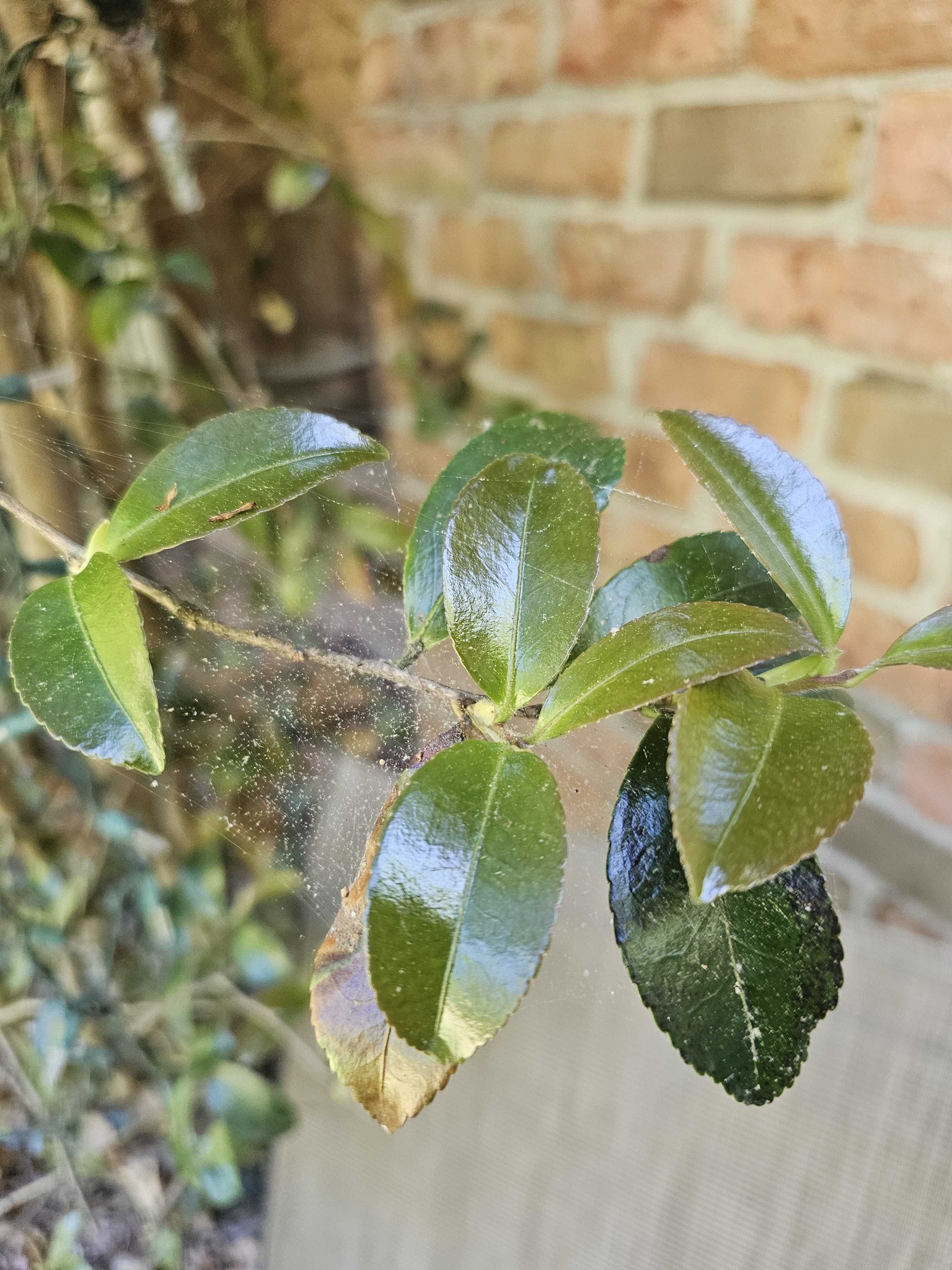
Sasanqua Camellia
Camellia sasanqua
An evergreen shrub or small tree with glossy, dark green, oval leaves that have slightly serrated edges. It features fragrant blossoms and a more graceful, open habit than its relative, Camellia japonica.
- Light
- Partial shade to full sun; ideally 4-6 hours of morning sun with afternoon protection in hotter zones.
- Water
- Regular watering is essential during the first two years. Once established, it is moderately drought-tolerant. Water weekly, increasing frequency during heatwaves.
- Growth
- Evergreen perennial shrub/small tree; upright or spreading habit; typically reaches 6–14 feet tall and wide with a medium growth rate.
Care instructions
Requires well-draining, acidic soil rich in organic matter. While more sun-tolerant than other camellias, it prefers partial shade in hot climates. Mulch to retain moisture and keep roots cool.
Growing details
Sunlight
Partial shade to full sun; ideally 4-6 hours of morning sun with afternoon protection in hotter zones.
Watering
Regular watering is essential during the first two years. Once established, it is moderately drought-tolerant. Water weekly, increasing frequency during heatwaves.
Soil
Moist, well-drained, acidic soil (pH 5.5 to 6.5). Avoid heavy clay or alkaline soils.
Hardiness zone
7 to 9
Growth habit
Evergreen perennial shrub/small tree; upright or spreading habit; typically reaches 6–14 feet tall and wide with a medium growth rate.
Bloom season
Fall to early Winter; flowers are white, pink, or red, often with yellow stamens and a light fragrance.
Propagation
Typically propagated through semi-hardwood cuttings in summer or by air layering.
Common pests & issues
Susceptible to tea scale, aphids, and root rot if soil drainage is poor. Petal blight and leaf spot can also occur in humid conditions.
Similar species
Camellia japonica (has larger, thicker leaves and flowers in spring); Camellia sinensis (the tea plant, has smaller flowers and different leaf texture).