
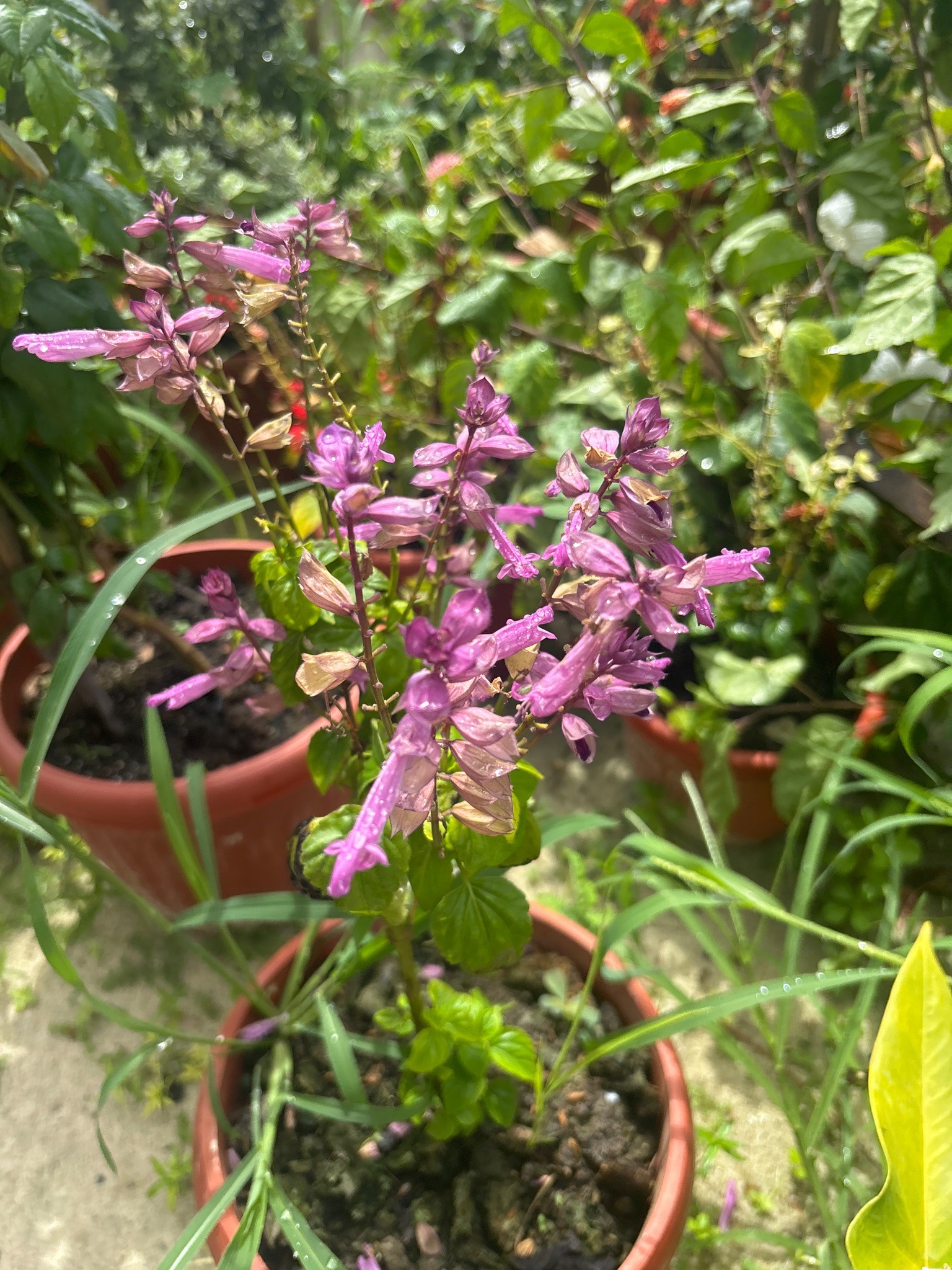
Scarlet Sage
Salvia splendens
An upright, clump-forming herbaceous plant known for its vibrant spikes of tubular flowers and heart-shaped, dark green leaves with serrated edges.
- Light
- Full sun to partial shade; ideally 6 to 8 hours of direct light per day for best flowering.
- Water
- Requires regular watering to maintain consistent soil moisture. It is not drought-tolerant and will wilt if the soil dries out completely.
- Growth
- Herbaceous perennial usually grown as an annual. Reaches 12 to 24 inches in height and 8 to 12 inches in spread with an upright, bushy form.
Care instructions
Provide full sun to partial shade and plant in fertile, well-draining soil. Water regularly to keep the soil consistently moist but not waterlogged. Apply a balanced liquid fertilizer every two weeks during the growing season to encourage continuous blooming.
Growing details
Sunlight
Full sun to partial shade; ideally 6 to 8 hours of direct light per day for best flowering.
Watering
Requires regular watering to maintain consistent soil moisture. It is not drought-tolerant and will wilt if the soil dries out completely.
Soil
Rich, loamy, well-drained soil with a slightly acidic to neutral pH between 6.0 and 7.0.
Hardiness zone
USDA zones 10-11 as a perennial; grown as an annual in zones 2-9.
Growth habit
Herbaceous perennial usually grown as an annual. Reaches 12 to 24 inches in height and 8 to 12 inches in spread with an upright, bushy form.
Bloom season
Flowers from late spring until the first frost, producing spikes of tubular blossoms in shades of red, purple, pink, or white.
Propagation
Typically grown from seeds started indoors 6 to 8 weeks before the last frost, or via softwood cuttings taken in late summer.
Common pests & issues
Susceptible to spider mites, whiteflies, and aphids. Overwatering can lead to root rot, and poor air circulation may cause powdery mildew.
Similar species
Salvia coccinea (Tropical Sage), which has a more open growth habit and smaller, more widely spaced flowers compared to the dense spikes of Salvia splendens.