
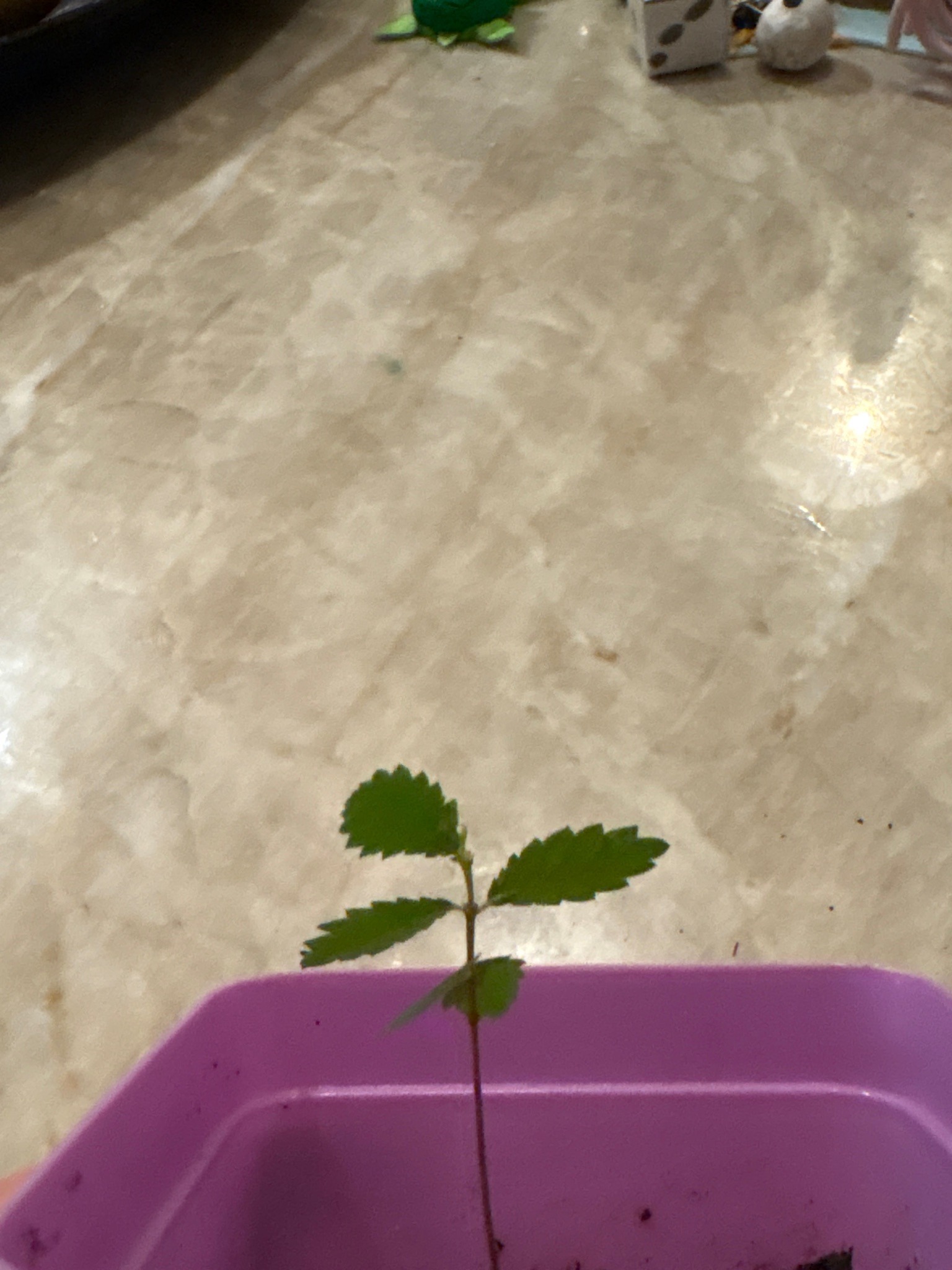
Siberian Elm seedling
Ulmus pumila
A young seedling characterized by small, alternate, ovate-lanceolate leaves with sharply serrated (toothed) margins and asymmetrical bases along a slender stem.
- Light
- Full sun to partial shade; prefers 6+ hours of direct sunlight per day.
- Water
- Moderate; water regularly as a seedling. Established trees are highly drought-tolerant. Yellowing leaves can indicate over-watering or poor drainage.
- Growth
- Deciduous tree with a fast growth rate. Mature trees reach 50–70 feet with an open, spreading crown. Often behaves like a weed in disturbed areas.
Care instructions
This is a highly invasive and resilient tree. If cultivating, place in full sun and water when the top inch of soil is dry. Use well-draining soil and avoid heavy fertilization as it grows rapidly on its own.
Growing details
Sunlight
Full sun to partial shade; prefers 6+ hours of direct sunlight per day.
Watering
Moderate; water regularly as a seedling. Established trees are highly drought-tolerant. Yellowing leaves can indicate over-watering or poor drainage.
Soil
Highly adaptable; prefers well-drained, loamy or sandy soil but survives in heavy clay and alkaline soils (pH 6.0 to 8.0).
Hardiness zone
3 to 9
Growth habit
Deciduous tree with a fast growth rate. Mature trees reach 50–70 feet with an open, spreading crown. Often behaves like a weed in disturbed areas.
Bloom season
Early spring (March to April). Flowers are small, greenish-red, and appear before leaves. They produce flat, circular winged seeds (samaras).
Propagation
Easily propagated by seeds, which germinate rapidly upon falling, or by semi-hardwood cuttings.
Common pests & issues
Prone to Siberian Elm Leaf Beetles and Anthracnose. It is notoriously brittle, with branches breaking easily in wind or ice storms.
Similar species
Chinese Elm (Ulmus parvifolia) has smaller, thicker leaves and blooms in autumn. American Elm (Ulmus americana) has much larger, doubly-serrate leaves.