
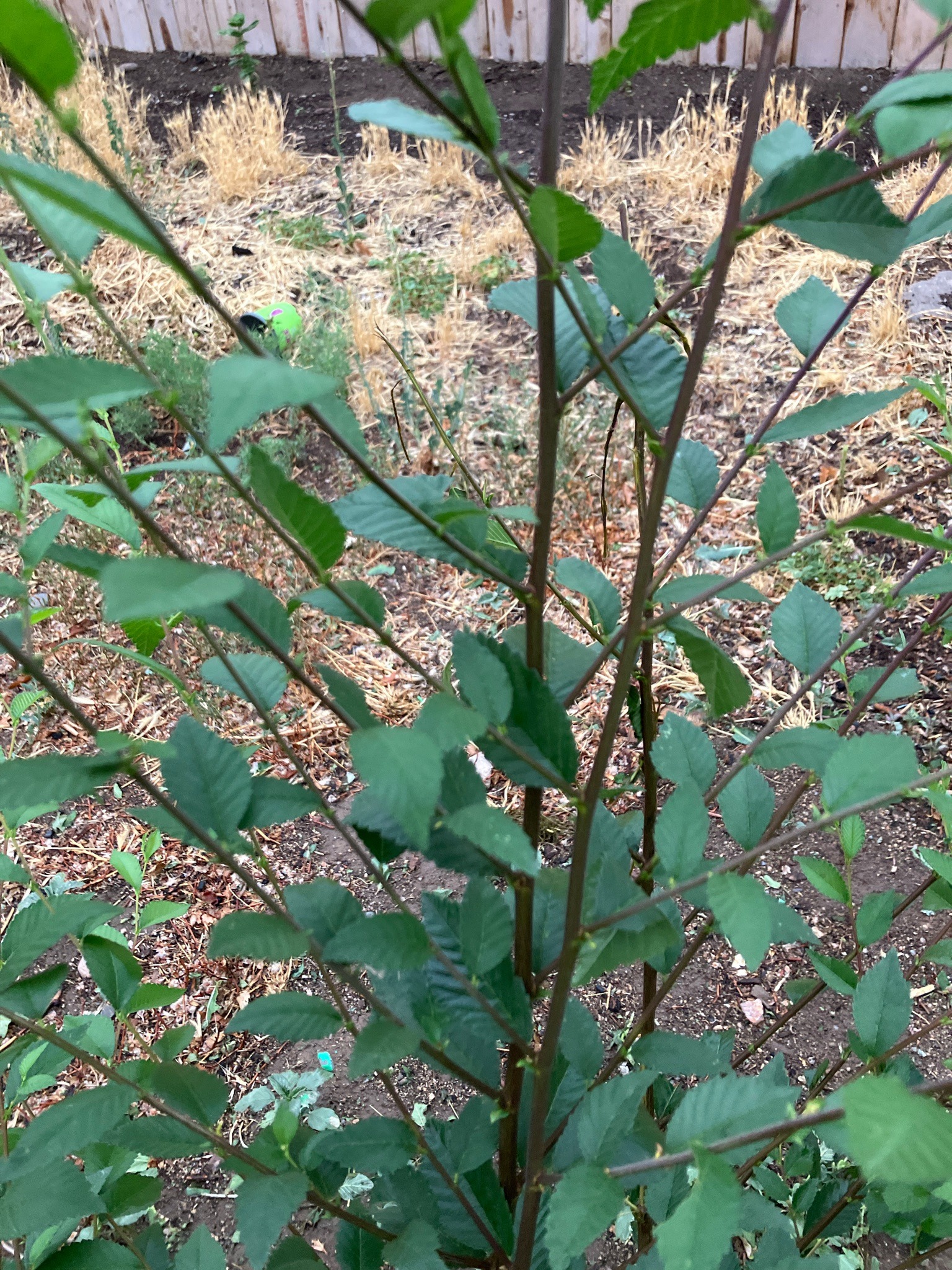
Siberian Elm
Ulmus pumila
A fast-growing, medium-sized tree characterized by its small, elliptical, dark green leaves with serrated margins and a distinctive asymmetrical base. The bark is gray-brown and becomes deeply furrowed with age.
- Light
- Full sun, requiring at least 6 to 8 hours of direct sunlight per day.
- Water
- Low to moderate watering needs; it is highly drought-tolerant but benefits from regular watering during the first few growing seasons.
- Growth
- Perennial deciduous tree with an open, rounded crown; grows rapidly to a mature height of 50-70 feet and spread of 35-50 feet.
Care instructions
This is a highly adaptable and resilient species that requires minimal care. It performs best in full sunlight and well-draining soil but is extremely tolerant of poor soil conditions and drought once established.
Growing details
Sunlight
Full sun, requiring at least 6 to 8 hours of direct sunlight per day.
Watering
Low to moderate watering needs; it is highly drought-tolerant but benefits from regular watering during the first few growing seasons.
Soil
Highly adaptable to various soil types, including sandy, loamy, and clay soils with a wide pH range from 5.5 to 8.0.
Hardiness zone
USDA zones 3 through 9; extremely cold-hardy.
Growth habit
Perennial deciduous tree with an open, rounded crown; grows rapidly to a mature height of 50-70 feet and spread of 35-50 feet.
Bloom season
Early spring, producing small, inconspicuous greenish flowers in clusters before the leaves emerge.
Propagation
Propagated primarily through seeds, which disperse via wind in late spring, or via softwood cuttings taken in early summer.
Common pests & issues
Susceptible to elmbark beetles, elm leaf beetles, and Dutch Elm Disease, though it shows higher resistance to DED than most native North American elms.
Similar species
Chinese Elm (Ulmus parvifolia), which has exfoliated bark showing orange patches and blooms in the fall, unlike the early spring bloom of the Siberian Elm.