
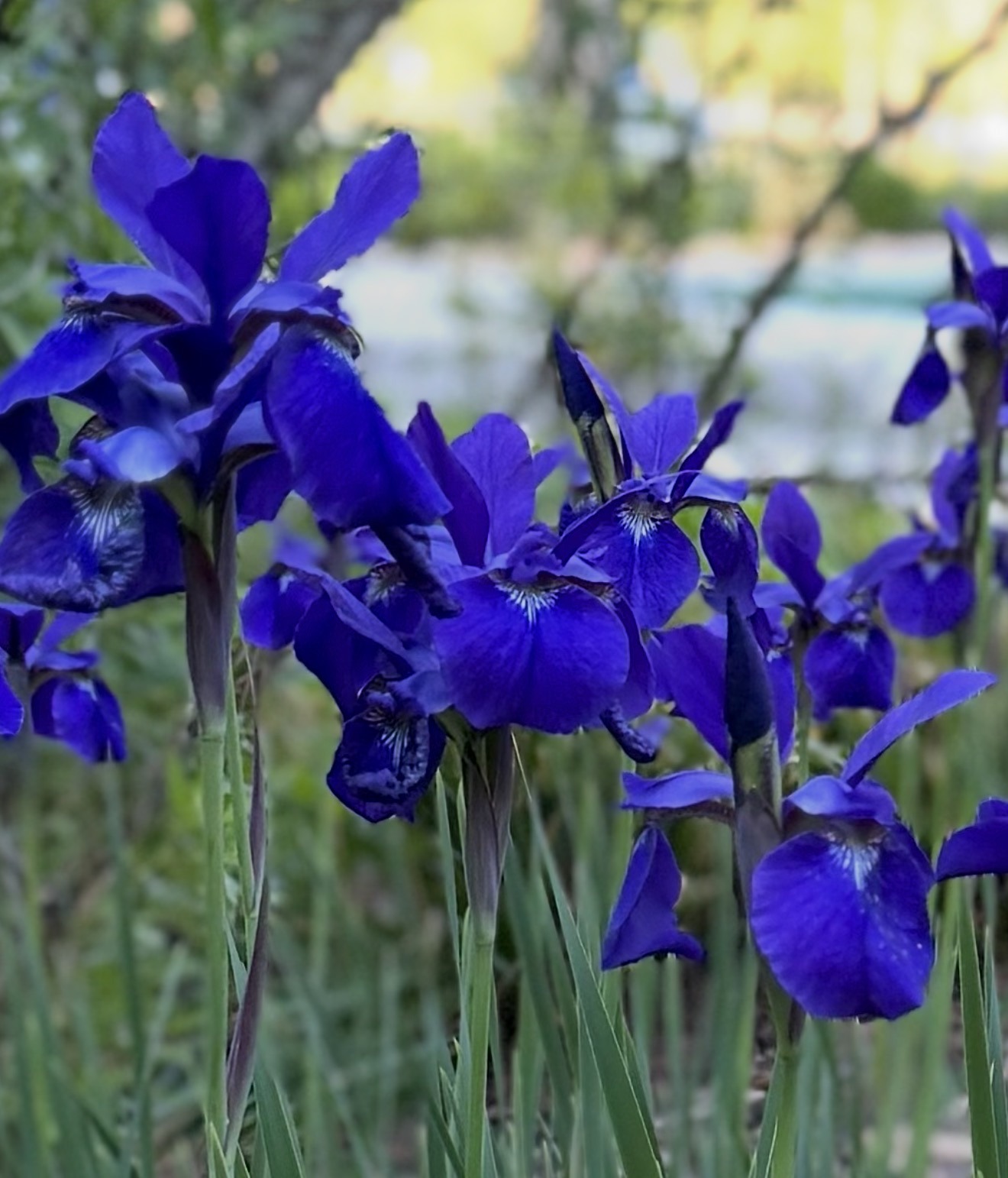
Siberian Iris
Iris sibirica
A herbaceous perennial known for its distinctive blue-to-violet flowers with intricate veining, narrow grass-like foliage, and beardless petals.
- Light
- Full sun to partial shade; prefers at least 6 hours of sun for best blooming.
- Water
- Requires regular watering to keep soil consistently moist; thrives in damp conditions but cannot tolerate standing water in winter.
- Growth
- Clump-forming perennial; reaches 2 to 4 feet in height and 2 to 3 feet in width with a moderate growth rate.
Care instructions
Plant in full sun to partial shade in moist, organic-rich soil. Keep the soil consistently moist, especially during the first growing season. Mulch to retain moisture and suppress weeds.
Growing details
Sunlight
Full sun to partial shade; prefers at least 6 hours of sun for best blooming.
Watering
Requires regular watering to keep soil consistently moist; thrives in damp conditions but cannot tolerate standing water in winter.
Soil
Rich, moist, slightly acidic soil (pH 5.5 to 6.9); tolerates boggy soil better than other iris varieties.
Hardiness zone
3 to 8
Growth habit
Clump-forming perennial; reaches 2 to 4 feet in height and 2 to 3 feet in width with a moderate growth rate.
Bloom season
Late spring to early summer; features blossoms with white or yellow signals and dark blue/purple veins.
Propagation
Propagation is best achieved by dividing rhizomes in early autumn or spring after flowering.
Common pests & issues
Generally more resistant to iris borer than bearded irises, but may suffer from leaf spot, crown rot, or slugs.
Similar species
Japanese Iris (Iris ensata) which has larger, flatter blooms and requires even wetter soil, and Bearded Iris which has a fuzzy 'beard' on the falls.