
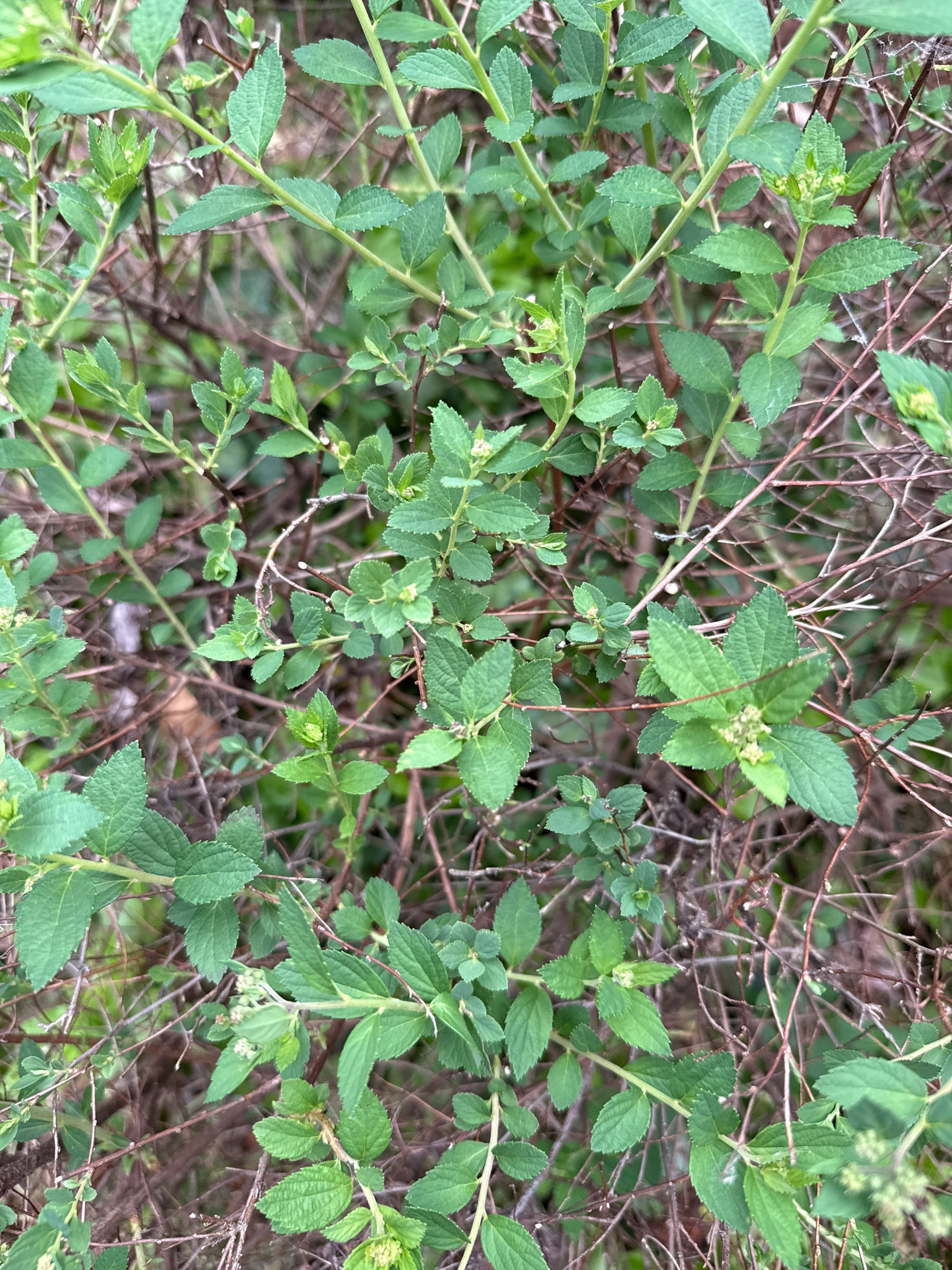
Sida rhombifolia
Sida rhombifolia
A perennial or subshrub with woody stems and diamond-shaped (rhomboid) to lance-shaped leaves with serrated margins. It features small yellowish-orange flowers and a very tough, fibrous stem.
- Light
- Full sun to partial shade; prefers 6+ hours of direct sunlight per day.
- Water
- Low to moderate. Very drought-tolerant once established; overwatering can lead to root rot in poorly draining soils.
- Growth
- Perennial subshrub or herb; erect growth reaching 2-4 feet in height and spreading 2-3 feet wide.
Care instructions
This is a hardy weed-like plant that thrives in disturbed soils and full sun. It requires minimal intervention; water only during prolonged droughts and avoid heavy fertilization as it prefers poor soils.
Growing details
Sunlight
Full sun to partial shade; prefers 6+ hours of direct sunlight per day.
Watering
Low to moderate. Very drought-tolerant once established; overwatering can lead to root rot in poorly draining soils.
Soil
Well-drained sandy, loamy, or clay soils; adaptable to a wide range of pH (5.0 to 7.5).
Hardiness zone
8 to 11 (grown as an annual in cooler climates).
Growth habit
Perennial subshrub or herb; erect growth reaching 2-4 feet in height and spreading 2-3 feet wide.
Bloom season
Year-round in tropical climates; summer to fall in temperate regions. Produces small 5-petaled yellow to pale orange flowers.
Propagation
Primarily by seeds, which are dispersed by animals or water. Can sometimes be grown from semi-hardwood cuttings.
Common pests & issues
Highly resistant to most pests; may occasionally attract spider mites or whiteflies in very dry conditions. Can be invasive in pastures and gardens.
Similar species
Sida spinosa (Prickly Sida), which has small 'spines' at the base of the leaf stalks, and Sida cordifolia, which has heart-shaped leaves.