
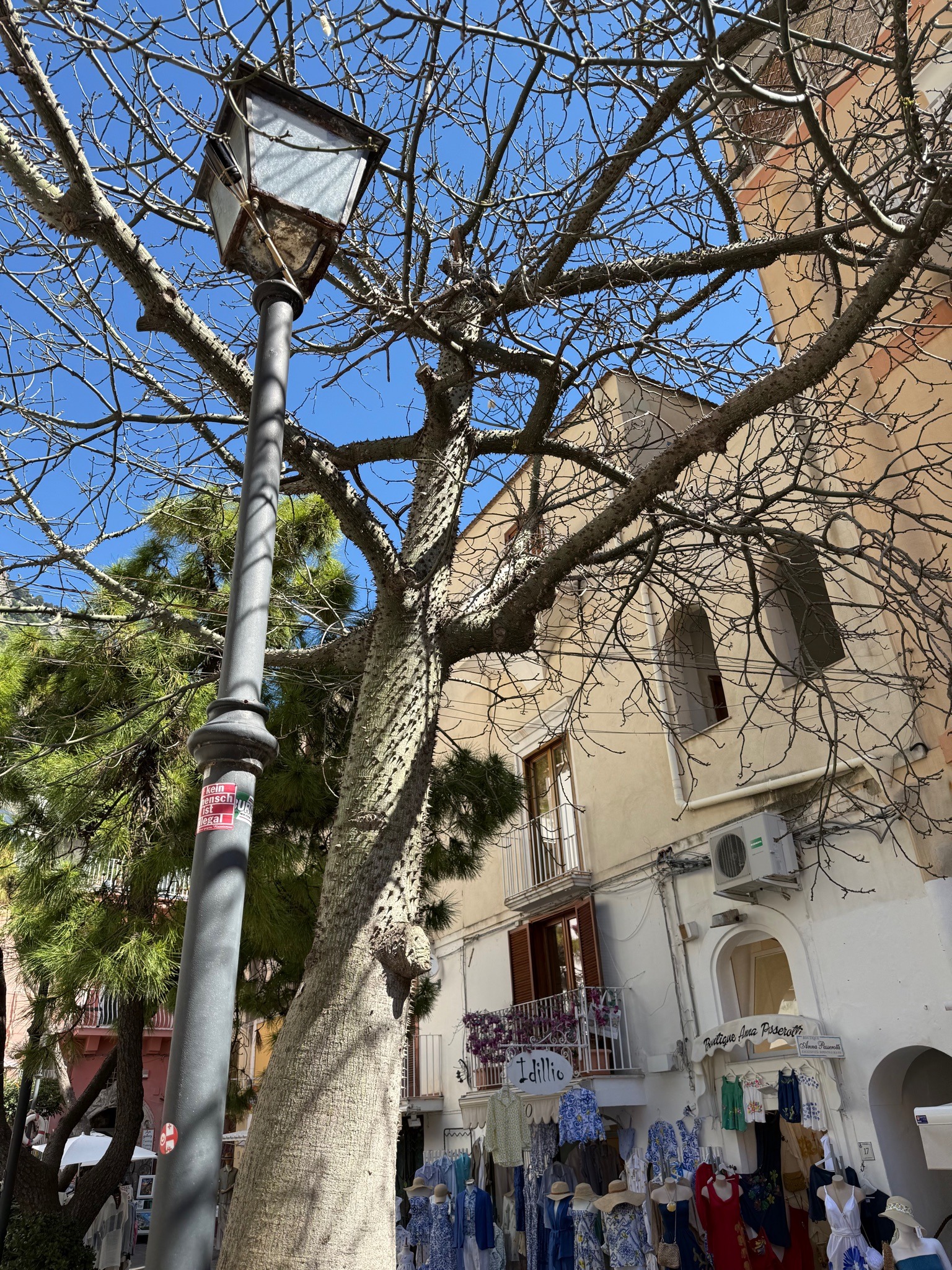
Silk Floss Tree
Ceiba speciosa
A deciduous tree known for its bottle-shaped trunk studded with thick, conical woody prickles and large pink-to-magenta hibiscus-like flowers.
- Light
- Full sun, at least 6 to 8 hours per day.
- Water
- Moderate; water deeply during dry spells. Once established, it is fairly drought-tolerant. Avoid waterlogged soil.
- Growth
- Deciduous tree with a fast growth rate, reaching 40 to 60 feet in height and 30 to 45 feet in spread.
Care instructions
Provide full sun and well-draining soil. Water regularly while young, but older trees are drought-tolerant. Prune primarily to remove dead wood.
Growing details
Sunlight
Full sun, at least 6 to 8 hours per day.
Watering
Moderate; water deeply during dry spells. Once established, it is fairly drought-tolerant. Avoid waterlogged soil.
Soil
Well-drained, fertile soil; can tolerate acidic to slightly alkaline pH.
Hardiness zone
9b to 11
Growth habit
Deciduous tree with a fast growth rate, reaching 40 to 60 feet in height and 30 to 45 feet in spread.
Bloom season
Late summer to winter; produces large, five-petaled pink or purple flowers with yellowish-white centers.
Propagation
Most commonly by seed; can also be propagated through semi-hardwood cuttings.
Common pests & issues
Scale insects and mealybugs; root rot if kept in excessively wet soil.
Similar species
Ceiba pentandra (Kapok tree), which has similar thorns and floss but typically white or cream-colored flowers and a more massive spread.