
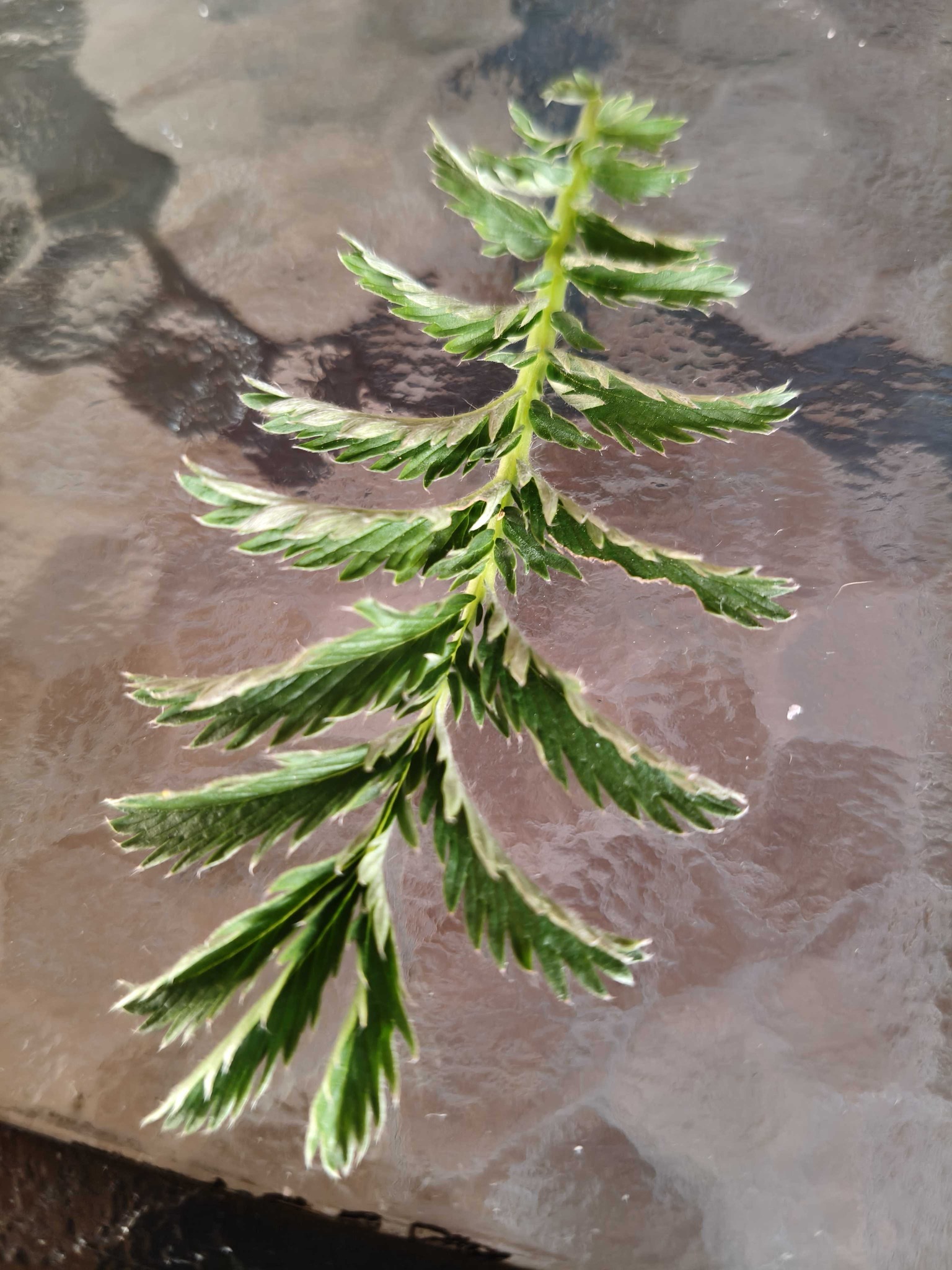
Silverweed Cinquefoil
Potentilla anserina
A low-growing perennial herb known for its pinnate, saw-toothed leaves that are green on top and have a distinctive shimmering silvery-white underside due to fine hairs.
- Light
- Full sun to partial shade (4-8 hours per day). Full sun ensures the most vibrant yellow flowers.
- Water
- Consistent moisture is key; prefers damp soil and has low drought tolerance. Over-watering is rarely an issue in well-draining spots, but it can handle temporary flooding.
- Growth
- Creeping perennial herb that spreads by long red stolons (runners). Reaches 2-6 inches in height with a wide-spreading carpet habit.
Care instructions
Thrives in moist to wet soils with plenty of sunlight. It is low-maintenance and can tolerate poor drainage. It spreads via runners, so it may need containment in a garden setting.
Growing details
Sunlight
Full sun to partial shade (4-8 hours per day). Full sun ensures the most vibrant yellow flowers.
Watering
Consistent moisture is key; prefers damp soil and has low drought tolerance. Over-watering is rarely an issue in well-draining spots, but it can handle temporary flooding.
Soil
Loamy, sandy, or clay soils; prefers a neutral to slightly acidic pH (6.0-7.0) and moist conditions.
Hardiness zone
3 through 9
Growth habit
Creeping perennial herb that spreads by long red stolons (runners). Reaches 2-6 inches in height with a wide-spreading carpet habit.
Bloom season
Early summer to early autumn; produces bright yellow, five-petaled flowers on solitary stalks.
Propagation
Easily propagated by dividing the runners (stolons) in spring or autumn, or by sowing seeds in a cold frame.
Common pests & issues
Relatively pest-free but can be susceptible to powdery mildew if air circulation is poor. Can become invasive in garden beds due to its aggressive runners.
Similar species
Argentina egedii (Pacific Silverweed), which is very similar but usually limited to coastal salt marshes and has slightly different hair patterns on the leaves.