
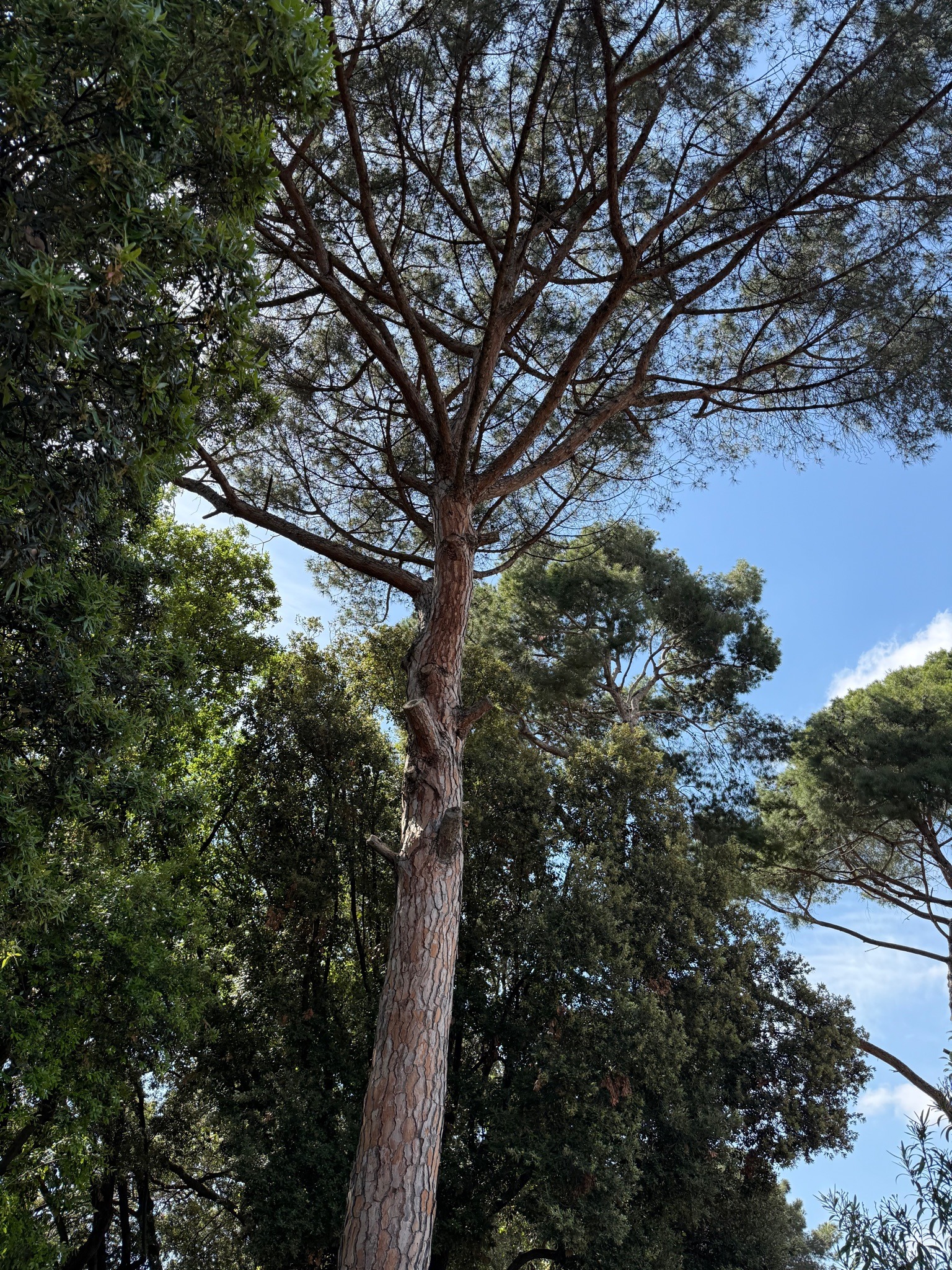
Stone Pine
Pinus pinea
A distinctive evergreen coniferous tree known for its flat-topped, umbrella-like canopy and thick, deeply fissured reddish-brown bark. It has long, stiff bright-green needles in pairs.
- Light
- Full sun, requiring at least 6 to 8 hours of direct sunlight per day.
- Water
- Moderate when young, but highly drought-tolerant when mature. Over-watering in heavy clay soils can lead to root rot.
- Growth
- Perennial evergreen tree. It typically reaches 35 to 60 feet in height with a wide, spreading umbrella-like crown. Growth rate is moderate.
Care instructions
Requires full sun and well-draining soil. It is very drought-tolerant once established and prefers Mediterranean climates with mild winters and hot summers. Minimal feeding is needed once mature.
Growing details
Sunlight
Full sun, requiring at least 6 to 8 hours of direct sunlight per day.
Watering
Moderate when young, but highly drought-tolerant when mature. Over-watering in heavy clay soils can lead to root rot.
Soil
Prefers sandy, well-draining acidic or neutral soils. Highly tolerant of maritime conditions and poor soils.
Hardiness zone
USDA zones 8 through 11.
Growth habit
Perennial evergreen tree. It typically reaches 35 to 60 feet in height with a wide, spreading umbrella-like crown. Growth rate is moderate.
Bloom season
Non-flowering; produces cones. Male pollen cones are yellow-brown; female seed cones are large, ovoid, and glossy brown, maturing in their third year.
Propagation
Propagated by seeds (pine nuts), which require a period of cold stratification to improve germination rates.
Common pests & issues
Susceptible to Pine Processionary Moth caterpillars and Pine Bast Scale. Root rot can occur in poorly drained, waterlogged soils.
Similar species
Pinus halepensis (Aleppo Pine) which has a more irregular, open crown and smaller cones, and Pinus pinaster (Maritime Pine) which has coarser bark and larger, more pointed cones.